

Are you comparing a water softener vs water filter and wondering why the answer is not simply “both”? The two systems can work together, but they solve different problems. A conventional water softener reduces the calcium and magnesium that cause hard-water scale. A water filter must be selected for a specific concern, such as chlorine taste, sediment, lead, or another verified issue.
Fortunately, you don’t need to guess from product names or marketing language. Start with your water test, identify the problem you want to solve, and then choose treatment that is designed and certified for that job. This guide explains when a softener makes sense, when a filter makes sense, and when a home may need both.
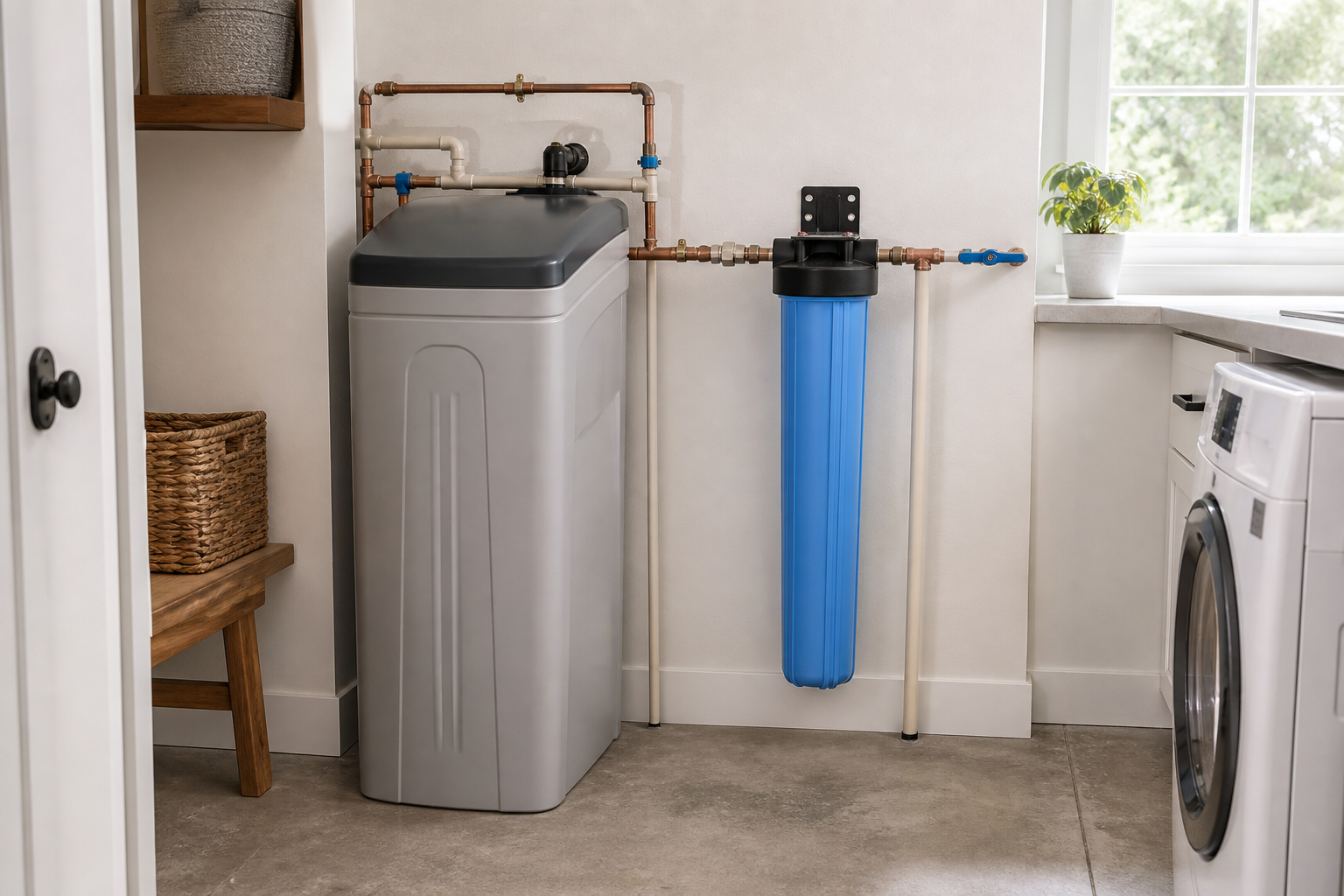

Table of Contents
Table of Contents
- Water Softener vs. Water Filter: The Short Answer
- What a Water Softener Does
- What a Water Filter Does
- Do You Need a Softener, a Filter, or Both?
- How to Choose Without Buying the Wrong System
- Frequently Asked Questions
Water Softener vs. Water Filter: The Short Answer
A water softener is for hardness. A water filter is for a specific reduction claim. If your test shows elevated calcium and magnesium and you see recurring scale, spots, or soap film, a conventional ion-exchange softener may be the right tool. If your concern is sediment, chlorine taste, a named contaminant, or another water-quality condition, you need a filter or treatment system that documents reduction of that exact concern.
Here is the practical difference:
| Question | Water softener | Water filter |
|---|---|---|
| Main job | Reduce calcium and magnesium hardness. | Reduce a specified substance or improve a specified water-quality issue. |
| Common method | Cation-exchange resin, regenerated with sodium or potassium chloride. | Technology varies: sediment media, activated carbon, reverse osmosis, ultraviolet treatment, or other media. |
| Typical scope | Often whole-house, because hardness affects fixtures and appliances throughout the home. | Point-of-use or whole-house, depending on the problem and the equipment claim. |
| Best reason to buy | A verified hardness result plus repeated scale or cleaning problems. | A verified water concern and an exact model claim that addresses it. |
| What to verify | Incoming hardness, flow needs, plumbing scope, and regeneration settings. | The exact contaminant or condition, the standard or certification, capacity, and replacement schedule. |
The U.S. Environmental Protection Agency explains cation exchange as a treatment that removes hardness ions such as calcium and magnesium. That is the core job of a conventional softener. It is different from an ordinary filter cartridge that catches sediment or improves chlorine taste.
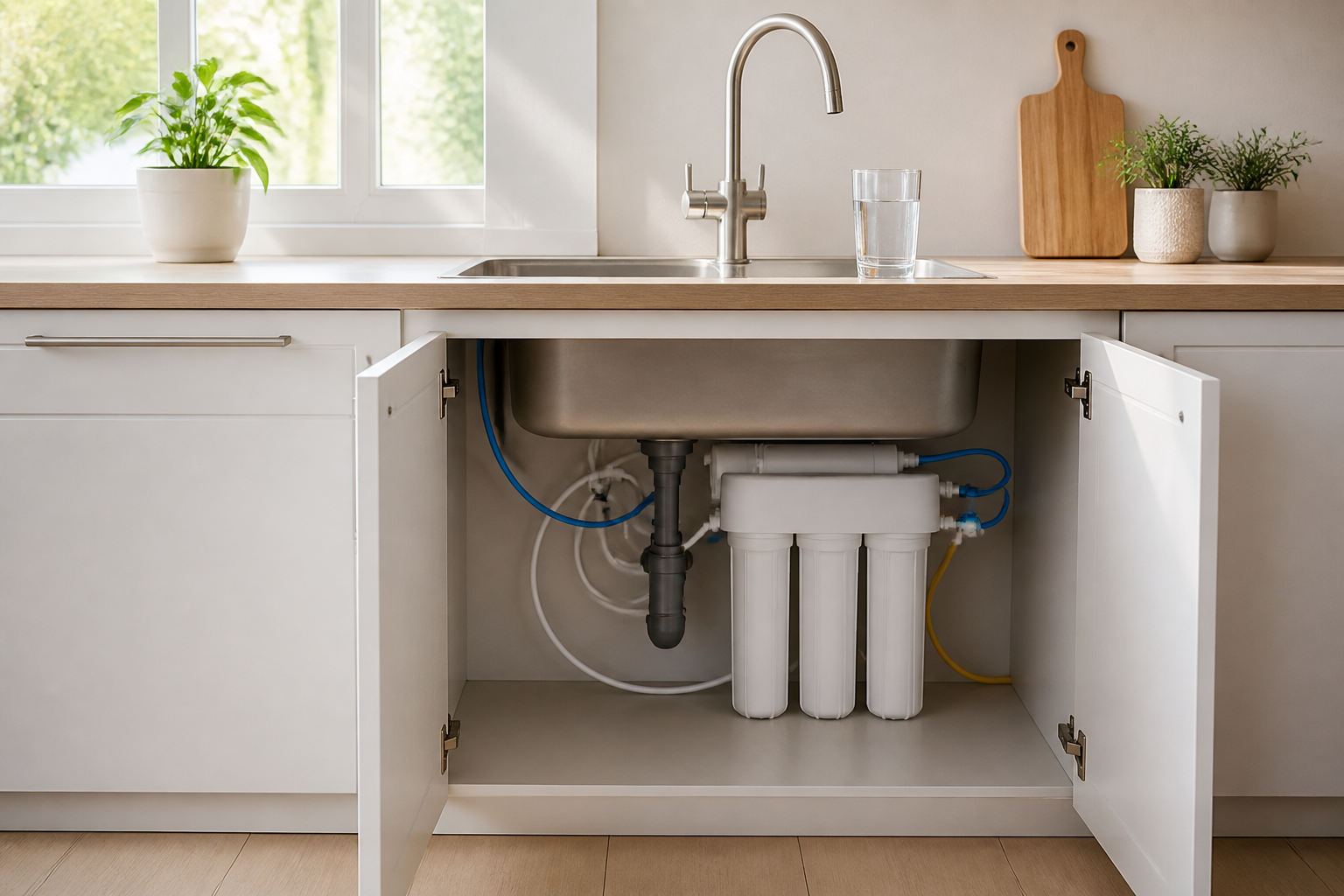
So, does a water filter soften water? Most common carbon, sediment, pitcher, faucet, and shower filters do not. They are not built to control dissolved calcium and magnesium throughout your plumbing. Some point-of-use systems, including properly selected reverse-osmosis units, can reduce dissolved solids at a drinking-water tap. That is still not the same as whole-home softening for scale control.
Before you treat either problem, use a water-hardness test and, when needed, a broader water-quality test. Test results give you a much better starting point than the appearance of one faucet or a recommendation from a neighbor.
What a Water Softener Does
Hard water contains dissolved calcium and magnesium. Those minerals are not usually a drinking-water emergency, but they can leave mineral deposits on fixtures, reduce soap performance, and build scale in appliances that heat water. A softener uses ion exchange to swap those hardness minerals for sodium or potassium ions.
The NSF description of NSF/ANSI 44 says that cation-exchange softeners reduce calcium and magnesium hardness and use sodium or potassium chloride for regeneration. This process is why a conventional softener needs a brine tank, salt or potassium chloride, a drain connection, and periodic maintenance.
What problems does that help with? Look for a pattern of white scale on shower doors and faucets, spots on dishes, soap film, stiff laundry, or fast mineral buildup in a water heater. Our water hardness scale guide can help you read gpg, ppm, or mg/L results before you decide. The number matters, but the effect in your home and the ongoing cost of maintenance matter too.
A softener does not automatically address every water issue. It is not a blanket solution for a taste concern, bacteria, lead, PFAS, sediment, or an unusual color. If the water test identifies another condition, that condition needs its own treatment plan. This is especially important for private wells, where hardness can occur alongside iron, manganese, low pH, sediment, or microbial concerns.
What a Water Filter Does
“Water filter” is a broad label. A sediment filter, activated-carbon filter, reverse-osmosis system, and ultraviolet system can all be called water treatment, yet each has a different purpose. The right question is not, “Is this a good filter?” It is, “What does this exact model reduce under its documented test conditions?”
For example, NSF/ANSI 42 covers aesthetic claims such as chlorine and taste or odor reduction. NSF/ANSI 53 covers reductions for contaminants with health effects. NSF also notes that certification to a standard or protocol does not mean a system reduces every possible contaminant. Always verify the exact model and the exact reduction claim before you buy.
That check matters because the right filtration method changes with the problem:
- Sediment needs equipment rated for particles and the expected flow rate.
- Chlorine taste or odor may call for a properly sized carbon filter with a documented claim.
- A named contaminant needs a system rated or certified to reduce that specific contaminant.
- Bacteria or other microbiological concerns need a test-informed treatment plan, not an assumption that a carbon cartridge will make the water safe.
- Hardness usually needs ion exchange for whole-home scale control, not an ordinary filter.
For a broader look at point-of-use and whole-home choices, see our home water filtration guide and whole-house water filter guide. Use them after you know what your water needs, not as a substitute for testing.
Do You Need a Softener, a Filter, or Both?
The answer comes from your test result and your goal. Here is a useful way to sort the decision.
Choose a water softener when hardness is the problem
Choose a conventional softener when your water test confirms hardness and you want to control recurring scale or soap-performance problems across the home. A softener often fits homes where fixtures, laundry, dishwashers, and water-heating equipment all show the same mineral effects.
What should you check first? Confirm the hardness at the incoming supply, not at a tap after treatment. Then consider household water use, plumbing scope, and your system’s regeneration efficiency. If you are sizing a new unit, our guide to water-softener sizing for a family of four shows why incoming gpg and daily water use both matter.
Choose a water filter when a separate condition is the problem
Choose a filter when testing identifies a substance or condition that the exact product is designed to reduce. You may also choose filtration for a taste, odor, or sediment concern, but the system must state that function clearly. A filter may serve one drinking-water tap, the whole home, or a single appliance depending on the problem and the equipment design.
If you use a private well, do not assume hardness is the only issue. The EPA private-well program recommends using testing information to understand your well water. A complete result can help you decide whether you need hardness treatment, filtration, disinfection, or a combination in the right order.
Choose both when tests show two separate needs
Some homes need both systems because they have both hardness and another verified water issue. In that case, a whole-home softener may handle scale while a selected filter treats the separate concern at the appropriate point of use or entry. The order of equipment can matter, especially if sediment, iron, or another condition could affect the performance of a later treatment stage.
Do not combine systems simply because a package advertises “complete water treatment.” Ask for the test result, the purpose of each component, its documented reduction claim, maintenance needs, and the plumbing location. A qualified local water-treatment professional can help with installation decisions, but the water test should still drive the plan.
How to Choose Without Buying the Wrong System
Want a simple way to avoid an expensive mismatch? Work through these five steps.
- Name the problem. Is it scale, spots, soap film, sediment, chlorine taste, an odor, a test result, or something else? Separate what you see from what you can confirm.
- Test before you treat. Use a hardness test for scale questions and add a broader test when your source, appearance, or local guidance calls for it. Private-well owners should keep testing records and follow local recommendations.
- Match the technology to the result. Ion exchange is for conventional softening. Filtration technology must match the specific concern. A reverse-osmosis system can be useful for certain drinking-water needs, but it has different capacity, waste-water, and maintenance considerations than a softener.
- Verify the exact product claim. Look beyond a category label. Check the model’s certification, performance data, flow rating, installation scope, replacement parts, and conditions of use. Do not assume that a certification for one claim proves a different claim.
- Plan the maintenance. Softeners need salt or potassium chloride, a correct regeneration setting, and occasional service. Filters need timely cartridges, media, lamps, membranes, or other parts, depending on their technology.
What if you are tempted by a salt-free conditioner? Read its performance claim carefully. Some conditioners aim to change how minerals behave, but they are not the same as ion-exchange softeners that remove hardness ions. If your goal is a defined hardness reduction for your whole home, confirm that the system is designed and documented for that result.
Frequently Asked Questions
Is a water softener better than a water filter?
Neither is better in every home. A softener is better for verified hardness and scale control. A filter is better for a separate, verified water-quality concern that the exact system is documented to reduce. If you have both needs, you may need both systems.
Can a water filter remove hard-water minerals?
Most common household filters do not provide whole-home hardness reduction. Some point-of-use membrane systems can reduce dissolved solids at one drinking-water tap, but a conventional ion-exchange softener is the common solution for treating hard water across the home’s plumbing.
Does a water softener make water safe to drink?
A softener targets hardness minerals. It should not be treated as a general contaminant-removal system or as a substitute for a water-quality test. If you are concerned about a specific substance or microbiological issue, test for it and choose treatment that documents reduction of that exact concern.
Do I need a filter after a water softener?
Only if you have a separate need. Some households use a drinking-water filter after softening because they want treatment for a documented concern or a specific taste preference. Others do not need an additional filter. Your test results and the product’s documented claims should decide.
Should a whole-house filter go before or after a softener?
It depends on the water condition and the equipment. Sediment or other pretreatment may need to protect a softener, while a drinking-water filter may serve a separate tap later in the plumbing. Follow the equipment instructions and use a qualified installer when the design affects plumbing safety or system performance.
The Bottom Line
The water softener vs water filter choice becomes simpler when you start with the problem, not the product. Choose a softener for verified hardness and scale. Choose a filter for a separate condition that the exact system is documented to reduce. Choose both only when your water test shows two distinct treatment needs.
Test before you treat, verify each product claim, and plan for maintenance. That approach helps you spend on water treatment that solves your household’s actual problem.