

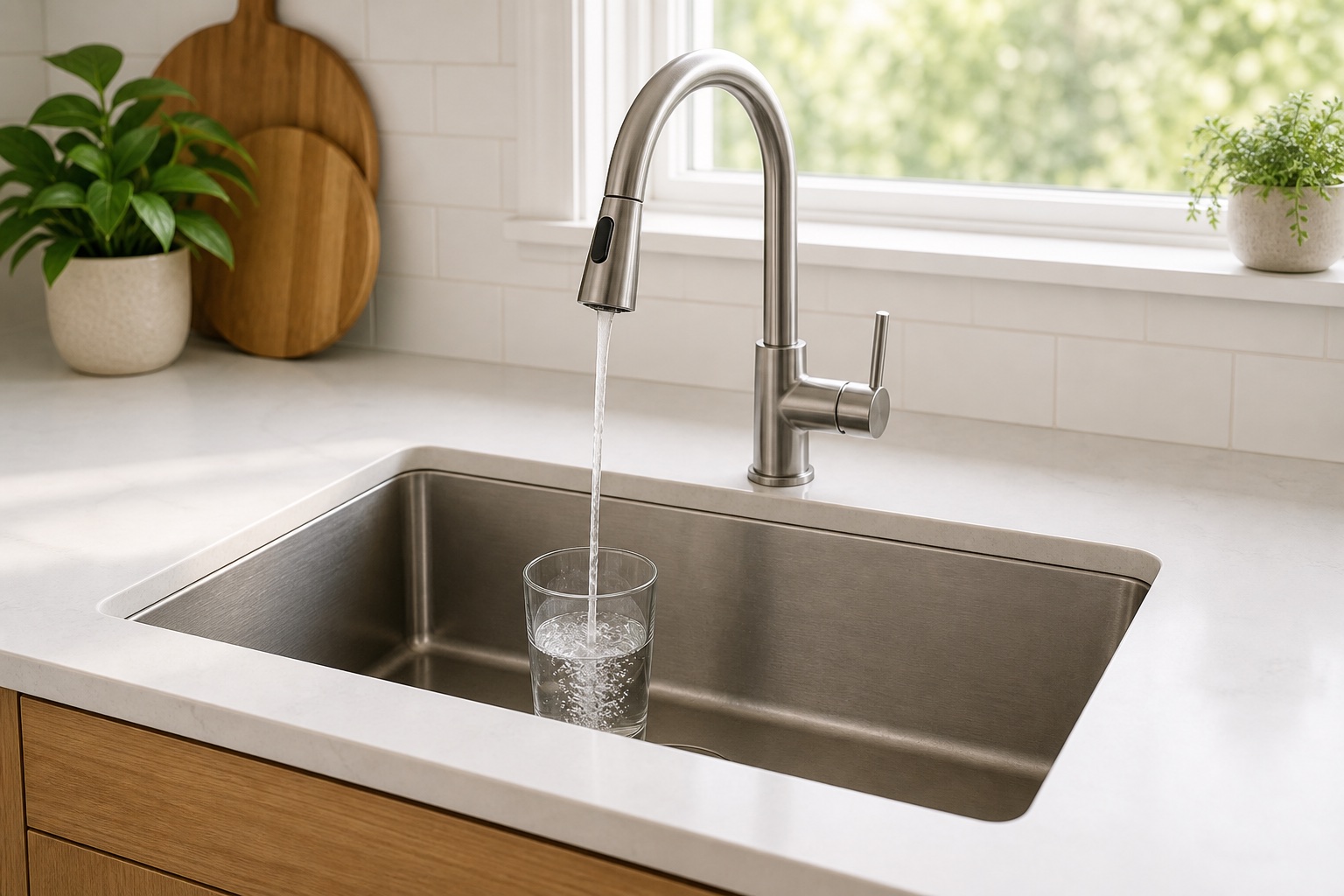

Are you looking at rows of pitchers, under-sink systems, and whole-house tanks and wondering which one your home actually needs? Water filtration gets confusing when every package promises cleaner water but uses a different technology, certification, and replacement schedule.
Fortunately, you don’t need to start with a brand. Start with your water. A useful filter is one that addresses a measured problem, fits the place where you need treatment, and has a verified reduction claim for the contaminant that concerns you.
This guide explains how water filtration works, which filter types solve common water problems, how to read NSF certification claims, and what to check before you buy. If you want a quick recommendation after you identify your water concern, use our Find Your Filter tool to narrow the choices by water source, treatment type, and budget.
Table of Contents
Table of Contents
- How Does Water Filtration Work?
- Why Should You Test Your Water Before Choosing a Filter?
- Which Home Water Filtration System Fits Your Problem?
- What Do Water Filter Certifications Really Mean?
- How to Choose a Water Filtration System Step by Step
- Water Filtration FAQ
- Choose the Filter That Matches Your Water
How Does Water Filtration Work?
Water filtration moves water through a material or process that reduces particular particles, chemicals, tastes, odors, or microorganisms. The word filter sounds like one simple device, but different systems work in very different ways.
The CDC explains that home water treatment can include filtration, distillation, ultraviolet treatment, and water softening. It also warns that different systems remove different germs or chemicals. In other words, a filter designed to improve chlorine taste may do little for lead, and a sediment cartridge does not automatically disinfect water.
What are the main types of water filters you will encounter?
Mechanical Filtration
Mechanical filters catch particles in pores. A coarse sediment filter may trap sand, rust flakes, and visible debris. Finer membranes can reduce much smaller particles, but pore size alone does not tell you how well a product handles dissolved chemicals.
Mechanical filtration often serves as the first stage in a larger system. Removing grit before water reaches carbon, a membrane, or an ultraviolet unit can protect the more expensive treatment stage and help it work consistently.
Activated Carbon
Activated carbon has a large, porous surface that attracts certain compounds as water passes through it. It is commonly used to reduce chlorine taste and odor, and some products carry certified claims for specific organic chemicals or other contaminants.
Does every carbon filter reduce the same things? No. Carbon type, contact time, filter size, flow rate, and the product’s verified claims all matter. Check the certification listing and performance data sheet rather than assuming that the word carbon guarantees a particular result.
Ion Exchange
Ion exchange media swaps selected dissolved ions in the water for different ions held by the media. A traditional water softener uses this process to reduce calcium and magnesium, the minerals that cause hardness scale.
Some specialized cartridges use ion exchange for a narrower contaminant claim. Still, a softener is not a general-purpose drinking water filter. The CDC notes that water softeners primarily remove hardness minerals and do not remove parasites, bacteria, or viruses.
Reverse Osmosis
Reverse osmosis (RO) pushes water through a very fine membrane. Most residential RO systems also include sediment and carbon stages before or after the membrane. This combination can reduce a broad range of dissolved substances, but the exact list depends on the model’s certification and design.
RO produces a concentrated waste stream and usually treats water more slowly than a basic carbon filter. That makes it especially useful at a drinking-water faucet when the concern involves a dissolved contaminant with a verified RO reduction claim.
Ultraviolet Treatment
Ultraviolet (UV) treatment exposes water to light that can inactivate microorganisms. It doesn’t remove sediment, hardness minerals, or dissolved chemicals. UV units also need clear water, reliable power, and scheduled lamp maintenance.
For well water, UV may be one stage in a treatment train after sediment removal. If bacteria are a concern, read our guide to choosing a water filter for well water and work from a certified laboratory result.
Why Should You Test Your Water Before Choosing a Filter?
Would you buy a key before looking at the lock? Shopping for a water filter without understanding your water creates the same problem.
The CDC recommends testing tap water for harmful chemicals or germs and then choosing a system labeled to reduce the specific concern. It also notes that you may not need a home treatment system when testing shows no harmful chemicals or germs.
If You Use City Water
Start with your utility’s annual Consumer Confidence Report (CCR). According to the EPA’s Consumer Confidence Report guidance, the report describes your drinking water source, regulated contaminants found in the water, and whether the system met federal drinking water standards.
A CCR is a strong starting point, but it reports on the public system. It may not reveal a problem introduced by your building’s plumbing. If you live in an older home, have a known lead service line, notice an unexplained change, or need information about an unregulated contaminant, a certified laboratory test can give you a clearer answer at your tap.
If You Use a Private Well
Private wells need a more direct testing plan because the owner is responsible for monitoring the water. Start with our step-by-step guide on how to get well water tested, then ask your local health department about contaminants common in your area.
Has the water changed color, taste, or smell? Did flooding, construction, a well repair, or nearby land use change recently? Those are reasons to test again rather than guessing from the symptom alone.
Separate Aesthetic Problems From Health Concerns
Some filters mainly improve taste, smell, or appearance. Other systems carry claims for contaminants that can affect health. Both goals are reasonable, but they require different evidence.
Write down your priorities before shopping:
- What did the report or laboratory test detect?
- Is the concern at one drinking faucet or throughout the home?
- Are you trying to reduce a specific contaminant, improve taste, protect plumbing, or disinfect well water?
- What flow rate does your household need?
- Who will replace cartridges, clean housings, or service the system?
This short list turns water filtration from a product hunt into a practical treatment decision.
Which Home Water Filtration System Fits Your Problem?
A point-of-use water filter treats water at one location. Examples include pitchers, faucet-mounted filters, countertop units, and under-sink systems. A point-of-entry system treats water near the main line as it enters the home, so it is usually called a whole-house system.
Which one makes sense for you? Treat only the water that needs treatment unless there is a clear reason to do more.
Choose Point-of-Use Filtration When
- Your concern is limited to drinking and cooking water.
- You rent and need a removable setup.
- A certified pitcher, faucet filter, or under-sink system addresses the target contaminant.
- You want to limit purchase cost, water use, or maintenance.
- You need reverse osmosis for one drinking-water tap rather than every fixture.
Choose Whole-House Filtration When
- Sediment, iron, sulfur odor, or chlorine affects showers, laundry, appliances, and multiple faucets.
- You need to protect downstream treatment equipment from sediment.
- Your water test supports treating the full household supply.
- The system can provide enough flow without causing a noticeable pressure drop.
- You have room for installation, bypass valves, drainage where required, and future service.
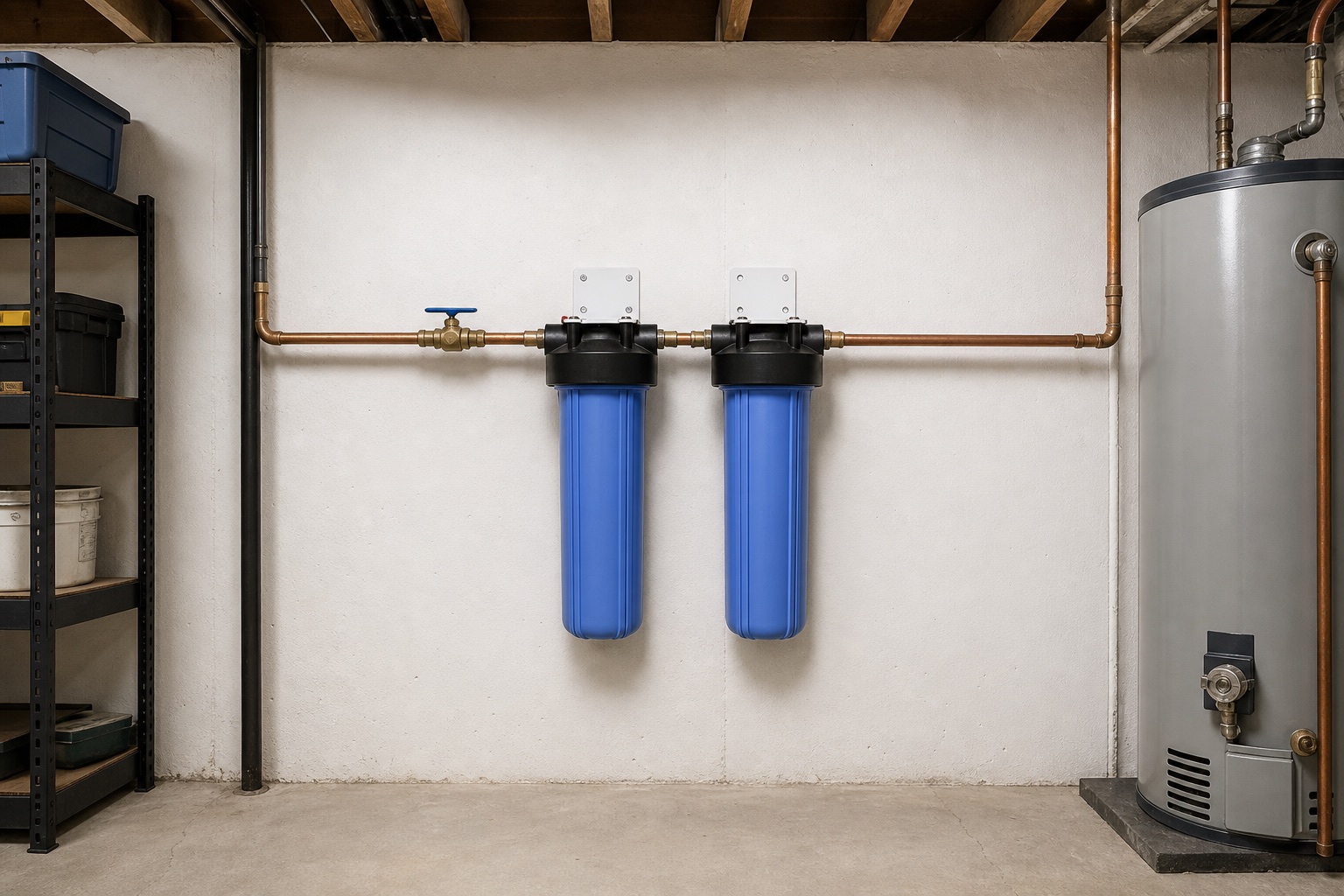
If you are comparing full-home equipment, our whole-house water filter guide covers sizing, water source, and long-term ownership considerations in more detail.
Match the Concern to the Treatment Method
Use this table as a starting point, not as a substitute for a product’s certified claims or professional advice.
| Water Concern | Common Starting Point | What to Verify |
|---|---|---|
| Sediment, sand, or rust particles | Sediment cartridge or spin-down filter | Micron rating, flow rate, pressure loss, replacement schedule |
| Chlorine taste or odor | Activated carbon | NSF/ANSI 42 claim for the specific model |
| Lead | Certified point-of-use filter or RO system | Certification and a specific lead reduction claim |
| PFAS | Certified carbon or RO system | Current certification listing for the PFAS reduction claim |
| Hardness scale | Water softener | Capacity, hardness setting, salt and water use |
| Iron or manganese in well water | Oxidation and filtration selected from test results | Concentration, pH range, flow rate, backwash requirements |
| Bacteria in well water | Corrective action plus UV or another disinfection method | Microbiological test, pretreatment, UV dose, post-treatment test |
| Nitrate, arsenic, or other dissolved contaminants | Contaminant-specific RO or media | Exact reduction claim, operating range, follow-up water test |
No single home water filtration system removes everything. In some homes, the right answer is a treatment train. A sediment stage might protect a carbon filter, while a separate under-sink RO unit handles a drinking-water concern.
What Do Water Filter Certifications Really Mean?
Certification is one of the best tools for separating a verified claim from broad marketing language. It is also easy to misunderstand.
The NSF guide to water treatment standards explains that the numbers are standard identifiers, not rankings. A higher number does not automatically mean a better filter.
Common standards include:
- NSF/ANSI 42: Aesthetic effects such as chlorine taste and odor.
- NSF/ANSI 53: Contaminants with a health effect, when the product is certified for the named claim.
- NSF/ANSI 58: Reverse osmosis systems and their verified claims.
- NSF/ANSI 401: Certain emerging contaminants, when listed for the product.
Here is the part that matters most: certification to a standard does not mean the product reduces every contaminant covered by that standard. NSF advises buyers to verify the standard and the exact contaminant claim.
For example, two filters may both carry NSF/ANSI 53 certification while only one is listed for lead reduction. Look up the exact model in the certifier’s database, confirm the claim, and make sure the replacement cartridge is also the certified model.
Want a deeper explanation? Our guide to NSF-certified water filters walks through the labels and shopping checks.
How to Choose a Water Filtration System Step by Step
Ready to narrow the options? Choosing a water filter for home use gets easier when you follow this order. It helps the equipment fit the water instead of forcing the water problem to fit a product.
- Identify your water source. City water and private well water begin with different reporting and testing responsibilities.
- Define the problem with evidence. Use a CCR, certified laboratory test, or both. Do not rely only on taste, smell, a strip test, or a sales demonstration.
- Choose the treatment location. Decide whether one drinking faucet or the whole household supply needs treatment.
- Match the technology to the concern. Mechanical filtration, carbon, ion exchange, RO, and UV solve different problems.
- Verify the exact certification claim. Search by model number and contaminant, not just the certification logo on the box.
- Check capacity and flow. A whole-house system must support simultaneous fixtures. A small point-of-use system should make enough treated water for your routine.
- Calculate ongoing maintenance. Include cartridges, membranes, lamps, salt, professional service, water used for flushing or backwashing, and the time needed to maintain the unit.
- Plan installation and bypass access. Make sure housings can open, cartridges can drop out, valves remain reachable, and leaks will not damage the home.
- Retest when treating a measured contaminant. A follow-up test confirms that the installed system works under your water conditions.
Avoid These Common Buying Mistakes
The biggest mistake is buying a system that promises to remove a long list of contaminants without checking which claims are certified for that model. Another common mistake is installing a fine filter that restricts flow because the unit is undersized or clogged by sediment it was never meant to handle.
Do you see a broad reduction percentage on the package? Find the complete performance data sheet. Check the starting concentration, rated capacity, flow, testing protocol, and certifier listing. A percentage without conditions tells you very little about how the filter will perform in your home.
Maintenance matters too. A neglected cartridge can reduce flow and stop meeting its expected performance. Put replacement dates on your calendar, keep the correct cartridge number with your records, and follow the manufacturer’s sanitation instructions.
Water Filtration FAQ
Is Water Filtration Worth It?
Water filtration can be worth it when a report, test, or clear aesthetic problem identifies something a suitable system can address. It may also be a convenient way to improve chlorine taste. If your water already meets your needs and testing shows no concern, you may not need extra treatment.
What Water Filter Removes the Most Contaminants?
There is no universal winner. Reverse osmosis can reduce many dissolved contaminants, but it does not make every model appropriate for every water source. A certified carbon filter may be the simpler choice for chlorine taste, while well-water bacteria may call for disinfection and pretreatment. Match the verified claim to the test result.
Does a Water Filter Remove Hardness?
Most ordinary sediment and carbon filters do not remove the calcium and magnesium that cause hard water. A water softener uses ion exchange for that job. Some RO systems reduce hardness at one faucet, but whole-home hardness control usually requires correctly sized softening equipment.
Can a Water Filter Make Well Water Safe?
A properly designed treatment system can address specific well-water problems, but no single filter guarantees safe water. Test first, choose treatment for the measured germs or chemicals, and test after installation. If a test detects a serious contamination problem, follow your local health department’s guidance.
Should I Filter All the Water in My House?
Not always. Whole-house water filtration makes sense when the problem affects plumbing, bathing, laundry, appliances, or every tap. When the concern is limited to drinking and cooking, a point-of-use filter is often simpler and less expensive to maintain.
Can I Use a Water Filter During a Boil Water Advisory?
Do not assume a household filter makes water safe during an advisory. Follow the instructions from your utility or health department. Unless officials state otherwise, boil or use water exactly as directed, even if you have a filter.
Choose the Filter That Matches Your Water
Good water filtration starts with one simple rule: test before you treat. Identify your water source, read the available report, test when needed, and choose a system with a verified claim for the problem you are trying to solve.
For drinking-water concerns, a point-of-use filter may be all you need. For sediment, iron, sulfur odor, or other problems throughout the home, whole-house treatment may be the better fit. Either way, capacity, flow, maintenance, and certification matter as much as the technology name.
You don’t need the filter with the longest claim list. You need the filter that matches your water, your household, and your ability to maintain it. Start with Find Your Filter, keep your test results nearby, and make the next step based on evidence rather than packaging.