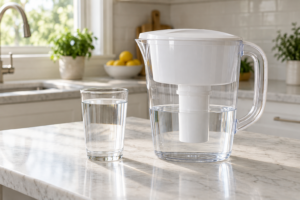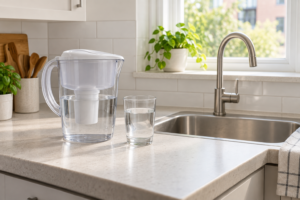



Choosing an under sink vs countertop water filter is not only a question of where the unit sits. The format affects how you fill it, how much cabinet or counter space you give up, whether you need a water-line connection, and how easily you can keep up with replacement parts.
Start with the water concern, not the cabinet. The CDC advises matching a home filter to the germs or chemicals you are concerned about. Once you know what claim you need, use this guide to choose a format you can install and maintain.
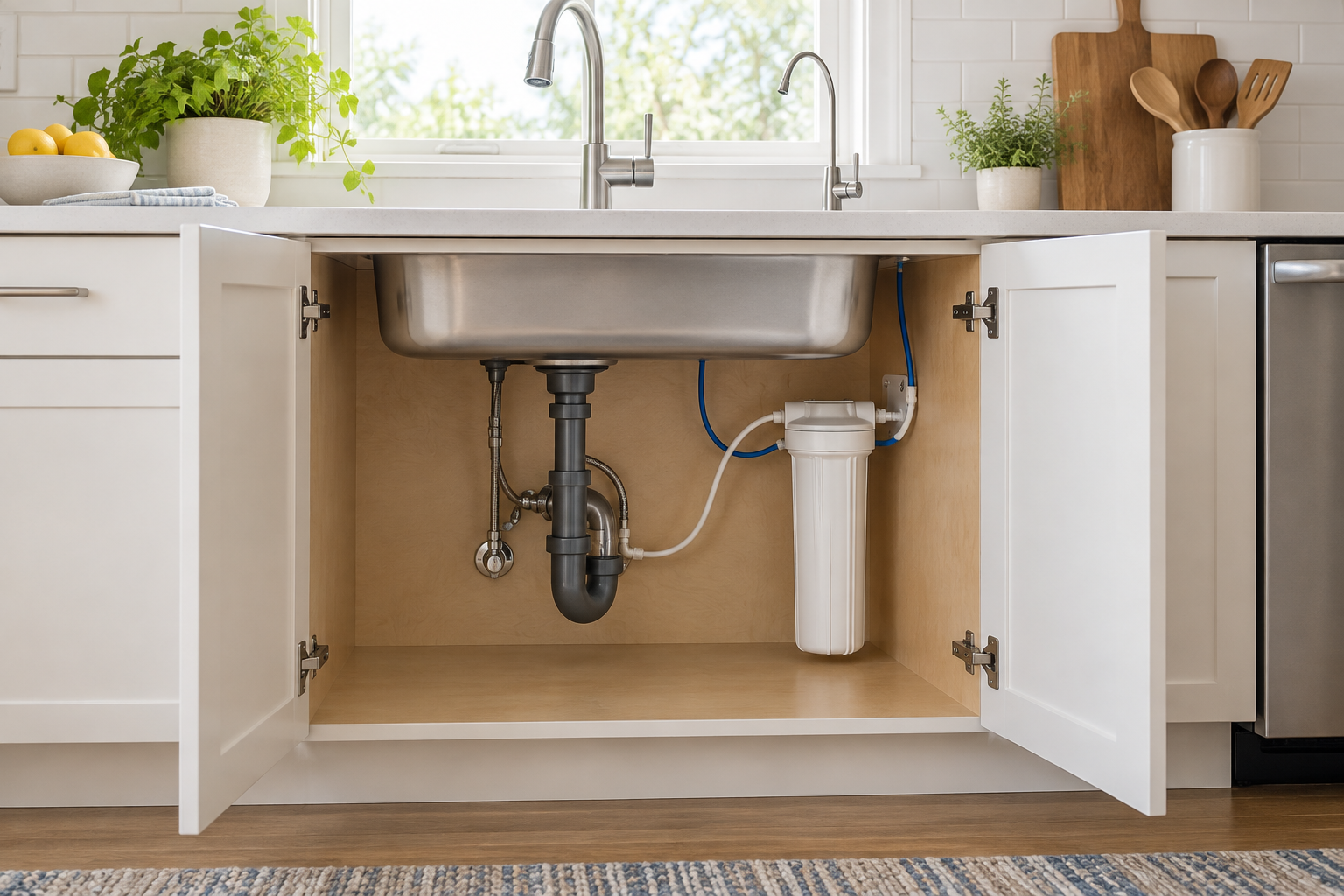
For drinking and cooking water at one location, both formats can be point-of-use options. An under-sink system usually connects below the kitchen sink and sends treated water to a dedicated faucet. A countertop system can sit by the sink, connect to a water line, or use a manual-fill reservoir, depending on the model. The EPA’s WaterSense guide describes both formats and notes that the exact connection design matters.
Table of Contents
Table of Contents
- The Short Answer
- What Format Does and Does Not Tell You
- When a Countertop Filter May Fit
- When an Under-Sink Filter May Fit
- Compare the Practical Tradeoffs
- Verify Claims and Plan Maintenance
- Questions Readers Ask
Under Sink vs Countertop Water Filter: The Short Answer
A countertop filter can be a practical fit when you have open counter space, want to avoid work inside a cabinet, or prefer a manual-fill setup. An under-sink filter can be a practical fit when you want to keep the counter clear, have suitable cabinet space, and can accommodate the connection requirements of the exact model.
Neither format proves what a filter removes. Countertop and under-sink products can use different treatment stages, and two units in the same format can make very different reduction claims. Check the exact model, the named substance or purpose, its capacity, operating limits, and replacement cartridge before you choose a location.
| Question | Countertop water filter | Under-sink water filter |
|---|---|---|
| Where does it live? | On the counter or another stable nearby surface. | In the cabinet below the sink. |
| How does it receive water? | It may be manually filled or connected to a water source, depending on the model. | It is commonly connected to the cold-water supply and a dedicated faucet, depending on the model. |
| What space should you measure? | Footprint, height under cabinets, and room to refill or open a lid. | Cabinet width, height, depth, plumbing clearance, and room to replace cartridges. |
| What can change your routine? | Manual filling, reservoir cleaning, or a countertop connection. | Access around pipes, shutoff valves, and filter housings. |
| What should you verify? | The exact treatment claim, reservoir or flow design, and replacement plan. | The exact treatment claim, connection requirements, and service access. |
What Format Does and Does Not Tell You
Format tells you how a system is positioned and used. It does not tell you whether it is a carbon filter, a reverse osmosis system, a sediment filter, or a combination of stages. It also does not promise a particular contaminant reduction.
That distinction prevents a common buying error. A shopper may see a compact countertop system and assume it is only for taste, or see an under-sink system and assume it handles every water concern. Neither assumption is safe. A filter should have a claim that matches a known need, and the claim should be tied to the complete system or cartridge model.
If you are still choosing between treatment methods, read our reverse osmosis vs carbon filter comparison. It explains why a technology name is only a starting point. If a certification mark is part of your decision, use our NSF certified water filters guide to check the model, named reduction, capacity, and replacement part.
The format also does not decide whether you need whole-home treatment. Point-of-use systems are intended for water at a single tap or fixture. If the issue affects drinking and cooking water at the kitchen sink, a point-of-use format may be enough. If a measured condition affects many household uses, begin with our water filtration guide instead of forcing a kitchen filter into a whole-home role.
When a Countertop Filter May Fit
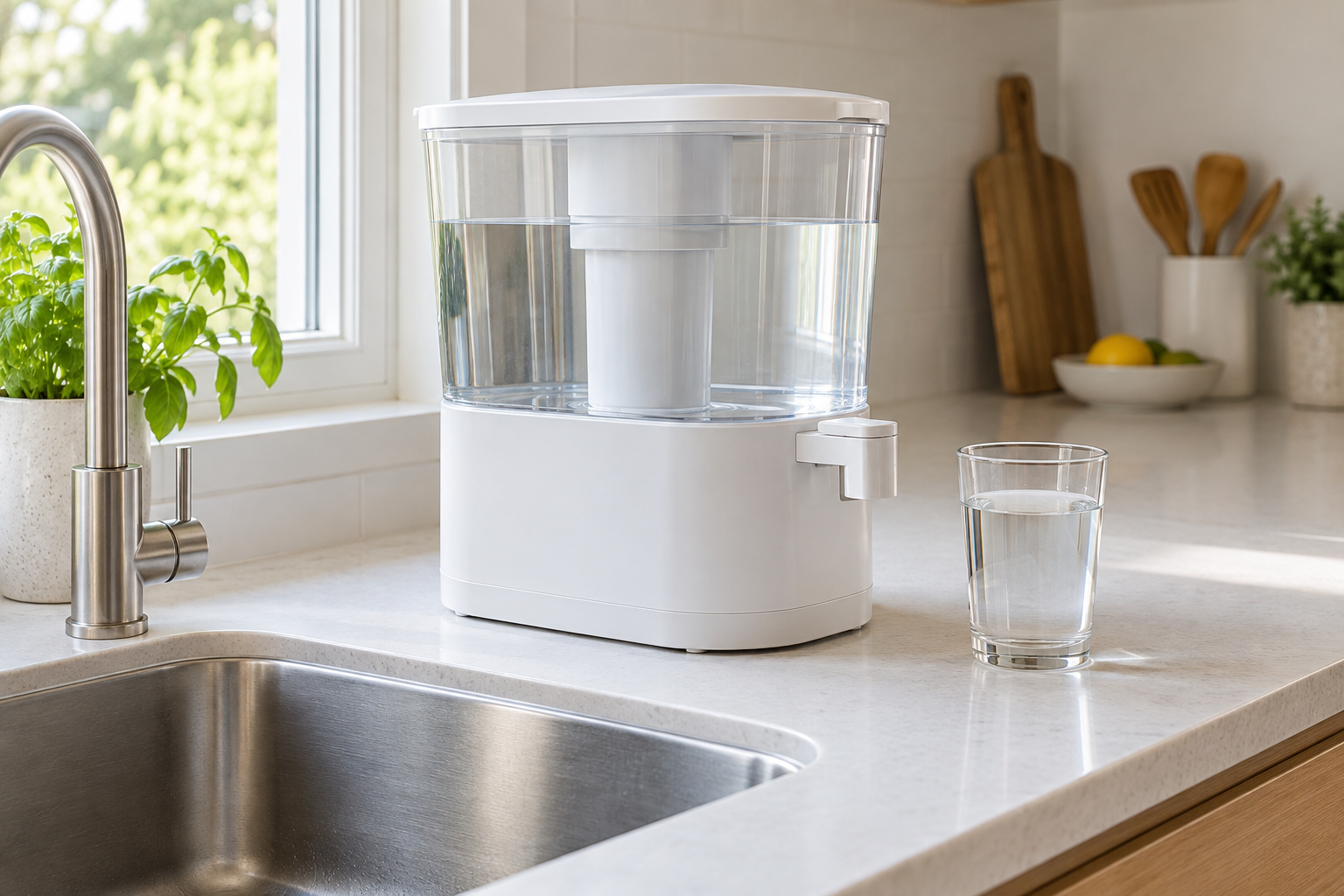
Countertop systems can make the most sense when you need a visible, accessible setup and have a safe place to keep it. The EPA describes countertop or stand-alone systems that either draw from a water supply line or require manual filling within a self-contained unit. Those are different daily routines, so read the manual before you buy.
Choose the manual-fill question first. Are you willing to fill a reservoir, wait for a batch, and clean the reservoir as instructed? A manual-fill system may avoid a plumbing connection, but it asks you to make filling part of your routine. If the household drinks a larger volume than the reservoir holds, consider how often you will refill it instead of relying on a listed maximum capacity alone.
Then measure the actual counter. Check the system footprint, its height with the lid open, clearance below upper cabinets, and room to lift or carry a full reservoir. Keep it away from a place where it can be knocked over, block a main work area, or prevent normal cleaning around the sink. Do not assume a unit that looks compact in a product photo will fit below your cabinets.
For a countertop system that connects to a faucet or water line, check the exact adapter, faucet compatibility, pressure limits, and connection steps in that model’s manual. A general countertop label does not mean every faucet type works. If a connection requires changes to plumbing or conflicts with a lease, get permission or choose a format that fits the situation. This article compares physical setup, not local lease rules.
When an Under-Sink Filter May Fit
An under-sink system may suit you when counter space matters and the cabinet has room for the system, plumbing, and future service. The EPA describes under-sink systems as typically installed below the kitchen sink, with water treated from the supply line before it reaches a dedicated faucet. It also notes that these systems can treat larger quantities of water, but the exact capacity and flow still belong to the specific product documentation.
Measure before you compare product dimensions. Start with the cabinet’s usable width, depth, and height. Then note the cold-water line, drain, garbage disposal, pull-out shelves, electrical outlets, and anything else already using the space. You need room not only to place a filter housing, tank, or tubing, but also to reach it later.
Manufacturer instructions show why this step is specific to the model. For example, the Aquasana under-sink installation manual asks installers to select an under-sink location with access to the cold-water supply and filter replacement. Treat that as an example of what to confirm in the manual for your selected model, not as instructions for every system.
Ask who will install it and who will replace the cartridge. Some models use a dedicated faucet, while others use the main faucet or a different connection arrangement. Some may need access to a drain or power. Do not drill, alter a water line, or modify a cabinet based on a generic guide. Use the exact manufacturer instructions and a qualified installer when the work is outside your ability or permission.
Under Sink vs Countertop Water Filter: Practical Tradeoffs
Use these questions to compare exact models. They are more useful than a broad claim that one format is always better.
- What water concern are you addressing? Use a water report or appropriate test result. Taste, smell, and appearance alone cannot identify every concern. If you do not have a known concern and your water meets your needs, additional treatment may not be necessary.
- Where will you use the treated water? A kitchen point of use can suit drinking and cooking. It is not a substitute for a plan to treat every tap when a documented issue requires broader action.
- Can you live with the daily water routine? Compare manual filling, batch waiting, direct dispensing, and the amount of water your household uses at that point.
- Do you have the right physical space? Measure counter footprint and cabinet clearance. Include doors, lids, pipes, waste bins, and room for a hand to reach replacement parts.
- What connection is required? Check the manual for the exact faucet, adapter, cold-water, drain, and power requirements. Do not treat a category name as a compatibility promise.
- Can you maintain it on schedule? Save the cartridge part number, the stated replacement interval, and the instructions for cleaning, flushing, or service. The CDC says filters need maintenance according to manufacturer recommendations to keep working as intended.
- Does the exact model make the claim you need? Check the product label, performance data sheet, or accredited certification listing. A format, brand family, or retailer headline is not enough.
This comparison also helps you avoid solving the wrong problem. If scale on fixtures or appliance performance is your main concern, a drinking-water filter is not automatically a water softener. See water softener vs water filter to separate hardness management from a filter claim for drinking water.
Under Sink vs Countertop Water Filter: Verify Claims and Plan Maintenance
After you narrow the format, verify the treatment claim before you place an order. The CDC recommends choosing a filter for the germs or chemicals that concern you, then checking the label for the specific substances it removes. If you are comparing certified products, save a screenshot or printout of the exact model and cartridge listing with the date you checked it.
Plan for the less visible parts of ownership as well. A countertop system needs a cleaning and refill routine that fits the household. An under-sink system needs accessible service space and a way to shut off or service the specific installation safely. Every format needs the correct replacement part. A compatible-looking cartridge may not have the same construction, capacity, or documented claim.
Want help narrowing the path after you identify the water concern? Find Your Filter can help you organize the next question. Then return to the exact product manual and certification or performance documentation before you buy.
Questions Readers Ask
Is an under-sink water filter better than a countertop filter?
Not by default. An under-sink filter may keep the counter clear and can suit a household that has cabinet space and the right connections. A countertop filter may be easier to access or may avoid a below-sink installation. Choose based on your needed treatment claim, available space, connection requirements, and maintenance routine.
Do countertop filters need plumbing?
Some do not. The EPA describes stand-alone countertop systems that may be manually filled, while other countertop systems can draw from a water supply line. Read the exact manual because the connection method varies by model.
Does an under-sink filter work with every faucet?
No. Some systems use a dedicated faucet and others use a different connection approach. Check the product’s stated faucet, adapter, and installation requirements before purchase. Do not assume that a system will fit a pull-down, specialty, or existing faucet without model-specific confirmation.
Can either format remove a specific contaminant?
Either format may have a documented claim for a named contaminant, but the format alone does not prove it. Check the exact system or cartridge label, performance data, and certification listing for the named reduction you need.
Which format is easier to maintain?
The easier format is the one you can reach and service on schedule. Countertop units may make reservoir access simple but can add filling and cleaning tasks. Under-sink units can keep the counter clear but need cabinet access. Follow the exact manufacturer’s replacement and care instructions.
Choose the Format You Can Use Well
An under-sink versus countertop water filter decision becomes simpler when you separate treatment from placement. First identify the concern and verify an exact reduction claim. Then measure the space, confirm the connection, and choose the routine that you can maintain. A well-matched point-of-use system is more useful than a feature list that does not fit your kitchen or your day.