

Is hard water safe to drink? In many cases, hardness by itself is not the reason a water supply is unsafe. Hardness is mainly a measure of dissolved calcium and magnesium. It can leave scale on fixtures, make soap harder to rinse, and affect how water tastes. But it does not tell you whether water has bacteria, lead, nitrate, or another contaminant that needs a different test.
That distinction is important. A high hardness number can be useful for protecting appliances or choosing a treatment setting, but it is not a complete drinking-water safety result. The right next step depends on where your water comes from: check your utility’s water-quality report for public water, or use a broader, locally appropriate test for a private well.
| Your question | Best first check | What hardness can tell you |
|---|---|---|
| Is my public tap water meeting reported standards? | Read your utility’s Consumer Confidence Report. | Whether calcium and magnesium may be causing scale. |
| Is my private-well water safe to drink? | Use a state-certified lab or local health guidance for the concerns in your area. | One mineral characteristic, not a complete safety screen. |
| Do I need to protect plumbing or set a softener? | Measure hardness in the units your equipment uses. | Whether hardness treatment may be useful. |

Table of Contents
Table of Contents
- What Hard Water Means
- What a Hardness Result Cannot Tell You
- How to Check Public Water
- How to Check a Private Well
- When to Test More Than Hardness
- Do You Need a Filter or a Softener?
- Frequently Asked Questions
What Hard Water Means
Hard water contains more dissolved calcium and magnesium than soft water. The U.S. Geological Survey explains that these minerals come from water moving through rock and soil. They can create scale in pipes and water heaters, cloudy glassware, and soap residue.
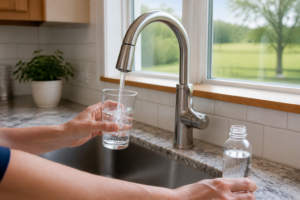
What does that mean for your glass of water? It means the water may have a higher mineral content. It does not, on its own, mean that the water contains a harmful contaminant. EPA’s home water-treatment guide says that some water hardness is generally not a health hazard, while excess hardness can be a reason to manage scale and soap performance.
If you want to know your number, start with our guide to testing water hardness at home. A test can report hardness in parts per million, milligrams per liter, or grains per gallon. Our water hardness scale guide explains how those units relate to common hardness ranges.
Why Hardness Causes Household Problems
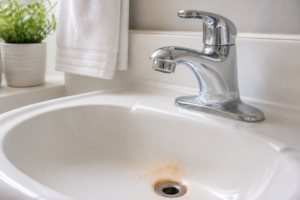
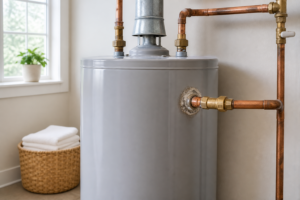
When hard water dries or is heated, dissolved minerals can remain behind as deposits. That is why the first clues often appear on a faucet, showerhead, kettle, dishwasher, or water heater. The same minerals can react with soap, so you may see film on shower surfaces or need to adjust how you clean.
Those effects can be expensive or frustrating, but they are different from a safety finding. Scale is a maintenance clue. It can tell you that a hardness measurement may help you manage equipment. It cannot tell you what else may be in the water.
Does a Higher Number Mean a Bigger Health Risk?
Not necessarily. A higher hardness result means more of the calcium and magnesium that make water hard. It does not rank the health risk of the water or replace the safety information for your water source.
For that reason, avoid using hardness as the only reason to change drinking-water habits. First identify the question you need answered. Then use a public-water report, a local authority, or a suitable laboratory test to answer that question directly.
What a Hardness Result Cannot Tell You
A hardness test answers a narrow question: how much of the mineral content that causes hardness is present? It does not test for every water-quality concern.
For example, a hardness strip cannot determine whether water has bacteria, lead, nitrate, arsenic, or a local chemical concern. It also cannot tell you whether the water in a particular building has changed after it left a public-water system. A low hardness result is not a safety clearance, and a high result is not a finding that water is unsafe.
Why does this matter? It keeps you from buying the wrong treatment. If white buildup, dull dishes, or poor soap lather are your main concerns, hardness may be the right measurement. Our signs of hard water guide can help you decide whether those clues fit. If you are worried about a contaminant, an odor, a sudden color change, an illness concern, or a private well, choose a test that addresses that specific question.
How to Check Public Water
If your home uses a community water system, begin with the annual Consumer Confidence Report, also called a water-quality report. EPA explains that the report helps you learn about the quality of drinking water in your area. It can show the water source, monitored results, and whether the system reports compliance with applicable standards.
Look for your provider’s most recent report on its website, bill insert, or customer-service page. If you cannot find it, EPA provides a Consumer Confidence Report resource that explains the report and how to locate local information.
Your utility report is a valuable starting point, but it describes the system’s water. If you have a concern specific to your home, such as a lead-service-line issue, a plumbing change, or a persistent taste or odor, ask your utility or local health department what test is appropriate. EPA’s home drinking-water testing guidance is a useful starting point for selecting the question before you select the test.
Want to compare your hardness result with local information? Our guide on finding your local water hardness level explains how to use a utility report or local data as context, then confirm the number at your own tap when it will guide a treatment decision.
How to Check a Private Well
Private wells need a different approach. The water is not monitored by a public utility in the same way, so the well owner is responsible for testing. CDC advises private-well owners to test at least once each year for core concerns and to ask local officials about contaminants that are common in their area.
Hardness may be one useful part of a well-water panel, especially if you have scale or a softener. It should not be the only test you use to decide whether the water is safe to drink. Ask your local health department, environmental agency, or a state-certified laboratory what to test for based on your location, well construction, flooding, nearby land use, and household concerns.
Use a new test after a flood, a plumbing or well repair, a change in taste, odor, or appearance, or any other event your local authority says should trigger testing. If results show a potential contaminant problem, use the laboratory or local agency to understand the result before choosing treatment.
Keep a copy of results, including the sample date and the testing method. This makes it easier to compare a future result with the same source and to explain the issue to a laboratory, utility, or treatment professional. A record also helps you avoid treating a one-time result as a permanent condition.
When to Test More Than Hardness
You do not need to treat every water concern as a crisis. You do need to match the test to the question. Consider a broader conversation with your utility, health department, or laboratory when you notice any of these situations:
- You use a private well and have not followed a regular testing plan.
- Your water changes suddenly in color, odor, taste, or sediment.
- A flood, well repair, plumbing change, or local advisory affects your water source.
- You are concerned about a specific contaminant, such as lead or nitrate.
- A hardness test does not explain the problem you see at home.
EPA lists total dissolved solids among its secondary drinking-water guidelines. These are non-mandatory guidelines for aesthetic effects such as deposits, staining, or taste. That is another reason not to treat a scale problem as a complete safety diagnosis. Water can have a scale issue and still need a different test for a different concern.
If you see a utility notice or a local health advisory, follow that instruction first. Do not wait for a hardness result to answer an urgent, source-specific safety question. A hardness test can still be useful later for equipment decisions, but it should not delay the right safety check.
Do You Need a Filter or a Softener?
Hardness treatment and contaminant treatment are not the same job. A water softener is commonly used to reduce the calcium and magnesium that cause hardness. It can help manage scale and improve soap performance. It does not automatically address bacteria, lead, nitrate, or every other contaminant.
A filter should also match a documented concern. Before you buy a system, identify what you want to reduce, where in the home you need treatment, and what proof supports that choice. Then compare a product’s stated performance and certification for that specific claim. Do not buy a treatment system only because a hardness strip changed color.
If you already use a softener, confirm the incoming-water hardness and your equipment instructions before changing its settings. A properly measured result is more useful than a guess based on scale alone.
A Treatment Choice Starts With the Water Question
There is no single device that answers every water-quality concern. A whole-home softener may make sense for recurring scale across the house. A point-of-use filter may make sense for a documented concern at the kitchen tap. A laboratory result or a utility report tells you which of those questions is actually present.
This approach can also prevent unnecessary work. If the report and your home checks point only to hardness, focus on scale management. If a report, test, or advisory identifies another concern, follow the guidance for that concern instead of assuming a softener will solve it.
A Simple Next-Step Checklist
- Identify your source: community water or private well.
- Separate the question about hardness from the question about drinking-water safety.
- Read the local Consumer Confidence Report if you use public water.
- Ask a local authority or certified laboratory for the right private-well panel if you use a well.
- Measure hardness when you need to manage scale, choose treatment, or set a softener.
- Match any filter or softener to a documented need.
Frequently Asked Questions
Can you drink hard water every day?
Hardness alone is mainly about calcium and magnesium and is generally not the same as a safety finding. Still, the answer for your home depends on the full water source and any other concerns. Check the Consumer Confidence Report for public water, or use locally appropriate testing for a private well.
Is hard tap water bad for you?
Hard water can be inconvenient because it can leave deposits and affect soap performance. A hardness number alone does not show whether tap water has other contaminants. Use a source-specific report or a targeted test for a health or contaminant question.
Does boiling hard water make it safe?
Boiling is not a general answer to a hardness or contaminant question. It does not provide a complete water-quality test and may concentrate some dissolved material as water evaporates. Check the actual concern and use guidance that fits it.
Should I filter hard water for drinking?
Choose a filter only when you have a documented concern that the filter is designed to address. If your only issue is hardness, first decide whether scale management or a softener setting is the actual goal. If you have a concern beyond hardness, use a suitable test before choosing treatment.
Can a hardness strip tell me whether my water is safe?
No. A strip can help estimate hardness, but it does not test for the full set of drinking-water concerns. Use a different test for bacteria, lead, nitrate, or another specific concern.
The Bottom Line
Hard water is usually a mineral and maintenance question, not a complete drinking-water safety answer. Use your hardness result to understand scale and treatment needs. Then use your public-water report or a properly selected private-well test to answer the safety question that matters for your home.