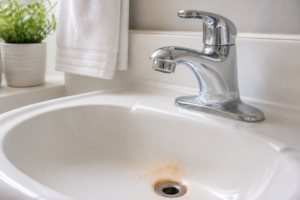


Are you seeing white buildup around faucets, weaker flow from a showerhead, or a water-using appliance that no longer performs as you expect? Hard water plumbing problems can develop over time because dissolved calcium and magnesium can form mineral scale. It is not the only explanation, and it does not prove that a pipe, valve, or appliance is damaged.
The U.S. Environmental Protection Agency explains that hard water can form scale inside pipes, water heaters, and other equipment. That scale can reduce water flow and make heat transfer less efficient. Fortunately, you do not need to guess at the cause or buy treatment based on one white mark. Look for a pattern, check the equipment instructions, and measure your water hardness before you make a treatment decision.
This guide shows what hard water can affect, what it cannot diagnose, and when a qualified plumber or appliance technician is the safer next call.
| What you notice | Hard water may be involved when | Check first |
|---|---|---|
| White crust on faucets or showerheads | It returns after cleaning and similar deposits show up elsewhere. | Aerator condition, fixture care instructions, and a hardness result. |
| Lower flow at one fixture | The aerator or spray holes have visible scale. | Remove and clean only as the fixture manual permits. |
| Lower flow throughout the home | Several fixtures and hot-water appliances show scale clues. | Shutoff positions, leaks, pressure regulator, and a plumber for sudden changes. |
| Water heater takes longer or makes new noises | You also have measured hard water and recurring mineral deposits. | The exact water-heater manual and a qualified technician. |
| Dishwasher, washer, kettle, or coffee maker has residue | The appliance maker identifies scale as a possible cause. | Model-specific cleaning and maintenance instructions. |
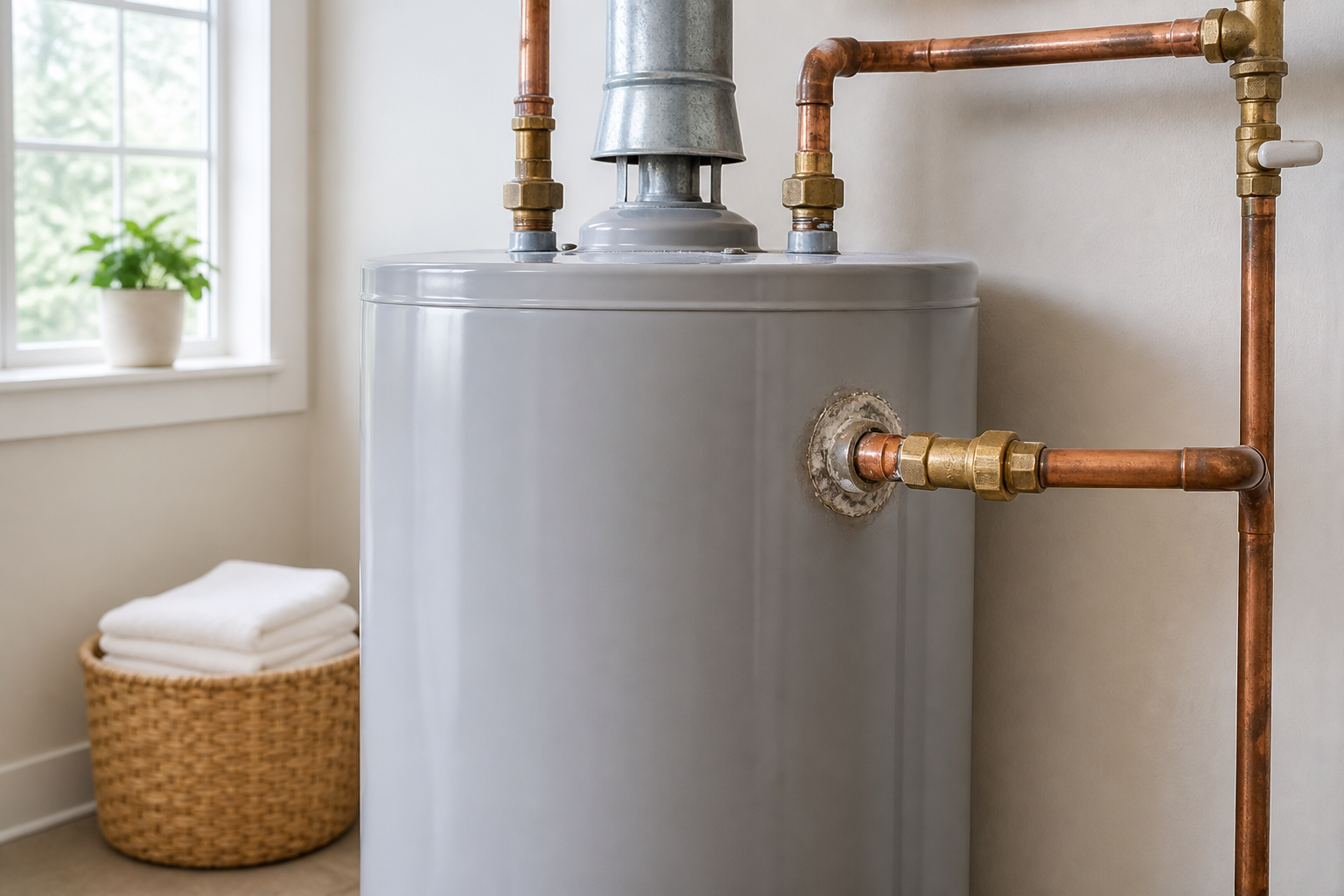

Table of Contents
Table of Contents
- Can Hard Water Really Damage Pipes and Appliances?
- How Mineral Scale Affects Plumbing and Equipment
- Clues That Point to Hard Water, and Clues That Do Not
- A Test-First Way to Choose Your Next Step
- When to Call a Plumber or Appliance Technician
- Frequently Asked Questions
Can Hard Water Really Damage Pipes and Appliances?
Hard water can leave scale inside plumbing and on surfaces where water is heated or evaporates. The U.S. Geological Survey notes that calcium and magnesium can precipitate as mineral solids on pipe and heat-exchanger surfaces. Over time, that buildup can impede flow and reduce the efficiency of heating elements.
What does that mean for your home? It may mean more cleaning around fixtures, deposits in a kettle, scale in an appliance that heats water, or a restricted aerator. It does not mean that every leak, drip, pressure problem, or appliance fault comes from hard water. Plumbing systems and appliances have many possible failure points.
For example, a single slow faucet might have a clogged aerator, a partly closed valve, or local debris. A dishwasher that leaves film on dishes may need a filter, detergent, rinse-aid, loading, or service check. A water heater can have a thermostat, burner, heating-element, venting, or safety issue that hardness cannot explain. Start with the lowest-risk check that matches the item in front of you.
Hardness is also not a general water-quality diagnosis. It measures dissolved minerals, mainly calcium and magnesium. It does not answer questions about bacteria, lead, nitrate, iron, corrosivity, or an appliance’s mechanical condition.
How Mineral Scale Affects Plumbing and Equipment
Why does scale show up most often where water is hot or drying? As mineral-rich water is heated or evaporates, minerals can come out of solution and attach to surfaces. Scale may collect in small openings, on heating surfaces, and at connections where water repeatedly dries.
The EPA states that scale can reduce flow through pipes and fixtures and that it does not conduct heat well. That can make a water heater or other heating appliance work less efficiently. The effect varies with your actual hardness level, water temperature, usage, plumbing materials, existing treatment, and equipment design. A visible deposit is a clue, not a measurement.
Pipes, Faucets, and Showerheads
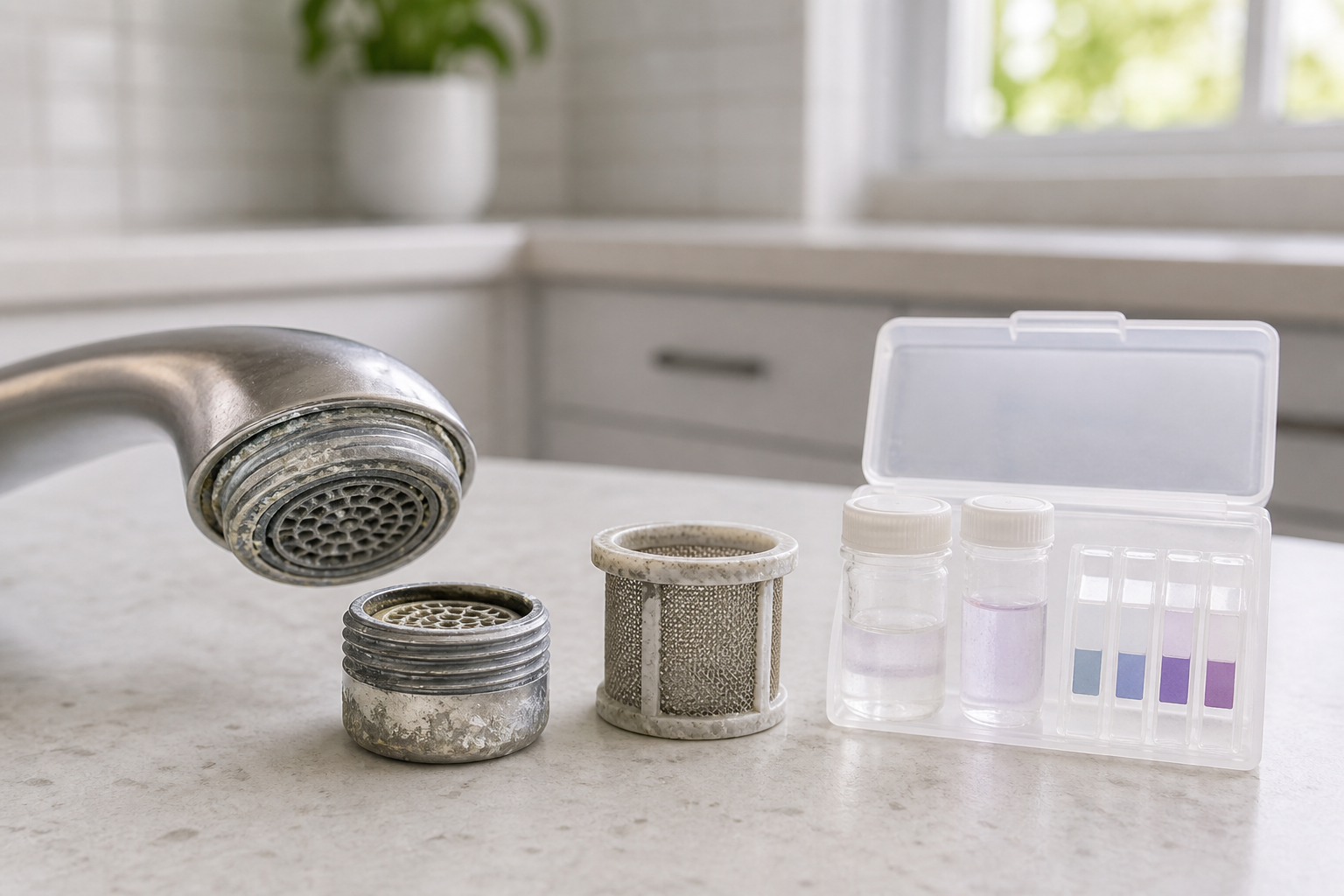
Scale can become obvious at faucet aerators and showerhead spray holes because the openings are small and water dries there. If cleaning is allowed by the fixture maker, it may restore normal spray. Do not force a stuck fitting, use an acid cleaner on an unknown finish, or treat a whole-home pressure change as a simple aerator problem.
Could hard water narrow plumbing enough to change flow? It can contribute to buildup over time, especially in hot-water areas. But a sudden pressure loss, water that stops completely, an active leak, colored water, or a major difference between hot and cold flow needs a plumbing diagnosis. Those problems can have causes beyond hardness.
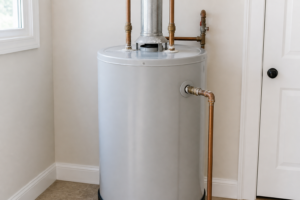
Water Heaters and Hot-Water Equipment
Hard-water scale can affect equipment that heats water. Our guide to hard water heater problems explains how scale can reduce heat transfer in tank and tankless units, while also making clear that a noise, temperature swing, or error code needs model-specific troubleshooting.
Do not open a water-heater panel, change wiring, operate relief controls, or use a generic descaling routine based on an article. Your unit’s manual and a qualified technician are the right sources for safe maintenance. A measured hardness result can give the technician useful context, but it cannot diagnose the equipment by itself.
Dishwashers, Washers, and Small Appliances
Hard water can leave spots, residue, and scale in appliances that use or heat water. The effect may be most visible on glassware, a kettle, a coffee maker, humidifier parts, or a dishwasher interior. That still does not mean the appliance needs a water softener or that scale is the only cause.
Start with the care instructions for the exact appliance. The manufacturer can tell you whether there is a filter, cleaning cycle, hardness setting, approved descaler, or service procedure. Use an observed pattern and a hardness result to decide whether water treatment research makes sense after routine appliance care.
For help telling a rough white deposit from a stain, corrosion, or a damaged finish, see our guide to limescale versus calcium buildup. It can help you avoid using the wrong cleaner on the wrong surface.
Clues That Point to Hard Water, and Clues That Do Not
How can you avoid blaming your water for every household problem? Look for repeated mineral clues in more than one place, then confirm them with a test.
Signs that make hardness more plausible include recurring white or chalky deposits on several fixtures, scale in a kettle or water-heating appliance, spots on glassware, and soap that does not lather well. Our signs of hard water guide walks through these clues in more detail.
Other clues deserve a different response. Brown or orange staining can involve iron. Green or blue staining can point to copper corrosion. A rotten-egg odor, a new leak, visible corrosion, a burning smell, breaker trips, or a sudden pressure change should not be labeled as hard water without professional advice. The USGS notes that water conditions outside hardness, including pH, can contribute to corrosion concerns.
It is also important not to confuse scale with a safety finding. You can have hard water and still need a separate test for a different water-quality concern. You can also have a mechanical appliance or plumbing fault even when your hardness result is high.
A Test-First Way to Choose Your Next Step
What is the most useful next step when the same deposits keep returning? Get a hardness result that you can use.
- Record the pattern. Note which fixtures or appliances show deposits, whether the problem is on hot water, cold water, or both, and whether it is gradual or sudden.
- Use equipment instructions first. Follow the fixture or appliance maker’s approved cleaning and maintenance guidance. Do not use a cleaner or repair method that the manual does not permit.
- Test water hardness. A test strip can be useful for a quick screen. A drop kit or laboratory analysis can give a more specific number when you are setting up equipment or considering treatment. Our how to test water hardness at home guide compares these options.
- Read the unit correctly. Hardness may be reported as milligrams per liter, parts per million, or grains per gallon. Use our water hardness scale guide to compare the result without mixing up the units.
- Match the action to the documented problem. A number can support a conversation about scale management or a water softener. It does not replace a plumber’s diagnosis or make treatment necessary in every home.
The EPA also notes that water softeners are not necessary in all homes and that local utilities, appliance makers, and local requirements may affect the appropriate choice. That is a good reason to treat a hardness number as decision support, not an automatic purchase signal.
When to Call a Plumber or Appliance Technician
Some problems are not a do-it-yourself water-hardness project. Contact a qualified plumber or appliance technician for an active leak, burst or cracked pipe, a sudden or severe flow change, a water-heater fault, repeated breaker trips, smoke, a burning smell, a gas smell, or a pressure-relief concern. Follow the manufacturer’s emergency instructions and local safety guidance.
Call for help when cleaning does not restore a fixture as its manual describes, when scale returns quickly after approved care, or when you need to inspect parts behind panels, inside a water heater, or in a plumbing line. A technician can separate scale from a failed valve, corroded part, blocked line, pressure issue, or appliance fault.
What should you bring to that conversation? The appliance model, a short symptom history, photos of visible deposits if safe to take, and your hardness result with its unit. This information is much more useful than a guess that your water is the cause.
Frequently Asked Questions
Can hard water clog pipes?
Hard water can contribute to mineral scale inside pipes and small fixture openings over time. It is not the only cause of low flow or a clog. Sudden flow loss, one-sided hot-water issues, or leaks need a plumbing check.
Can hard water ruin appliances?
Hard water can contribute to scale and reduced efficiency in appliances that heat or use water. It does not prove that an appliance is ruined or explain every failure. Follow the appliance manual and get service advice for faults, leaks, or unusual operation.
Does a water softener fix every plumbing problem?
No. A softener reduces hardness minerals when the water test and household goal support that choice. It does not repair a leak, remove every contaminant, correct corrosion, or fix a mechanical appliance problem.
What hardness level damages pipes?
There is no single level that predicts damage in every home. The USGS commonly describes water above 120 milligrams per liter as calcium carbonate as hard and above 180 mg/L as very hard. Your plumbing, water temperature, use, existing treatment, and actual scale pattern still matter. Use a documented result with the condition you are trying to solve.
Is white buildup always hard-water scale?
No. White buildup can be mineral scale, soap residue, cleaner residue, or a damaged finish. Check the surface and appliance guidance before cleaning, and test hardness when the deposits are recurring across several water-using areas.
The Bottom Line
Hard water can contribute to scale in pipes, fixtures, water heaters, and appliances. It is a practical maintenance concern, not a complete diagnosis. Look for repeated clues, use the manual for the exact equipment, and test water hardness before you spend money on treatment.
If you have an active leak, a sudden pressure change, an electrical or gas warning, or a malfunctioning appliance, get qualified help first. For ordinary scale questions, a measured result and a clear record of what you see will help you make the next decision with much more confidence.