

Are you seeing cloudy spots on your glasses, a ring around the sink, or soap that seems to disappear before it lathers? You can do a quick hard-water check with a clear bottle, tap water, and plain liquid soap. It is useful as a first clue, especially when you want to decide whether a water test is worth buying.
Here is the important part: this no-kit check cannot give you a hardness number. It can point to the way soap reacts in your water, but it cannot tell you grains per gallon, parts per million, or whether you should buy a particular water softener. Use it to decide what to test next, not to make a treatment decision by itself.
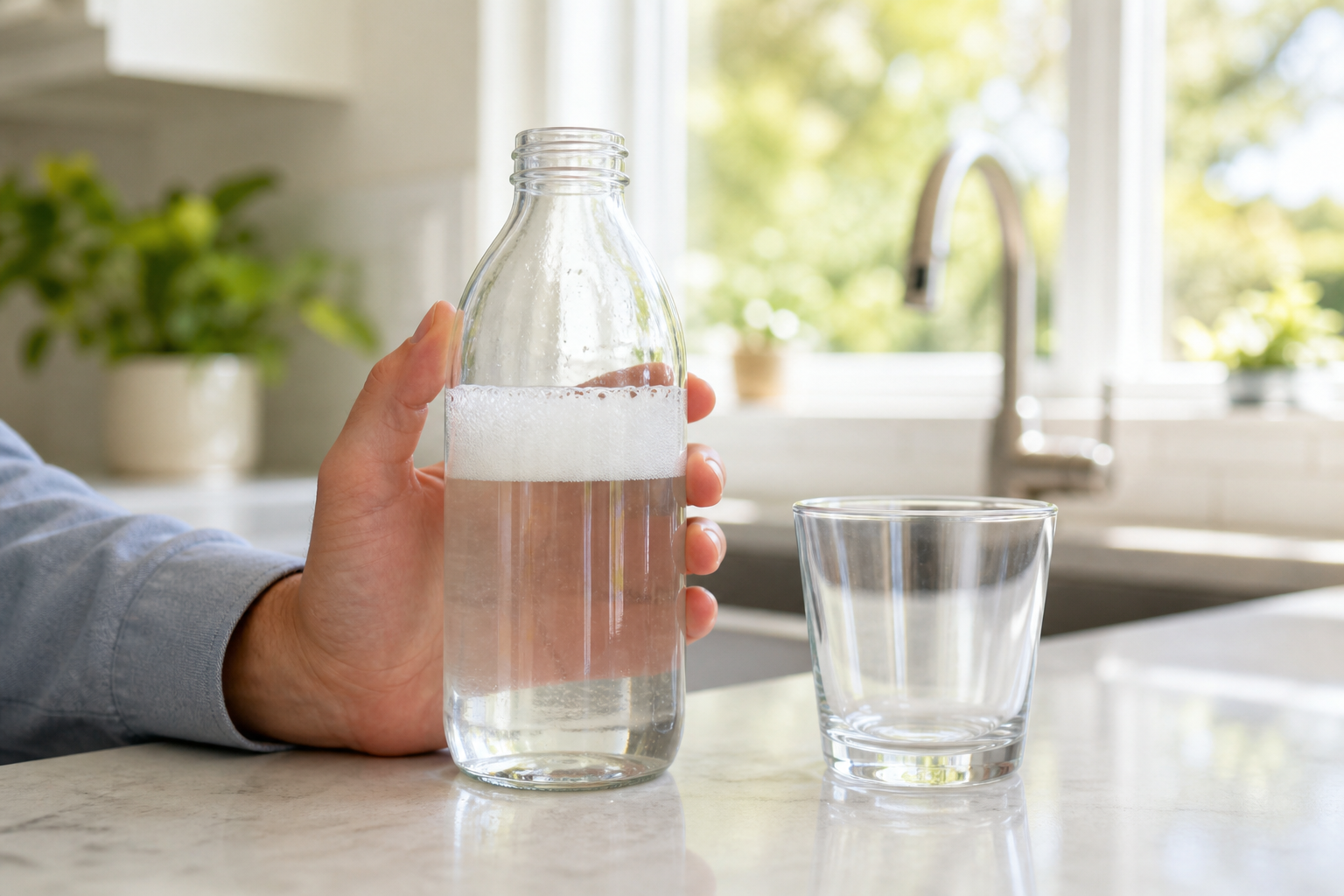

Table of Contents
Table of Contents
- The quick answer
- How to do a no-kit soap-lather check
- How to read the result
- Other signs that should prompt a real measurement
- What this check cannot tell you
- What to do next
- Frequently asked questions
The quick answer
You can check for a hard-water pattern by shaking a little plain liquid soap with tap water in a clean, clear bottle. Water with more hardness minerals may need more soap before it makes a stable lather because calcium and magnesium react with soap first. The same reaction can leave soap scum behind. The U.S. Geological Survey explains that calcium and magnesium are the main contributors to water hardness, and that harder water can require more soap for cleaning according to USGS.
That is why this is a clue, not a measurement. A soap result can be influenced by the soap itself, how much you use, water temperature, residue in the bottle, and other dissolved substances. If you need to compare your water with a hardness range, start with our water hardness scale after you obtain a measured result.
How to do a no-kit soap-lather check
Choose a clean, clear bottle with a lid. A small water bottle or jar works well. Avoid a container that has held detergent, fabric softener, lotion, or flavored drinks, because residue can change the result.
- Fill the bottle about one-third full with cold tap water from the faucet you want to check.
- Add about 10 drops of plain, unscented liquid castile soap or another simple liquid soap. Do not use dishwasher detergent, laundry detergent, body wash, or an antibacterial product with moisturizers. Those products are made to behave differently.
- Secure the lid and shake the bottle briskly for about 15 seconds.
- Set it on the counter and look at the water and foam after a short pause.
What are you looking for? A generous layer of bubbles above relatively clear water is more consistent with softer water. Little stable lather, cloudy water, or a film around the bottle is more consistent with a hard-water pattern. It is not a pass-or-fail test. Repeat it once with a freshly rinsed bottle if the result surprises you.
Why does soap matter here? Minerals in hard water can react with soap and form an insoluble residue commonly called soap scum. USGS describes this interaction in its hard-water and soap FAQ. That chemistry is the reason the bottle check can be informative, but it is also why the result stays qualitative.
How to read the result
Try to read the check in broad categories rather than treating every bubble as data.
| What you see | What it may suggest | Best next step |
|---|---|---|
| Thick, stable foam and mostly clear water | Your water may be softer, or at least not strongly interfering with the soap you used | Use your utility report or a measured test if you still see scale or appliance problems |
| Some foam with cloudy water or a film | Your water may contain enough minerals to affect soap performance | Get a strip or drop test if you want a hardness range |
| Very little stable foam and obvious cloudiness | A hard-water pattern is plausible | Measure hardness before choosing treatment or sizing equipment |
The result is most helpful when it matches what you notice around the house. If the bottle lathers poorly and you also see crusty residue on faucets or spots on glassware, a measured test becomes a sensible next move. If the bottle result and your household clues disagree, do not force a conclusion. Go straight to a kit, a local lab, or your water provider’s report.
Other signs that should prompt a real measurement
Hard water is usually a convenience and maintenance issue, not something you can diagnose from one stain. Still, a few repeat patterns can tell you it is worth collecting a number.
- White or chalky deposits build up on a kettle, faucet aerator, shower door, or humidifier.
- Glassware comes out of the dishwasher with spots or a hazy film.
- Soap seems slow to rinse, or you use more of it than expected for laundry and bathing.
- Towels feel stiff after washing even when your detergent routine has not changed.
- A water softener is installed, but the same scale and lather problems return.
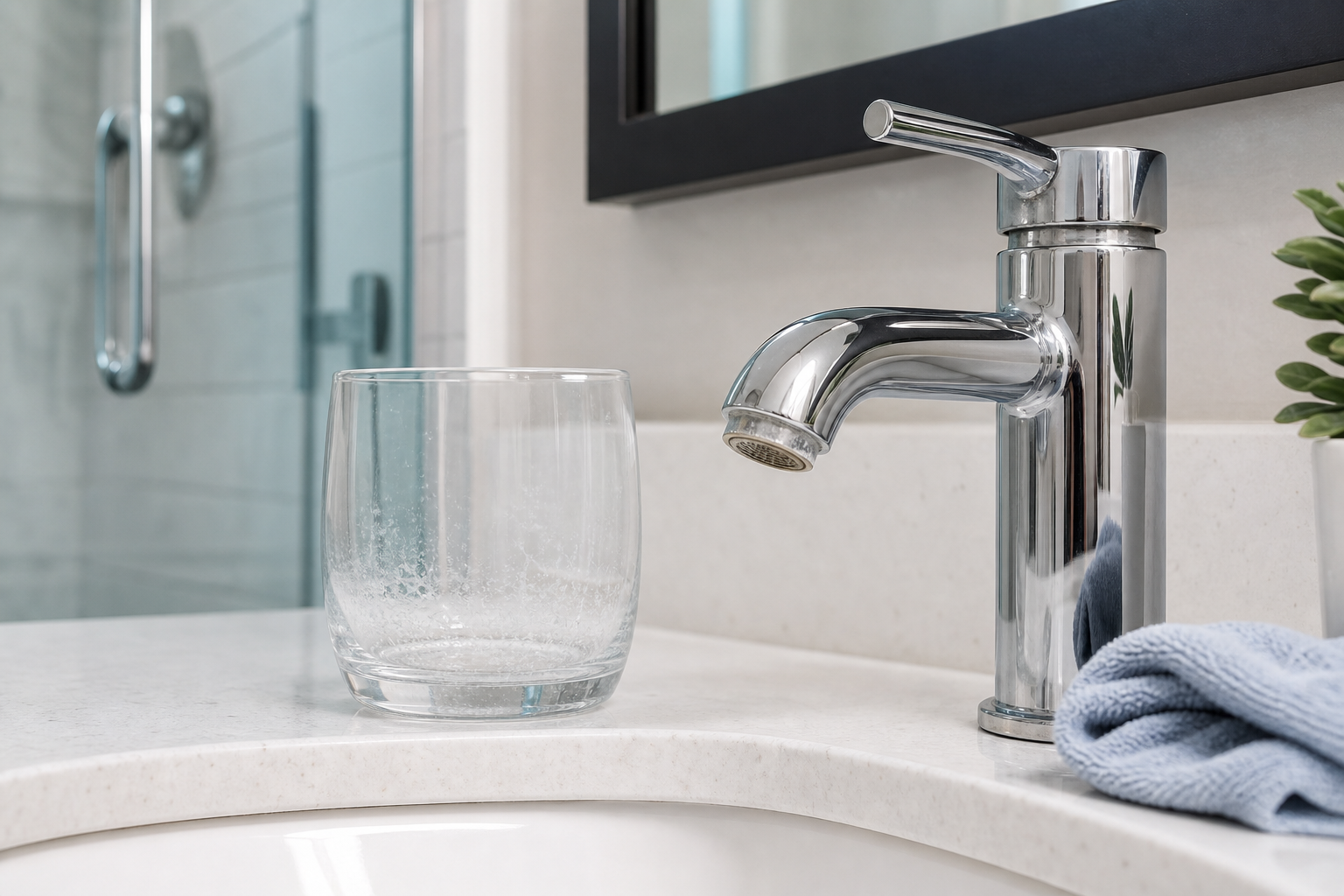
These signs are prompts, not proof. Scale can involve more than one kind of mineral, and cleaning habits can affect glassware and fixtures. A measured hardness result gives you a better starting point. For the bigger picture, our water-hardness testing guide walks through home-kit and laboratory options.
What this check cannot tell you
The bottle check cannot measure the concentration of calcium and magnesium. USGS commonly describes hardness in milligrams per liter as calcium carbonate: 0 to 60 mg/L is soft, 61 to 120 mg/L is moderately hard, 121 to 180 mg/L is hard, and above 180 mg/L is very hard in its hardness overview. Only a result from an appropriate measurement method can place your water in one of those ranges.
It also cannot tell you whether your water has bacteria, lead, nitrate, arsenic, or other contaminants. That distinction matters most for private wells. EPA recommends that private-well owners test regularly, and the EPA private-well guidance separates water-quality testing from choosing treatment. CDC likewise notes that private wells are not regulated, treated, or monitored by government officials in the same way as public water systems in its well-testing guidance.
In other words, do not use a soap check to decide whether drinking water is safe. It answers a narrow household question: does this water appear to interfere with soap enough that hardness deserves a real measurement?
What to do next
If your soap check points toward hard water, you have three practical paths.
1. Look up your public-water information
If you use municipal water, your utility may publish a consumer confidence report or a water-quality report. It may list hardness, calcium, or related measurements. Treat that as a useful area-level starting point, then test at your tap if you need a number for your household. Plumbing, a water softener, and seasonal changes can make your experience different from the utility’s general report.
2. Use a home kit when you need a range
For an estimate you can repeat, use a water-hardness strip or a drop-count kit. The water-hardness testing guide explains which option fits a quick screen and which one is better when you need a more useful result. Record the date, faucet, and result so you can compare later.
3. Use a lab when the decision is bigger
Choose a certified laboratory or an appropriate local testing program when you have a private well, are troubleshooting several water-quality issues, or need a broader panel. That is also the better path before making a large treatment purchase.
Once you have a number, you can use the water hardness scale to understand it. If you are evaluating a softener, move from the result to a water-softener sizing guide instead of choosing equipment from the soap check. If an existing softener seems to have stopped helping, start with a current hardness result and then use our water softener troubleshooting guide. Well owners can also see how hardness fits into broader treatment planning in our well-water softener guide.
Frequently asked questions
Can you test hard water without a kit?
You can perform a free soap-lather check that may reveal a hard-water pattern. It does not provide a hardness number, so it should be followed by a kit or lab result when you need to compare ranges or make a treatment decision.
Is the soap test accurate enough to buy a water softener?
No. It can help you decide whether to measure hardness, but it is not enough to select or size a water softener. Use a measured hardness result, your household water use, and the equipment manufacturer’s requirements.
Can a TDS meter measure water hardness?
Not by itself. A TDS meter measures total dissolved solids, not calcium-and-magnesium hardness specifically. Two water samples can have similar TDS readings for different reasons.
Why do I have spots even if the bottle makes foam?
Spots and residue can have more than one cause, and the soap check is affected by the soap and the container. A home kit or lab result can resolve the uncertainty.
The bottom line
A soap-lather check is a free way to decide whether hard water deserves closer attention. It is simple, quick, and useful when you keep its limits in view. If the result points toward hardness, get a measured number before you spend money on treatment. That one extra step makes it much easier to choose a solution that fits your water and your home.