

A water softener for well water removes hardness minerals, mainly calcium and magnesium. This can reduce scale on fixtures, help soap lather, and protect appliances that heat water. It does not make untreated well water safe to drink, and it does not reliably remove every well-water problem.
That distinction matters. A private well can have hard water and also have iron, manganese, bacteria, nitrate, low pH, sediment, or another issue. The right treatment starts with a current water test, not with a softener alone.
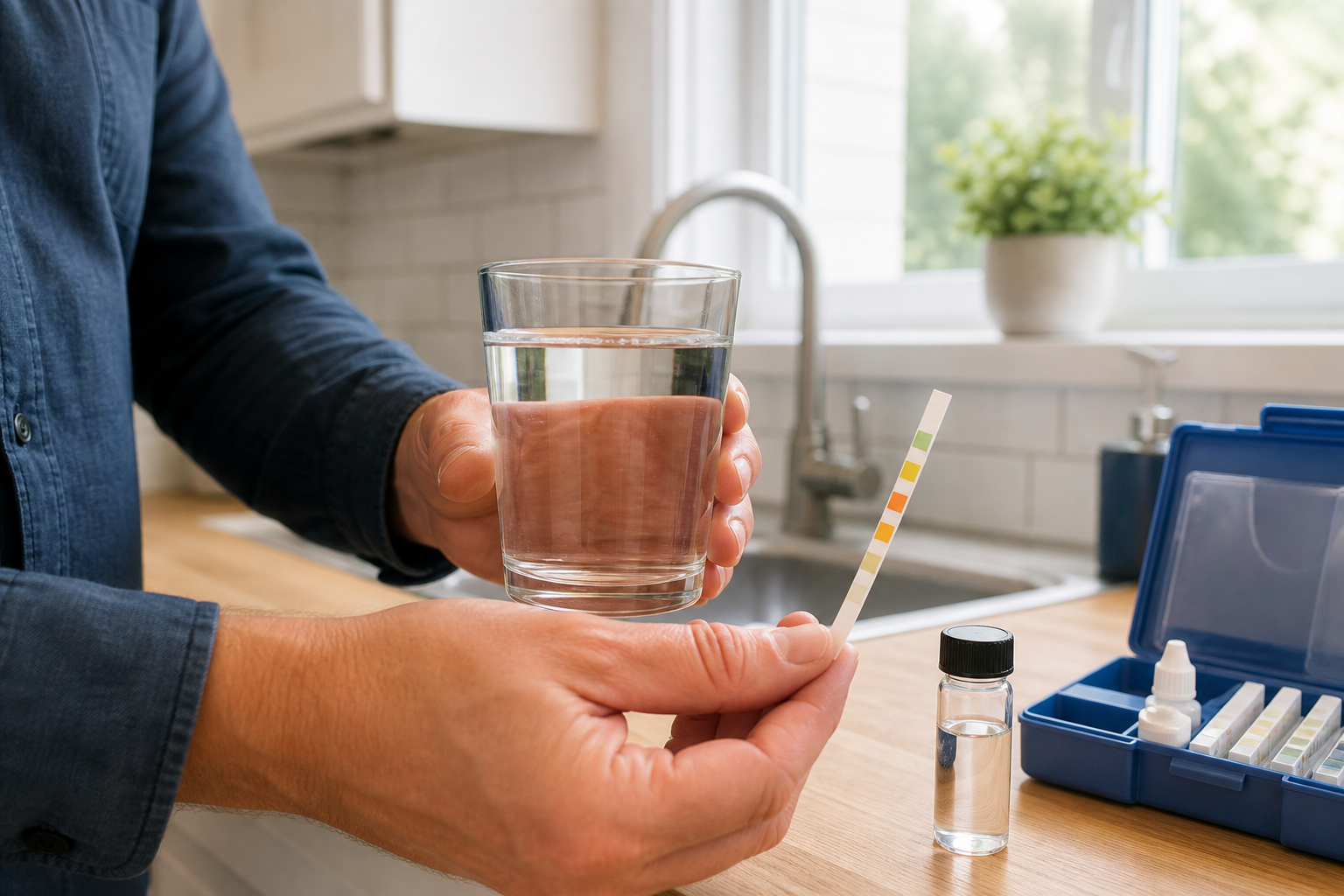

Table of Contents
What a water softener removes from well water
Hardness usually comes from dissolved calcium and magnesium. As groundwater moves through soil and rock, it can dissolve these naturally occurring minerals. The U.S. Geological Survey classifies water above 120 milligrams per liter as calcium carbonate as hard, and water above 180 mg/L as very hard. See the water hardness scale for homes if your report uses ppm, mg/L, or grains per gallon.
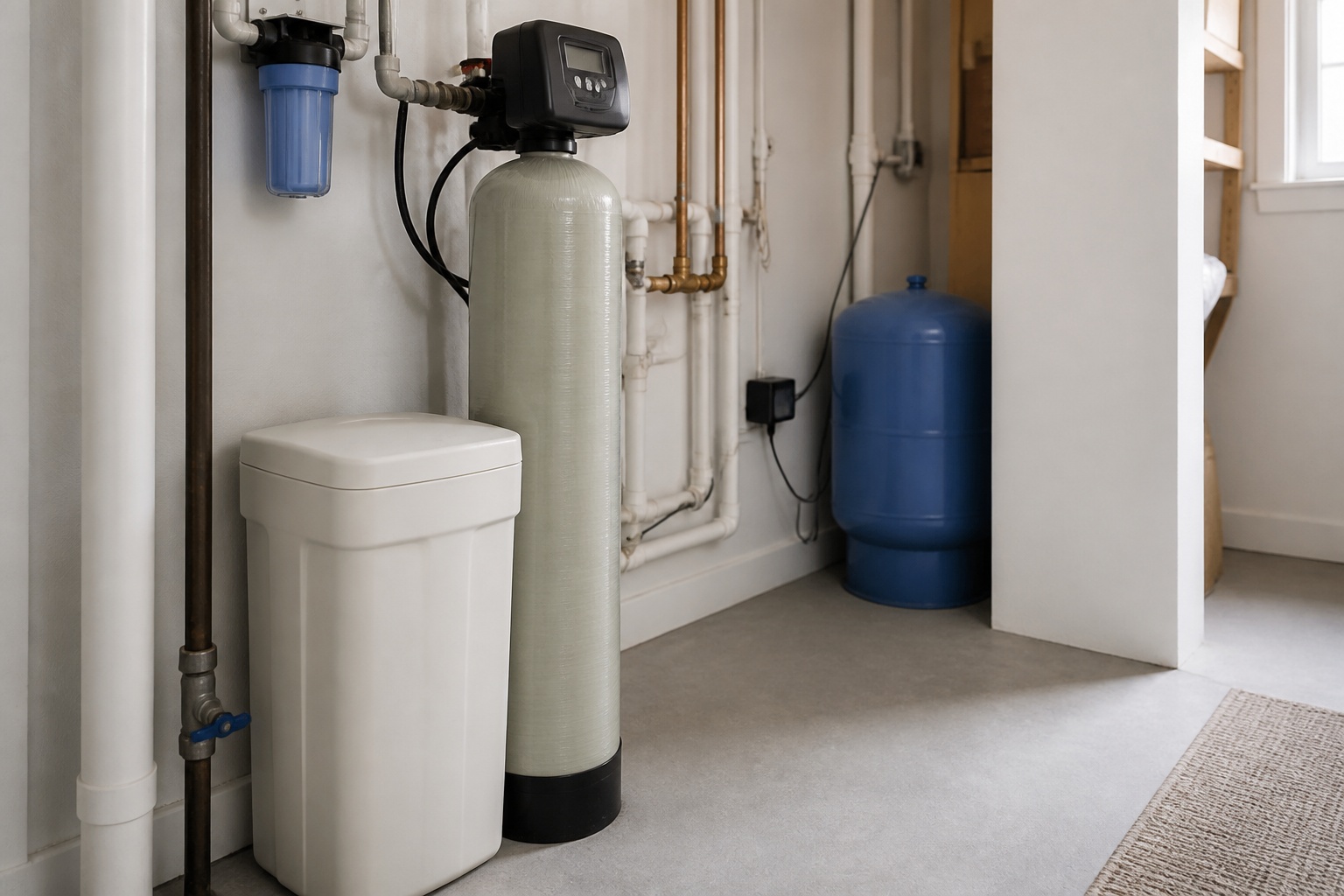
Most conventional softeners use ion exchange. Water flows through resin beads that exchange hardness minerals for sodium or potassium ions. Then, during regeneration, a brine solution restores the resin so it can keep removing hardness.
In a home with hard well water, this can mean:
- less white scale on faucets, shower doors, and inside water-using appliances;
- better soap lather and less soap residue;
- less scale pressure on a water heater and hot-water plumbing; and
- water that is easier to use for laundry and dishwashing.
These are hardness benefits. A softener changes the mineral balance of the water. It is not a general-purpose filter or disinfectant.
Why test well water before choosing a softener?
Your well does not have the same treatment needs as another well in your county. Groundwater chemistry can vary from one property to the next. A complete test gives you a baseline for hardness, iron, manganese, pH, bacteria, nitrate, and other items that fit your local risk factors.
The EPA advises private-well owners to use a certified laboratory and notes that scale or poor soap lather points to a hardness test. The same EPA guidance says that a softener needed for hardness is also a reason to test for iron and manganese. Start with how to test and treat hard well water if you need a practical testing sequence.
Ask the laboratory, local health department, or extension office which additional tests fit your area. For example, testing after flooding, nearby construction, a change in taste or color, or a new well can require more than a basic hardness panel.
What should a useful well-water test include?
There is no single panel that fits every private well. At a minimum, a treatment decision about hardness needs a reported hardness value and units. If staining, odor, color, or unusual particles are part of the problem, ask whether the test should also include iron, manganese, pH, and related indicators.
For a broader safety question, use the test schedule and local recommendations that apply to your well. The EPA lists common conditions that can point to additional tests, including nearby agricultural activity, fuel or chemical sources, plumbing corrosion, and changes in water appearance or smell. A good lab report gives concentrations. It does not choose the equipment for you, so keep a copy when you compare treatment options.
What a water softener does not remove
A conventional softener is designed for hardness, not every water-quality concern. The CDC notes that water softeners remove minerals, primarily calcium and magnesium, but they do not remove parasites, bacteria, or viruses.
That means a softener is not the answer when your test shows a contaminant that needs filtration, disinfection, source repair, or another treatment method. Do not assume that clear water is safe, and do not use a softener as a substitute for a well inspection or a certified laboratory test.
Here is a simple guide to the difference:
| If your test shows | A softener may help? | What to do next |
|---|---|---|
| Calcium and magnesium hardness | Yes | Size the softener from the documented hardness and household water use. |
| Dissolved iron or small amounts of manganese | Sometimes | Confirm the form and amount, plus pH, before choosing treatment. |
| Orange, black, or rusty particles | Not as a stand-alone fix | Ask about iron or manganese treatment that matches the test result. |
| Bacteria, nitrate, arsenic, or other contaminants | No | Use a source-specific treatment plan and local public-health guidance. |
| Sediment, odor, or color | Not necessarily | Test the cause before selecting a filter or other equipment. |
Can a water softener remove iron or manganese from well water?
Sometimes, but this is where a test result matters most. Pennsylvania State Extension explains that conventional softeners can remove some dissolved iron and small amounts of manganese through ion exchange. Their performance depends on the iron concentration, hardness, pH, and whether the metals are dissolved or oxidized.
Oxidized iron or manganese can foul softener resin. If water turns orange-brown or black after it sits, or if you have visible particles, a softener may not be the correct first treatment step. The treatment sequence may need a dedicated iron or manganese process before the softener. A water-treatment professional should size equipment from a full test and your well flow rate, not from one symptom.
For a broader comparison of water-treatment roles, see how to choose a well water filter. A filter and a softener can be part of the same system, but they do different jobs.
Does softening well water make it safe to drink?
No. Hardness is mainly a use and maintenance concern. Softening reduces the calcium and magnesium that cause scale, but it does not verify that the water is free of bacteria or other contaminants.
If your household has a private well, use water testing to answer the safety question. If a result is above a health standard or you have a sudden water-quality change, contact your local health department or a qualified well professional for next steps. Do not choose treatment based on hardness alone.
How do you size a water softener for a well?
Sizing starts with your hardness result and household water use. A treatment professional may also account for dissolved iron, because it can affect the resin load and regeneration settings. The goal is enough capacity for normal use without excessive regeneration water and salt.
Before you accept a size recommendation, ask:
- What hardness value and units did you use?
- Did you include iron or manganese from the lab result?
- What daily water-use estimate did you use for this household?
- How often will the system regenerate under normal use?
- What maintenance and water-discharge requirements apply where I live?
For a family-size starting point, read what size water softener a family of four may need. Use it as planning help, then adjust the final choice to your documented water chemistry and local installation requirements.
What maintenance does a well-water softener need?
A softener needs regular attention after it is installed. Check the salt or potassium supply, make sure the brine tank is clean when service is due, and watch for a change in water feel, scale, or regeneration behavior. Follow the equipment manual for service intervals instead of adding chemicals that the maker does not support.
Well water can make maintenance more important because iron, manganese, sediment, or low pH can affect equipment performance. If those conditions are present, ask the installer how the treatment stages work together and what result you should recheck. The EPA’s water-efficient softener guide also recommends choosing and operating a system so it reduces hardness without unnecessary regeneration water waste.
After any repair, treatment change, flood, or major change in water quality, test again. Do not assume that a softener is still solving the original problem just because it is running.
A practical decision path for hard well water
- Test the well water. Include hardness and the other items that fit your location, symptoms, and well history.
- Read the units correctly. Compare your result with the home water-hardness testing guide before you compare treatment options.
- Separate hardness from other findings. Scale and poor lather point to hardness. Staining, odor, cloudiness, or a bacteria result can require another treatment step.
- Choose equipment for the documented problem. A softener can be useful for calcium and magnesium. It should not be sold as a universal well-water solution.
- Retest after a meaningful change. Confirm that the installed system is reducing the condition it was selected to address.
Frequently asked questions
Is well water always hard?
No. Well water can be hard because groundwater dissolves minerals from soil and rock, but the actual hardness varies by aquifer and location. Test your own well water instead of assuming.
Does a water softener remove sulfur smell from well water?
Not reliably. A sulfur or rotten-egg odor can have several causes. Test the water and identify the cause before selecting treatment.
Can I install a softener before I test my water?
You can, but it is not a good treatment decision. A test helps you size the softener for hardness and reveals problems a softener cannot solve.
Should I use sodium or potassium in a softener?
The choice affects operation and water chemistry. Discuss it with your treatment provider, especially if your household has a sodium-related dietary concern or local discharge limits.
Do I need a softener and a filter for well water?
Maybe. A softener addresses hardness minerals. A filter or other treatment stage may address sediment, iron, manganese, odor, or a specific contaminant when the water test supports that need. The order of equipment matters, so use the laboratory results and a documented treatment design instead of buying systems one at a time.
The bottom line
A water softener can make hard well water easier on plumbing, appliances, soap, and laundry by reducing calcium and magnesium. It cannot certify well water as safe or replace treatment for bacteria, nitrate, sediment, or every iron and manganese problem.
Test first, match the equipment to the results, and confirm performance after installation. That is the most reliable way to decide whether a water softener belongs in your well-water treatment plan.