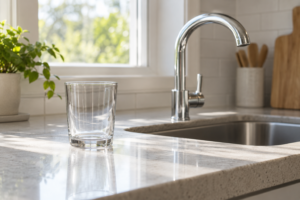


Are white spots showing up on your dishes, a chalky ring building on the showerhead, or soap refusing to lather in your apartment? You may have hard water. The frustrating part is that a renter usually cannot install a whole-home softener or alter a building’s main plumbing line.
There are still useful hard water solutions for renters. Start by confirming what is in your water, then choose a lease-safe step that matches the job. You can manage mineral deposits, improve drinking water at one tap when a system documents the needed claim, and ask the property owner to address a building-level problem. What you should not expect is for a small shower or faucet attachment to soften every gallon used in your apartment.
The good news is that you don’t need to solve every water issue at once. A renter’s plan can be small and practical: measure the tap water, deal with the scale that affects daily life, and make a clear request when the problem belongs to the building. That approach protects your lease and helps you avoid paying for equipment that cannot deliver whole-apartment results.
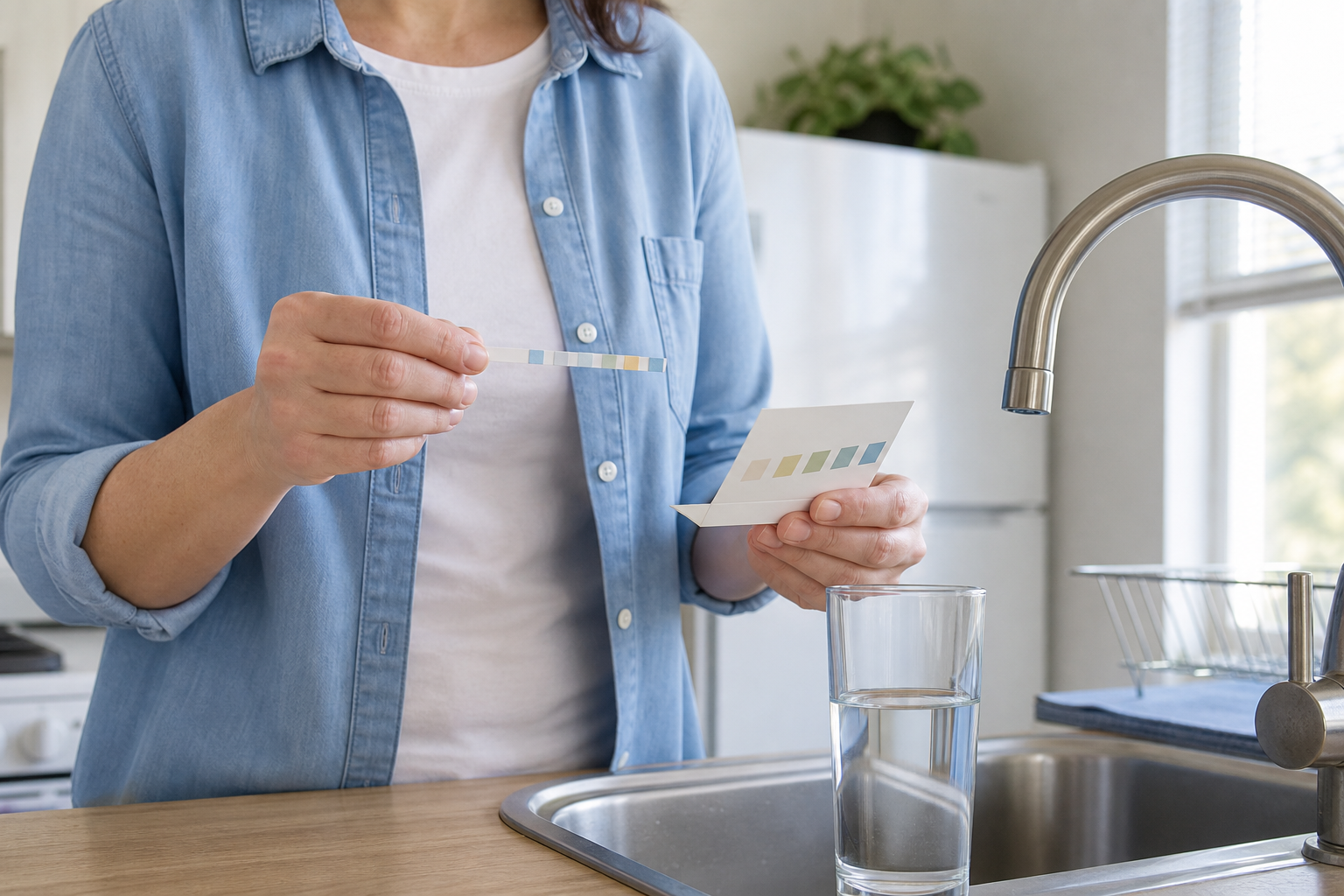

Table of Contents
Table of Contents
- What Can a Renter Actually Change?
- Confirm That Hardness Is the Problem
- Lease-Safe Hard Water Solutions for Renters
- What a Shower Filter Can and Cannot Do
- When to Ask Your Landlord for Help
- A Simple Renter Decision Path
- Frequently Asked Questions
What Can a Renter Actually Change?
Hard water is mainly caused by dissolved calcium and magnesium. The USGS explains that hardness is often reported as milligrams per liter, or mg/L, of calcium carbonate. Those minerals can leave scale on fixtures and make soap less effective.
What can you change without altering your apartment’s plumbing? Usually, you can use portable or point-of-use equipment, change cleaning and appliance-care habits, and collect useful evidence for your landlord. You should get written approval before attaching anything that changes plumbing, even when an item is marketed as removable.
The key distinction is simple:
| Your goal | A renter-friendly next step | What it does not do |
|---|---|---|
| Confirm whether mineral hardness is present | Use a home test kit or review your water supplier’s report. | It does not identify every possible water-quality concern. |
| Reduce visible scale on a fixture or appliance | Use manufacturer-approved cleaning and routine maintenance. | It does not remove hardness from incoming water. |
| Treat drinking or cooking water at one tap | Compare a point-of-use system only for its exact documented reduction claim. | It does not soften showers, laundry, or the dishwasher. |
| Lower hardness through the whole apartment | Ask the owner about the building’s water treatment or maintenance plan. | A small attachment is not a substitute for a building-level solution. |
Want a number before you decide? Our guide to testing water hardness at home walks through strips, drop kits, and when a lab result makes more sense.
Confirm That Hardness Is the Problem
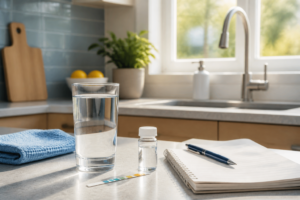
Scale and poor lather are useful clues, but they are not a full diagnosis. Iron, soap residue, detergent problems, and fixture wear can look similar. What is the fastest way to separate a guess from a useful answer? Test your water or get a current report from the water system that serves your building.
If your apartment receives public water, the EPA’s home drinking-water testing guidance points renters to Consumer Confidence Reports as a starting point. A report can give you context for the water system, but it may not show the exact hardness at your tap or account for a building softener. A simple test from cold, untreated tap water can give you a more direct household check.
Use the same sample point each time. Do not test water immediately after an unknown treatment device, and write down the date, result, and where you collected it. Then use our water hardness scale to turn the result into a plain-language range.
Is hard water the only concern? No. A hardness result does not prove that water is unsafe or that another contaminant is absent. If you have a specific concern such as lead, a private well, an unusual odor, or a local advisory, use a test that covers that concern and contact the appropriate local authority or property manager.
Lease-Safe Hard Water Solutions for Renters
The best apartment hard-water solution depends on what you need to improve. These options solve different problems, so it helps to choose one job first.
1. Manage deposits where they form
If your main problem is a cloudy shower door, a crusty faucet aerator, or spots on dishes, start with maintenance. Drying fixtures after use, using a dishwasher rinse aid according to the appliance manual, and descaling only with an approved product can reduce the visible effects of minerals.
This is often the lowest-risk renter step because it does not modify plumbing. It also gives you a useful record. If scale returns very quickly after cleaning, take dated photos and keep the test result. That information is more helpful in a conversation with your landlord than a general complaint that the water feels hard.
2. Use point-of-use treatment for a named drinking-water goal
Do you want to improve the water at your kitchen sink rather than all of your apartment’s water? A point-of-use system treats water at one tap or in batches. The CDC notes that point-of-use and whole-home systems are different, and that the label should match the specific substance or concern you want to address.
Some reverse-osmosis systems may reduce calcium and magnesium at a drinking-water tap when the individual system documents that claim. That can be useful for drinking or cooking water. It is not a whole-apartment softener. It will not change the water in your shower, washing machine, or dishwasher.
Before you buy, ask three questions:
- What exact reduction claim does this model make?
- Does the installation need a permanent plumbing change or the owner’s approval?
- What filter replacement, cleaning, and leak-check routine does the manufacturer require?
For a broader explanation of the difference, read water softener vs. water filter. A filter is not automatically a softener just because it changes taste, odor, or particle levels.
3. Treat a shower attachment as a limited, fixture-level choice
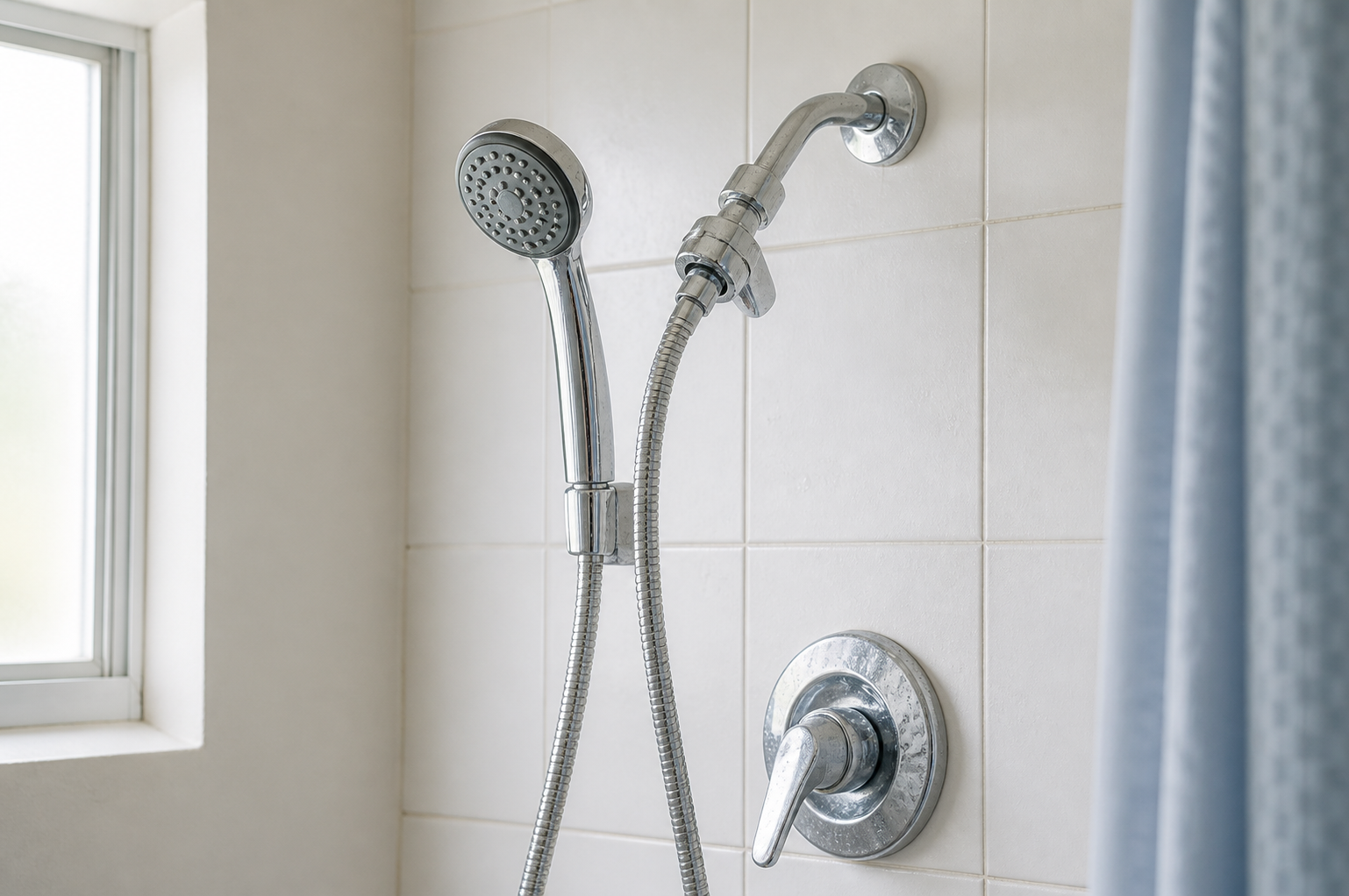
Shower attachments appeal to renters because they are compact and may be removable. But what is the realistic expectation? A shower filter can have a separate filtration claim, yet it should not be assumed to remove the calcium and magnesium that cause a hard-water test result.
Read the exact model label and installation instructions. Check whether your lease permits the attachment, whether it fits your shower connection, and whether it requires frequent cartridge changes. Our guide to a shower filter for hard water explains the claim limits and the questions worth asking before you rely on one.

4. Ask for a building-level solution when you need building-level results
If the goal is lower measured hardness at every fixture, the property owner controls the solution. Conventional ion-exchange softeners are designed to reduce calcium and magnesium, but they normally belong at a building entry point or another shared plumbing location. A renter should not install or adjust one without the owner and a qualified professional.
This does not mean you have no leverage. A documented hardness result, recurring scale, and an appliance issue can support a clear maintenance request. If other tenants report the same pattern, ask whether the building already has treatment equipment and when it was last serviced. Our guide to treating hard water without a softener can help you describe the exact outcome you need without asking for the wrong technology.
What a Shower Filter Can and Cannot Do
Can a shower filter make an apartment’s water softer? Usually, no. Hardness minerals are dissolved in the water, so a standard shower filter should not be treated as proof of hardness removal unless the exact product documents that specific result.
Can it still be useful? Possibly, but only for its stated purpose. A product may make a separate claim about a named contaminant, odor, or chlorine reduction. Those claims should be verified on the model label, and the cartridge must be maintained as directed. Do not use a general product category name as a promise about your water.
The same rule applies to pitcher filters, faucet filters, and countertop units. They may be useful for a point-of-use goal, but they do not convert a shared apartment water supply into softened water throughout the home.
When to Ask Your Landlord for Help
Talk to your landlord or property manager when you have evidence that points to a shared plumbing problem or when any change would connect to the building’s water system. Keep the request factual and specific.
You can include:
- Your hardness test result and date.
- Photos of recurring scale on fixtures that you have already cleaned.
- The affected fixtures or appliances.
- A request to confirm whether the building has a softener, filter, or maintenance schedule.
- A question about permission before you install any removable attachment.
Avoid diagnosing the building or demanding a particular product. Ask for an inspection or a discussion of the maintenance plan. If there is a leak, a sudden pressure change, discolored water, a safety advisory, or a suspected contaminant, report that separately and promptly. Those conditions need more than a hardness workaround.
A Simple Renter Decision Path
What should you do first? Use this sequence:
- Confirm the water source and the problem. Check the water supplier report, test your tap, and note what you see.
- Set one goal. Is it less fixture scale, better drinking-water treatment at one tap, or lower hardness everywhere?
- Choose the smallest lease-safe step. Start with maintenance or a documented point-of-use option when it fits the goal.
- Check permission and maintenance. Read your lease, get approval when needed, and follow the exact installation and replacement instructions.
- Escalate building-level issues. Share the test result and evidence with the property manager when the solution needs shared plumbing.
This approach keeps spending proportional to the problem. It also prevents a renter from buying a product that sounds like a softener but cannot deliver the result they need.
Frequently Asked Questions
Can I install a portable water softener in an apartment?
Only with the property owner’s approval and a clear understanding of where it connects. A portable device may be useful for a limited use case, but it is not automatically suitable for an apartment’s plumbing, water pressure, drainage, or lease. Do not assume it will soften every fixture.
Does boiling water remove hardness for renters?
Boiling can leave some mineral scale behind in a kettle, but it is not a practical whole-apartment solution and does not replace a proper test or treatment plan. Use it only for the purpose the appliance was designed for.
Should I buy a shower filter for hard water in an apartment?
Buy one only when its documented claim matches your goal and your lease permits it. Do not expect a shower filter to provide whole-apartment hardness removal unless the exact model documents that result.
What if my apartment water leaves stains but the hardness test is low?
Look beyond hardness. Iron, corrosion, cleaning products, or a fixture problem may be involved. Share the result and photos with your property manager, and use a more targeted test if there is a specific water-quality concern.
When is a conventional softener the better answer?
It is the direct option when the building needs lower calcium and magnesium hardness at many fixtures. Because it affects shared plumbing and needs installation and maintenance, that decision belongs with the property owner.
The Bottom Line
The most practical hard water solutions for renters are specific, not one-size-fits-all. Test first, manage deposits where they form, and use point-of-use treatment only for a documented one-tap goal. If you need softer water throughout the apartment, bring your evidence to the property owner instead of expecting a small attachment to solve a building-level problem.