
Is your water heater making a new popping sound, taking longer to recover, or giving you less hot water than usual? Hard water heater problems can involve mineral scale, but a sound or temperature change alone does not prove that hardness is the cause. A thermostat, heating element, burner, dip tube, pressure issue, or another fault can create similar symptoms.
Hard water contains dissolved calcium and magnesium. The U.S. Geological Survey explains that heating hard water can form solid calcium-carbonate deposits. In a water heater, that scale can collect on hot surfaces and reduce heat transfer. Fortunately, you do not need to guess or buy treatment based on one symptom. Start with safe observations, then use a water-hardness result and your unit’s manual to decide what comes next.
This guide explains what hard water can affect in tank and tankless water heaters, what it cannot explain by itself, and when a qualified technician is the safer choice.
| What you notice | Hard water may be involved when | Check first |
|---|---|---|
| Popping or rumbling during heating | You also see recurring white mineral scale on faucets, kettles, or glassware. | Your manual, the unit’s service history, and a measured hardness result. |
| Less available hot water | The change is gradual and other mineral clues appear around the home. | Temperature setting, household demand, and professional diagnosis if the problem continues. |
| Longer recovery or higher energy use | Scale may be reducing heat transfer, but several equipment faults can do the same. | The model manual and a qualified technician’s assessment. |
| Reduced hot-water flow from more than one fixture | Scale may be part of a longer-term plumbing issue. | Aerators, shutoff valves, and professional plumbing advice for a sudden or severe change. |
| Rotten-egg odor only in hot water | It may come from water-heater chemistry, not hardness. | A water-quality professional or the manufacturer’s service guidance. |
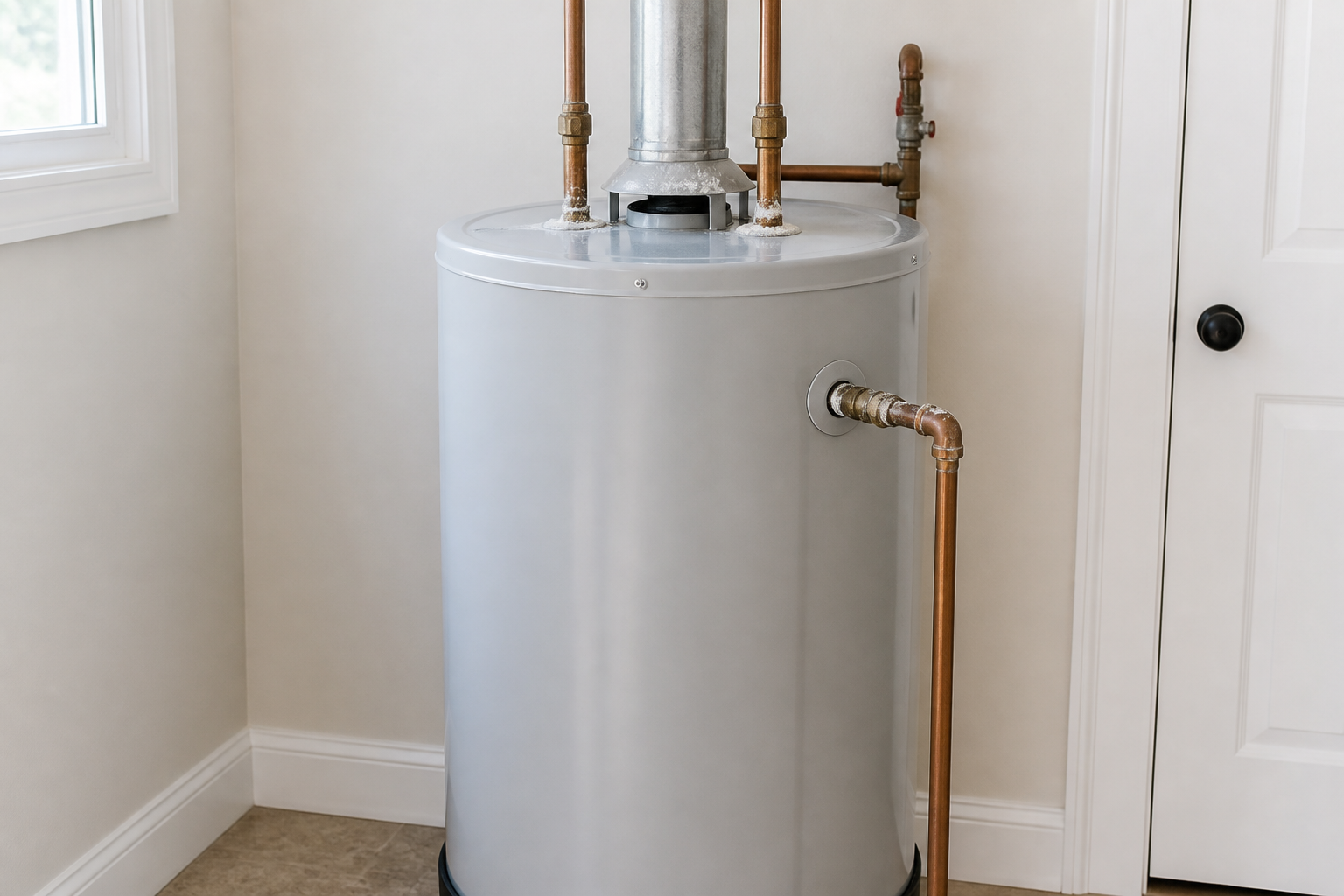
Table of Contents
Table of Contents
- Can Hard Water Cause Water-Heater Problems?
- Why Heated Hard Water Forms Scale
- Tank and Tankless Water Heaters Have Different Trouble Spots
- A Safe Way to Check for Hard-Water Clues
- When to Call a Qualified Technician
- Frequently Asked Questions
Can Hard Water Cause Water-Heater Problems?
Yes. Hard water can contribute to scale in a water heater, particularly on surfaces that get hot. USGS notes that calcium and magnesium are the main minerals behind hardness, and that solid deposits can form when hard water is heated. Those deposits can reduce the life of equipment, lower electric water-heater efficiency, and add heating cost.
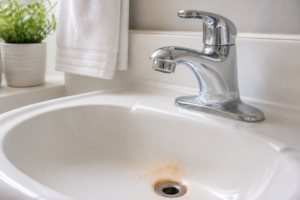
What does that look like at home? You may see chalky deposits on hot-water faucet aerators, a kettle, shower fixtures, or appliance parts. Our guide to signs of hard water can help you look for a pattern. One mark is not a diagnosis. Repeated mineral deposits in several places make hardness a more useful possibility to test.
Hardness also has limits as an explanation. It does not automatically explain an active leak, a gas smell, a burning smell, a tripped electrical circuit, discolored water, or a sudden loss of hot water. Those conditions can involve safety or equipment issues that need a different response. Do not treat hard water as a catch-all answer.
For a broader view of what a rough white deposit is, read our guide to limescale versus calcium buildup. It separates mineral scale from stains, corrosion, and finish damage that should not be handled the same way.
Why Heated Hard Water Forms Scale
Hardness is a measurement of dissolved calcium and magnesium, not a general score for drinking-water safety. When mineral-rich water is heated, some minerals can come out of solution and settle or attach to hot surfaces as scale. USGS shows this effect in water heaters and pipes, where mineral solids can build up and reduce heating-element efficiency.
Why does that matter? A heater must move heat through the tank or heat exchanger and into the water. A layer of mineral deposit can make that transfer less direct. That can be one reason a unit runs longer, recovers more slowly, or develops a noise during heating. It is not proof of the exact failure, though. Water heaters have many parts and many potential faults.
Think of scale as one item in a troubleshooting list, not the final answer. If the home has soft water and no repeated mineral deposits, another cause becomes more likely. If the water is hard and the same mineral pattern appears at hot-water fixtures, scale is worth discussing with a technician. You’re still looking for a diagnosis that fits the unit, not just the water test.
Penn State Extension also lists hard water as a likely contributor when homes show white or gray film, more soap use, scale in teapots, or frequent water-heater element failures. Its guidance gives a useful benchmark: water above about 120 milligrams per liter, or 7 grains per gallon, is more likely to create these household symptoms. Your own result still matters more than a general range.
Want help making sense of the number? Our water hardness scale guide explains PPM, mg/L, and grains per gallon in plain language. It can help you discuss the result with a technician or compare it with a water-treatment manual without assuming that every home needs the same solution.
Tank and Tankless Water Heaters Have Different Trouble Spots
Both types of water heater can be affected by scale, but they do not heat water in the same way. That difference changes where deposits can cause trouble.
Storage-Tank Water Heaters
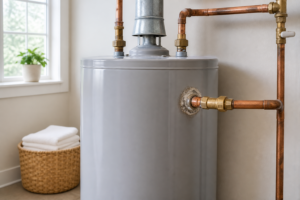
A storage-tank heater keeps a volume of water ready for use. Mineral sediment can settle in the tank, and scale can form near heating surfaces. You may notice reduced hot-water capacity, slower recovery, or a noise as the unit heats. These clues can also come from a worn component, a wrong setting, or a demand change in the home.
The safe next step is not to open panels or change parts based on an article. Check the exact model’s use-and-care manual. It tells you which maintenance is appropriate, what conditions need professional service, and what safety steps apply to gas or electric equipment.
Tankless Water Heaters
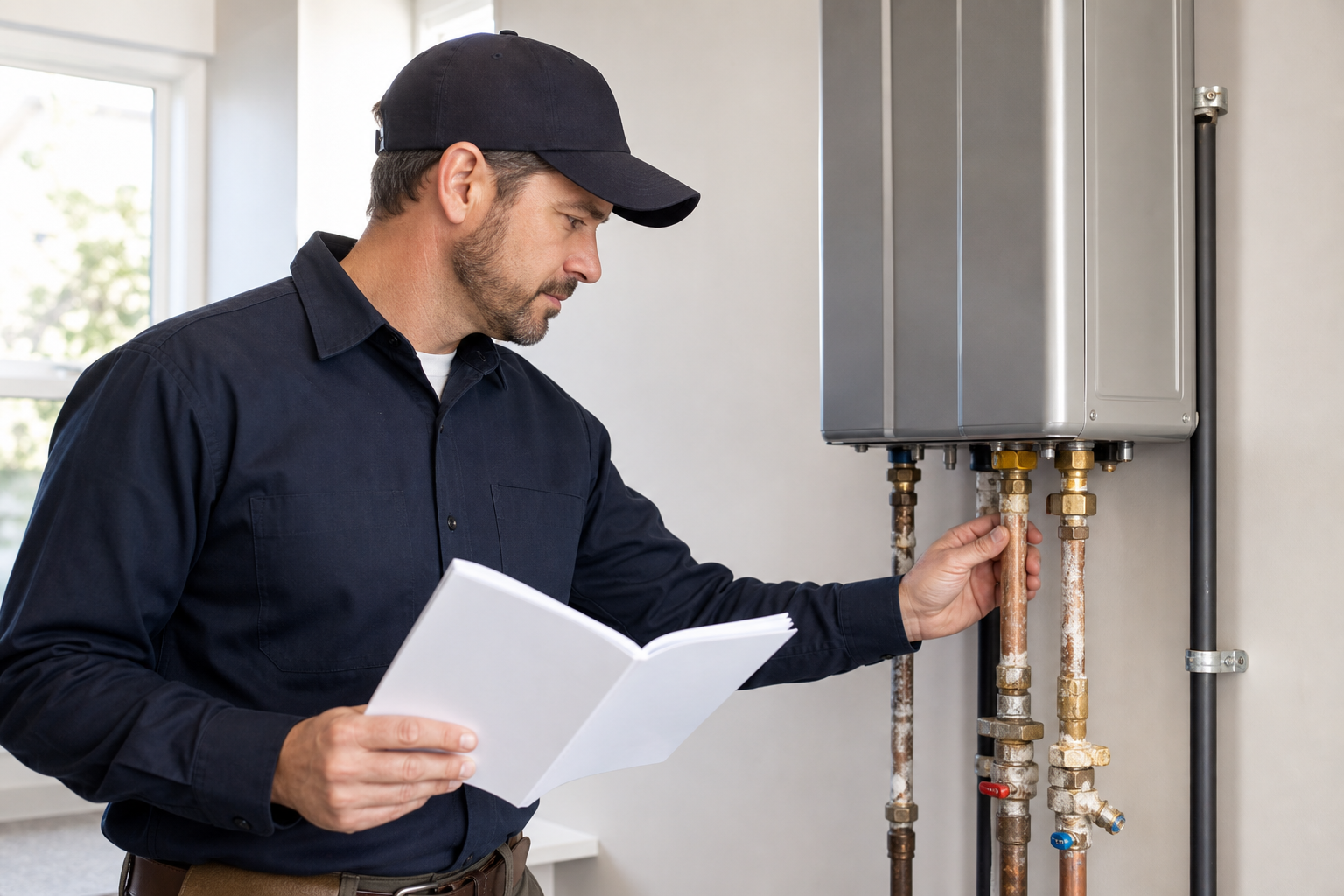
A tankless heater heats moving water through a heat exchanger. The U.S. Department of Energy’s tankless-water-heater guidance says scale can restrict flow through the heat exchanger and reduce unit life. It also notes that maintenance instructions and water-softener requirements can vary by manufacturer, model, water hardness, and usage.
That is why a tankless error code, a flow change, or a temperature swing should not lead to a generic descaling routine. Use the manual for your exact model and call an authorized service professional if the unit shows a fault, has a leak, or does not operate normally.
A Safe Way to Check for Hard-Water Clues
How can you tell whether your water heater and your water are connected? Work from the easiest, lowest-risk evidence toward a measured result.
- Look for a whole-home pattern. Check whether white, chalky mineral deposits return on more than one faucet, showerhead, kettle, or appliance. A single appliance problem can be unrelated to hardness.
- Check the water heater from the outside only. Note changes in hot-water availability, noises, visible exterior deposits, or fault indicators. Do not remove covers, operate valves, or bypass safety controls.
- Read the exact manual. Follow the unit maker’s guidance for the model, fuel type, maintenance interval, and warning signs. A generic online schedule may be wrong for your equipment.
- Measure hardness before you shop for treatment. A test strip can be a useful screen, while a drop kit or laboratory test may give a more useful number for a treatment decision. Our water-hardness test kit guide compares those options.
- Read the result correctly. If you use test strips, follow the timing and color chart that came with the kit. Our guide on reading water-hardness test strips explains how to avoid a misleading result.
What should you do after a high result? First, separate the water result from the equipment diagnosis. A high hardness number may support a discussion about scale control or a properly sized softener. It does not confirm that the current water-heater fault is caused by scale, and it does not replace service for a failing unit.
Keep a short record of what you see before you call. Note when the noise or temperature change began, whether it happens at every fixture, whether the cold-water side has the same issue, and the hardness result with its unit. This gives a technician useful context without asking you to take apart a gas or electric appliance.
Penn State Extension notes that ion-exchange softeners reduce hardness minerals, but they do not solve every water-quality issue. Iron, odor, bacteria, corrosion, and other conditions need their own tests and treatment decisions. This test-first approach helps you avoid buying a system that does not fit the actual problem.
When to Call a Qualified Technician
Some water-heater symptoms should move you out of do-it-yourself diagnosis. Contact a qualified water-heater technician or the appropriate utility or emergency service if you notice an active leak, a gas smell, a burning smell, smoke, repeated breaker trips, a pressure-relief concern, or a fault that prevents normal operation. Follow local safety guidance and the manufacturer’s instructions.
Also get help when the problem is sudden, severe, or limited to one fixture in a way that could point to a plumbing restriction. A technician can distinguish scale from a heating-element, burner, thermostat, valve, venting, or plumbing issue. That distinction protects both your equipment and your safety.
If hot water alone smells like rotten eggs, do not assume hard water is the reason. Penn State Extension explains that water-heater chemistry can play a part in hot-water hydrogen-sulfide odor. It is worth getting model-specific or water-quality guidance rather than adding a treatment product without a diagnosis.
Frequently Asked Questions
Can hard water make a water heater noisy?
It can contribute to mineral scale or sediment that may be associated with noise during heating. Noise is not a diagnosis. Check the manual and arrange service if the sound is new, severe, or paired with a leak, fault code, or loss of hot water.
Does hard water affect tankless water heaters?
Yes. Scale can collect in a tankless heat exchanger and can restrict flow or reduce efficiency. The correct maintenance method and frequency depend on the exact model and water conditions, so follow the manufacturer’s instructions.
Will a water softener fix every water-heater problem?
No. A softener can reduce hardness minerals when the water test supports that choice. It cannot repair a leak, failed component, gas issue, wiring problem, or an unrelated plumbing fault.
Should I test hardness if I see scale near my water heater?
Yes. A hardness test can turn a visible clue into a useful measurement. Use the result with the unit manual and, when needed, a technician’s diagnosis before you make a treatment decision.
Does hard water mean my drinking water is unsafe?
Hardness measures calcium and magnesium. It is not a complete drinking-water safety test. If you have a concern about a specific contaminant, odor, color, or private-well condition, use the appropriate certified laboratory test or local water-quality guidance.
The Bottom Line
Hard water heater problems often start with a reasonable question: is mineral scale making your water heater work harder? Hardness can contribute to scale, reduced heat transfer, and equipment wear, but it does not diagnose every water-heater symptom.
Look for a repeated mineral pattern around the home, check the exact water-heater manual, and test your water hardness before you spend money on treatment. If you see an urgent safety sign, an active leak, a gas smell, an electrical problem, or persistent heating trouble, contact a qualified technician. A measured result and a proper diagnosis give you the clearest path forward.