
Are you wiping white crust from faucets, rewashing cloudy glasses, or wondering why your soap never seems to lather the way it should? Those can be signs of hard water in your home. Hard water contains higher amounts of dissolved minerals, mainly calcium and magnesium, and those minerals can leave a trail on fixtures, dishes, laundry, and water-using appliances.
The important part is this: household signs can point you in the right direction, but they do not prove the cause. Iron, old plumbing, a dirty aerator, detergent residue, and other issues can create similar clues. Fortunately, you can use the signs below to decide whether a simple hardness test is the sensible next step.
| If you notice | Hard water may be involved when | First next step |
|---|---|---|
| White crust on fixtures | The deposit returns after cleaning. | Test hardness before choosing treatment. |
| Spots on glassware | It happens on dishes and fixtures, not only in one appliance. | Check detergent and rinse-aid settings, then test. |
| Soap film or poor lather | It happens with several soaps or faucets. | Rule out product residue, then measure hardness. |
| Appliance scale | It returns in heated-water appliances. | Follow cleaning directions and test the supply water. |
| Slower fixture flow | Several aerators or showerhead openings collect scale. | Clean the fixture and investigate persistent low flow. |
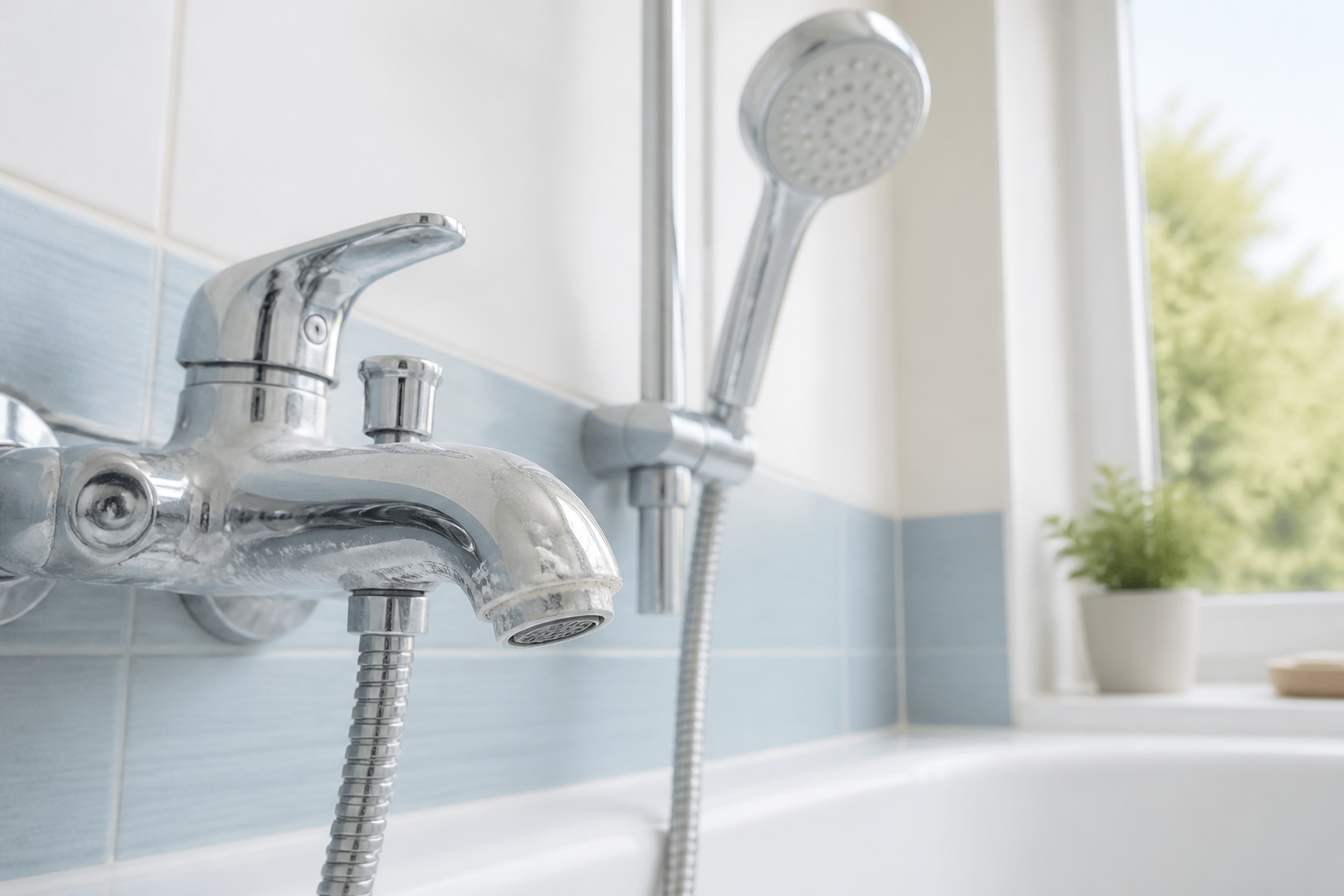
Table of Contents
Table of Contents
- What Hard Water Looks Like Around a Home
- 12 Signs of Hard Water in Your Home
- When a Sign Is Not Enough
- How to Confirm Whether You Have Hard Water
- What to Do With a Confirmed Hardness Result
- Frequently Asked Questions
What Hard Water Looks Like Around a Home
Hardness is a measurement of dissolved minerals in water, especially calcium and magnesium. The U.S. Geological Survey explains that these minerals can form scale as water moves through pipes or is heated. They also react with soap, which is why the effects often show up in bathrooms, laundry rooms, and kitchens first.
What does that mean in everyday terms? When water dries, it can leave minerals behind. When it is heated, those minerals are more likely to form solid deposits. And when you wash with soap or detergent, some cleaning power gets used up reacting with the minerals before it can do its usual job.
That pattern is useful, but it is not a diagnosis by itself. A single spot on a glass might be a dishwasher issue. A slow faucet might have one clogged aerator. Repeated clues in several places make a hardness test more worthwhile.
12 Signs of Hard Water in Your Home
1. White or Chalky Crust on Faucets and Showerheads
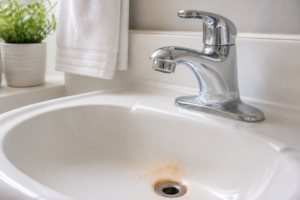
White, off-white, or chalky buildup around a faucet base, on a showerhead, or at the rim of a kettle is one of the clearest visual clues. The deposit is often called scale or limescale. It can form when mineral-rich water evaporates or is heated.
Start by looking where water dries repeatedly: faucet tips, showerhead nozzles, glass shower doors, and the inside of a coffee maker. One small deposit is not conclusive, but a recurring crust after cleaning is a good reason to check hardness.
2. Spots or Film on Clean Glassware
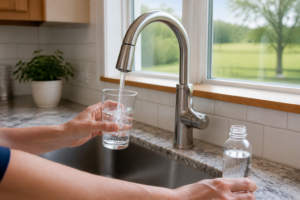
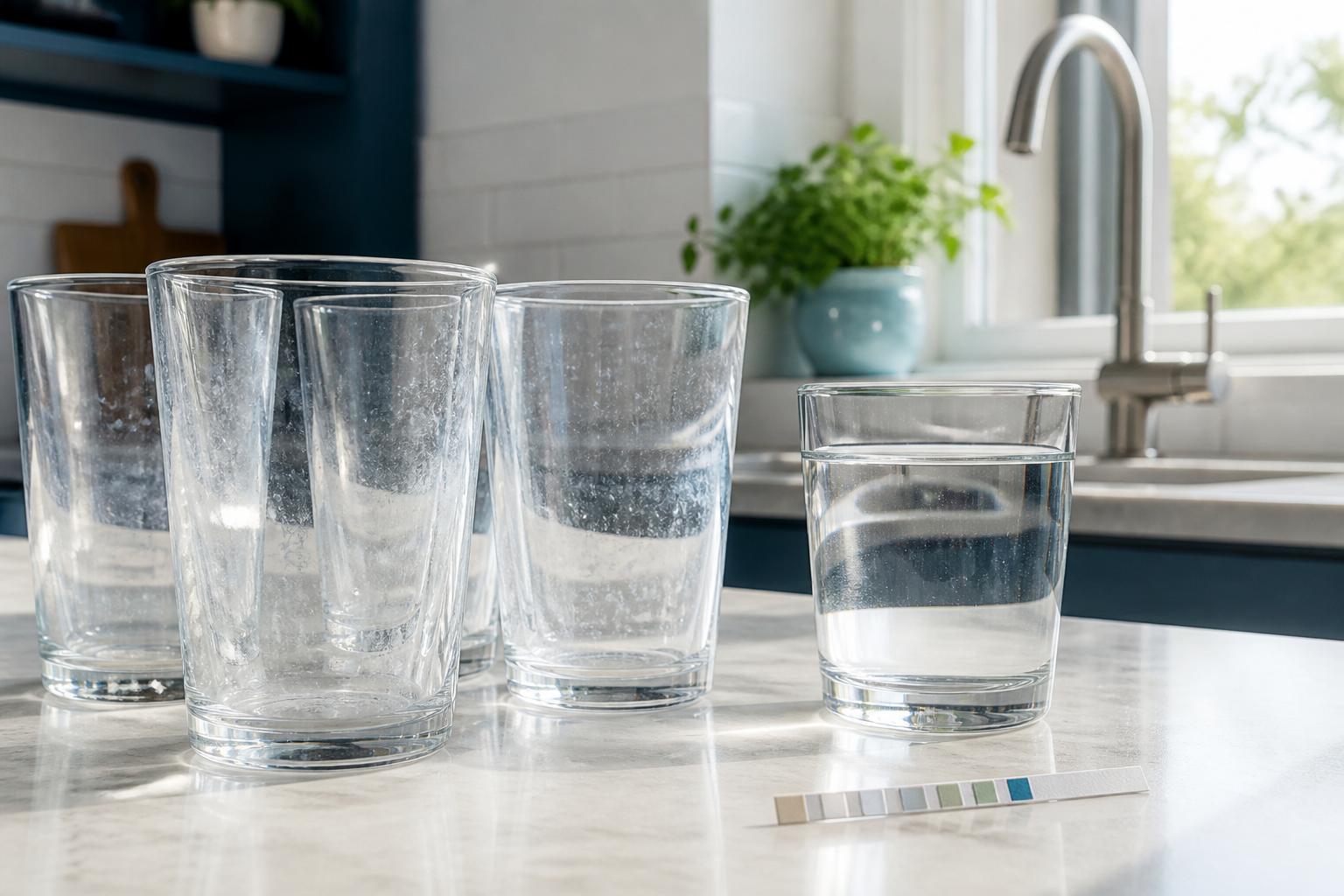
Do your drinking glasses come out of the dishwasher looking cloudy, spotted, or streaked? USGS lists cloudy dishes and glassware among common household effects of hard water. Minerals left behind as rinse water dries can create a film that looks like it never fully washed away.
Before blaming the water, check your dishwasher rinse aid, detergent amount, and filter. If the issue appears on hand-washed glasses too, or it is paired with scale on fixtures, hardness becomes a more likely explanation.
3. Soap Scum That Returns Quickly
Soap scum is a dull film that can appear on shower walls, tubs, sinks, and even hands after washing. Calcium in hard water can react with soap to form residue, according to the USGS water-hardness overview.
Does the film come back soon after you clean the bathroom? That repeat pattern matters more than a one-time ring. It’s still helpful to rule out a new soap or body wash, because product residue can look similar.
4. Soap or Shampoo That Does Not Lather Easily
If you need more soap than expected before you see suds, your water may be working against it. The minerals in hard water can react with soap before it produces a useful lather. Penn State Extension notes that calcium and magnesium can reduce the effectiveness of soaps and detergents.
This sign is easiest to notice when it happens with more than one product and at more than one faucet. It is not a reason to buy treatment on its own, but it is a practical clue to combine with visible scale or spots.
5. A Film on Skin or Hair After Washing
Some people notice that rinsing feels different, or that soap seems to leave a film after bathing. That can happen because hard-water minerals react with soap. It does not diagnose a skin or hair condition, and it is not a reason to assume your water is unsafe.
If dry, itchy, or irritated skin is persistent, consider the many non-water causes and speak with an appropriate professional. Use a hardness test to answer the water question rather than treating a household symptom as a health conclusion.
6. Laundry That Feels Stiff, Looks Dull, or Needs Extra Detergent
Hard water can make detergents work less effectively and can leave residues in fabric. You may notice towels that feel less soft, white laundry that looks grayish, or colors that seem less bright after repeated washing. Penn State Extension lists detergent film on freshly washed clothes as a familiar hard-water complaint.
Check your detergent dosage and washer maintenance first. If clothes, dishes, and bathroom fixtures all show related residue, you have a stronger case for measuring hardness.
7. A Kettle, Coffee Maker, or Humidifier That Needs Frequent Descaling
Small appliances make mineral buildup easy to spot because they heat water or let it evaporate. A white layer inside a kettle, coffee maker, steam iron, or humidifier can be a sign that minerals are concentrating as water changes state.
Follow the manufacturer cleaning instructions for each appliance. If you keep seeing deposits after routine cleaning, test the incoming water rather than guessing at its hardness level.
8. Shower Spray That Becomes Uneven
Mineral deposits can accumulate in showerhead nozzles over time. That may leave some jets spraying sideways or make the overall spray feel weaker. USGS notes that scale can gradually reduce movement through water pipes, and the same buildup can be visible in small fixture openings.
An uneven shower spray can also come from debris or a worn showerhead. Remove and clean the fixture according to its instructions, then watch whether scale returns.
9. Faucet Aerators That Keep Clogging
The small screen at the end of a faucet is called an aerator. If it repeatedly collects white grit or needs frequent cleaning, mineral scale may be part of the problem. This is especially telling when several faucets around the home show the same issue.
Do not assume every low-flow faucet is a hardness problem. A single clogged aerator can be local debris, while a whole-home pressure change needs a broader plumbing check.
10. More Buildup Around Hot-Water Fixtures
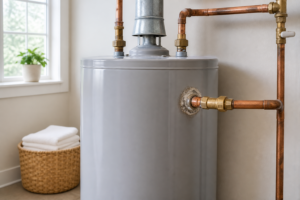
Hard-water scale often becomes more noticeable where water is heated. You might see it on a hot-water faucet, in a kettle, or around appliances that use hot water. USGS notes that solid calcium carbonate deposits can form in home water heaters and can reduce equipment efficiency.
Listen for a new water-heater noise or notice whether hot-water performance changes, but do not diagnose the appliance from one symptom. A qualified technician can help with a sudden or serious equipment problem.
11. A White Ring in Sinks, Tubs, or Toilets
A pale ring or crust where standing water evaporates can be another hardness clue. It often appears at a sink drain, on a tub surface, inside a toilet bowl, or at the water line in a pet bowl. Repeated white buildup is more consistent with minerals than a one-time spill mark.
Brown, orange, or red staining points more strongly toward iron or rust than hardness alone. If you see color, odor, or sediment along with scale, choose a broader water test rather than relying only on a hardness number.
12. You Keep Cleaning the Same Mineral Residue
The final sign is the pattern itself. You clean the faucet, shower door, dishes, and appliance, yet the same white residue returns. That does not prove hard water, but it tells you the issue is persistent enough to measure instead of repeatedly changing cleaners.
For a quick first screen, our guide on how to test for hard water without a kit explains a soap-lather check and its limits. A measured test is still the better choice when you are making a treatment or equipment decision.
When a Sign Is Not Enough
Could another problem look like hard water? Absolutely. White residue can come from detergent, cleaner, or scale. Brown or orange stains can be related to iron. A rotten-egg odor is not a normal hardness sign. A sudden drop in pressure, leaking pipe, colored water, or a major appliance change deserves a closer look than a quick hardness assumption.
The University of Minnesota Extension notes that hardness has no health-risk limit and is mainly a nuisance issue involving minerals, scum, staining, and dingy clothes. That is why it is important to separate a hardness clue from a drinking-water safety concern. A hardness test does not tell you whether water has bacteria, lead, nitrate, or another contaminant.
If your water comes from a private well, new color, odor, or sediment is especially worth discussing with a local testing resource. For a public system, start by identifying the utility and reading its current information. A local estimate can be a useful starting point, but it is not a substitute for a sample from your faucet.
How to Confirm Whether You Have Hard Water
What is the simplest way to move from clues to an answer? Test the water. A hardness strip can give you a quick range, while a liquid-drop kit can give a more specific number. A laboratory is useful when you need documentation or want a broader water-quality picture.
Our complete guide to testing water hardness at home explains which method fits each situation. If you already have a strip, use the matching water hardness test-strip reading guide before treating a color block as an exact result.
For the most useful comparison, take a clean sample from the faucet you want to understand, follow the kit directions, and write down the date, result, and unit. If you have treatment equipment, sample before and after it only when the question is whether the equipment is changing the hardness level.
What to Do With a Confirmed Hardness Result
Once you have a number, use the unit before drawing a conclusion. Results may be expressed as milligrams per liter (mg/L) as calcium carbonate, parts per million (PPM), or grains per gallon (GPG). The water hardness scale explains how common ranges are classified and how to keep units straight.
Then focus on your actual goal. Are you trying to reduce scale on fixtures, set up an existing softener, protect an appliance, or decide whether treatment is worth the cost? Hardness alone is not a full water-quality diagnosis, and a softener is not a general-purpose solution for every water problem.
If you decide to track the issue over time, retest after a move, a change in water source, new scale, or a softener adjustment. Our practical hardness-testing schedule can help you decide when another measurement is useful.
Frequently Asked Questions
What is the most common sign of hard water?
White scale on faucets and showerheads, spots on glassware, and soap scum are common clues. A test is the only way to confirm how hard your water is.
Can hard water cause low water pressure?
Scale can build up in fixture openings and, over long periods, inside plumbing. But a sudden or severe pressure change can have other causes, so do not assume hard water without checking the fixture and the plumbing.
Does hard water mean my drinking water is unsafe?
No. Hardness mainly measures dissolved calcium and magnesium. It does not answer broader drinking-water safety questions, so use the appropriate test if you are concerned about a specific contaminant or private-well condition.
How do I know whether I need a water softener?
Start with a measured hardness result and the problem you want to solve. Scale, soap performance, appliance maintenance, household budget, and local water conditions all matter. Do not choose equipment from visual clues alone.
The Bottom Line
The signs of hard water are often easy to see: chalky scale, cloudy glasses, stubborn soap scum, dull laundry, and mineral buildup in appliances. They are useful clues, not a final answer.
Fortunately, you do not have to keep guessing or cleaning the same residue without a plan. Use the clues to justify a water hardness test, record the result, and then decide whether a change is worthwhile for your home. That measured approach is more useful than spending money on treatment based only on a spotty glass or crusty faucet.