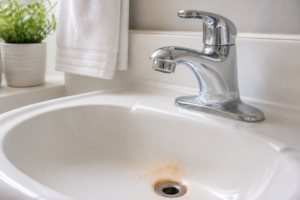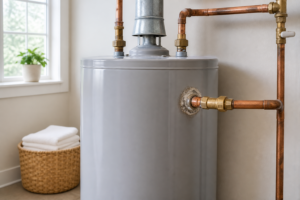

Do your towels feel rough, do dark clothes look dull, or do you see a light residue after washing? Hard water laundry problems can be frustrating, but they do not always mean you need to replace your washer or buy a treatment system. Start with a few controlled checks, then measure your water if mineral clues keep showing up around the home.
Hard water contains dissolved calcium and magnesium. The U.S. Geological Survey notes that hard water can make soap and detergent work less effectively, so you may need more detergent to get laundry clean. That does not mean more detergent is always the answer. Too much can also leave residue, especially when the washer is full or the product does not dissolve well.
The useful question is: are your clothes reacting to hard water, a laundry routine issue, or both? This guide gives you a safe order for checking each possibility. It also helps you decide when a hardness result can guide the next step.
| What you notice | Hard water may be involved when | Check first |
|---|---|---|
| Towels feel stiff | You also see scale on faucets or spots on glassware. | Care label, detergent directions, and washer loading. |
| White or gray residue | The same film appears on fixtures or inside the washer. | Detergent amount, water temperature, and the washer manual. |
| Clothes look dull | The change happens across several loads and fabrics. | Sorting, soil level, detergent type, and a hardness measurement. |
| Washer shows mineral buildup | You see chalky deposits near water paths or in the drum. | Manufacturer-approved cleaning instructions. |
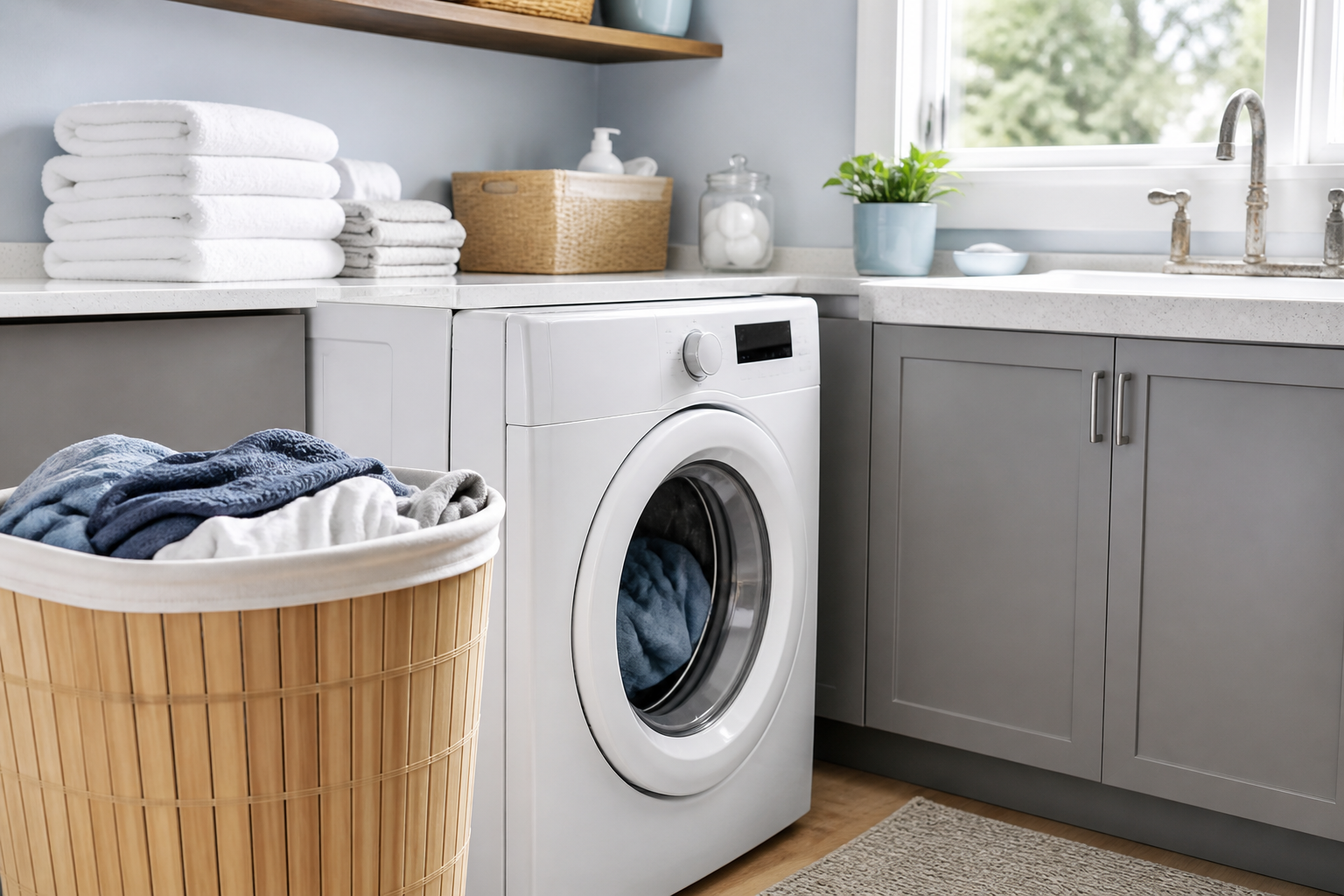
Table of Contents
Table of Contents
- Why Hard Water Affects Laundry
- A Simple Routine for Washing Clothes in Hard Water
- When to Test Your Water Hardness
- Build a Routine That Is Easy to Repeat
- Avoid These Common Hard Water Laundry Mistakes
- Frequently Asked Questions
Why Hard Water Affects Laundry
Hardness is mainly a measure of calcium and magnesium in water. Those minerals can reduce the cleaning action of soap and detergent and can leave deposits after water dries. That is why hard water can show up as stiff towels, a dull look on dark fabric, or a film in the washer. It is a household-performance issue, not a complete water-quality or drinking-water safety result.
The American Cleaning Institute explains that some powder detergents can combine with hardness minerals and leave residue on fabric. The New Mexico State University laundry guide makes the same practical point: minerals can combine with soap and create scum that causes laundry problems.
Does every rough towel prove that you have hard water? No. Too much detergent, an overloaded washer, poor rinsing, a worn towel, or a care-label conflict can create a similar result. Look for a pattern. If scale is also showing up on faucets, showerheads, kettles, or dishes, hardness becomes a more likely contributor. Our guide to signs of hard water can help you compare those clues without treating them as a diagnosis.
A Simple Routine for Washing Clothes in Hard Water
You do not need to change every laundry habit at once. Use the following steps for two or three comparable loads, then compare the result. Keep the garment care label and your washer manual in charge of temperature, cycle, and approved cleaner choices.
1. Sort and Do Not Overload
Sort by care label, color, and soil level. Leave enough room for the load to move and rinse. A packed drum makes it harder for water and detergent to circulate, which can make any residue problem worse. Towels, bedding, and heavily soiled work clothes often need their own load.
2. Start With the Detergent Label
Use the product label as your starting amount for your load size and water conditions. Some labels give a hard-water range. If yours does, follow it instead of estimating. USGS notes that more detergent may be needed in hard water, but adding extra product without a label direction can leave its own film.
If you use powder detergent and see streaks or residue, check whether the product is suitable for your wash temperature and machine. Do not mix products or add a laundry booster unless its label and your washer manual permit it. A branded product recommendation is not needed to make this step work.
3. Choose the Cycle for the Fabric
The right cycle protects fabric and improves rinsing. Use the warmest setting that the garment label allows when you need more cleaning power, but do not use hotter water just to fight hardness. Delicates, bright colors, and shrink-prone items may need cool water. The care label is more specific than a general laundry tip.
4. Check the Washer’s Care Instructions
Mineral deposits can build up in a washer, but every model has its own approved cleaning cycle and product limits. Follow the manual for drum cleaning, dispensers, filters, and any water-softening feature. Do not use vinegar, descaler, salt, or a homemade mixture unless the manufacturer says it is safe for your model.
5. Compare the Result With Other Clues
After a few controlled loads, look beyond the laundry room. Are you seeing scale on fixtures and spots on dishes too? Our guide to limescale versus calcium buildup explains what a chalky mineral deposit can look like. A pattern across several water uses is a better reason to test than one stiff towel alone.
When to Test Your Water Hardness
A test is most helpful when it changes a decision. If laundry improves after you correct loading, detergent, and washer care, you may not need to pursue treatment. If mineral signs continue across the home, a number gives you a better basis for adjusting a setting or researching a softener.
Start with our guide to testing water hardness at home or a local utility report. Then read the result with our water hardness scale guide. USGS notes that regional data are not a substitute for a home-level decision, especially if your supply or household use differs from a nearby area.
What result requires treatment? There is no single laundry-only cutoff. A documented hardness level, recurring scale, appliance needs, your budget, and the full water picture all matter. A water softener can reduce hardness minerals, but it will not repair a washer problem, remove every contaminant, or replace good loading and detergent practices.
Build a Routine That Is Easy to Repeat
The best laundry routine is one you can repeat without making a new guess each week. Start by writing down the detergent amount, cycle, load type, and result for two or three loads. You do not need a complex chart. A short note such as “two bath towels, normal cycle, label hard-water dose, no residue” is enough to show whether a change helped.
Use One Change at a Time
Did you change the detergent amount, washer cycle, additive, and load size in one day? You will not know which change affected the result. Keep the same detergent and cycle for a comparable load, then adjust one thing. For example, first correct an overloaded drum. Next, use the label’s hard-water range if it provides one. Then check the washer manual’s cleaning guidance if residue remains.
This slow approach can save money. It also prevents a common cycle where a reader adds more product because laundry looks dull, then sees more residue and adds something else. If a detergent is not suitable for your machine or fabric, the care label and product directions are better sources than a general online routine.
Treat Towels, Activewear, and Delicates Differently
Towels can hold detergent and mineral residue more visibly than some other items. Give them room to move, follow their care labels, and avoid treating a rough feel as proof that the water alone is the problem. If towels improve with a normal-sized load and correct detergent dose, you have useful evidence that does not require a treatment purchase.
Activewear, microfiber, water-repellent items, and delicate fabrics can have special limits for heat, softeners, or cleaners. Check each label before you change the routine. Do not use a hard-water workaround that can damage a fabric finish or reduce its performance.
Know When the Washer Needs Service
Hardness is not a safe explanation for a leak, burning smell, electrical problem, failure to drain, or unusual mechanical noise. Stop using the washer and follow the manufacturer service guidance if you see those signs. A measured hardness result can inform water-treatment research, but it cannot diagnose an appliance fault.
Avoid These Common Hard Water Laundry Mistakes
Guessing With More Detergent
More detergent can be useful only when the label calls for it. Too much can be hard to rinse and may leave fabric feeling coated. Change one variable at a time, then see whether the next comparable load improves.
Treating One Laundry Symptom as Proof
Stiff towels can result from age, detergent residue, overloading, or mineral deposits. Check for scale elsewhere and measure hardness before making a whole-home purchase.
Ignoring the Washer Manual
Washer cleaning products and cycles are not universal. The manual is the safe source for a specific model’s dispenser, cleaning cycle, filter, and approved cleaner instructions.
Using a General Water Test for Every Question
Hardness tests measure mineral content. They do not answer questions about bacteria, lead, nitrate, or other contaminants. Match the test to the water question you need to answer.
Frequently Asked Questions
Can hard water make clothes feel stiff?
Yes. Hardness minerals can limit detergent performance and can contribute to residue. Stiff fabric can also come from too much detergent, poor rinsing, overloading, or normal fabric wear, so check the routine before you assume the cause.
Should I use more detergent with hard water?
Follow the detergent label for hard-water dosing. USGS notes that hard water can require more detergent, but extra product without label direction can also leave residue.
Can I use vinegar or a laundry additive for hard water?
Use only products and amounts that both the product label and your washer manufacturer allow. Cleaner and additive guidance differs by model and material, so a general article should not override the manual.
Will a water softener fix every laundry problem?
No. A softener addresses hardness minerals. It does not fix a worn fabric, incorrect cycle, overloaded washer, damaged appliance, or detergent that is not used as directed.
Does hard water mean my water is unsafe?
No. Hardness describes dissolved minerals and their household effects. It does not measure other water-quality concerns. Use a test that matches the question you need to answer.
The Bottom Line
Hard water laundry problems are often manageable without guesswork. Sort and load correctly, follow garment and washer instructions, use the detergent label as the starting point, and look for a mineral pattern around the home. If that pattern continues, test your hardness and use the result to choose the next step with more confidence.