
Have you opened a water test result, seen a number like 140 ppm or 8 gpg, and wondered whether it is a problem? A water hardness scale turns that number into something useful. It shows whether your water is soft, moderately hard, hard, or very hard, then helps you decide whether you need more testing, a maintenance change, or a conversation about treatment.
Water hardness is mainly a measure of dissolved calcium and magnesium. It is not a contaminant score or a safety grade. Still, a high result can explain stubborn spots on glassware, soap that will not lather well, and mineral scale around faucets or inside water-heating equipment.
Fortunately, the units are easier to read than they look. This guide explains ppm, mg/L, and grains per gallon, shows the common hardness ranges, and gives you a practical next step for your own number.
Table of Contents
Table of Contents
- The Water Hardness Scale at a Glance
- Why PPM, mg/L, and GPG Appear on Different Tests
- How to Use Your Water Hardness Result
- When Does Hard Water Need Treatment?
- Water Hardness Scale FAQs
The Water Hardness Scale at a Glance
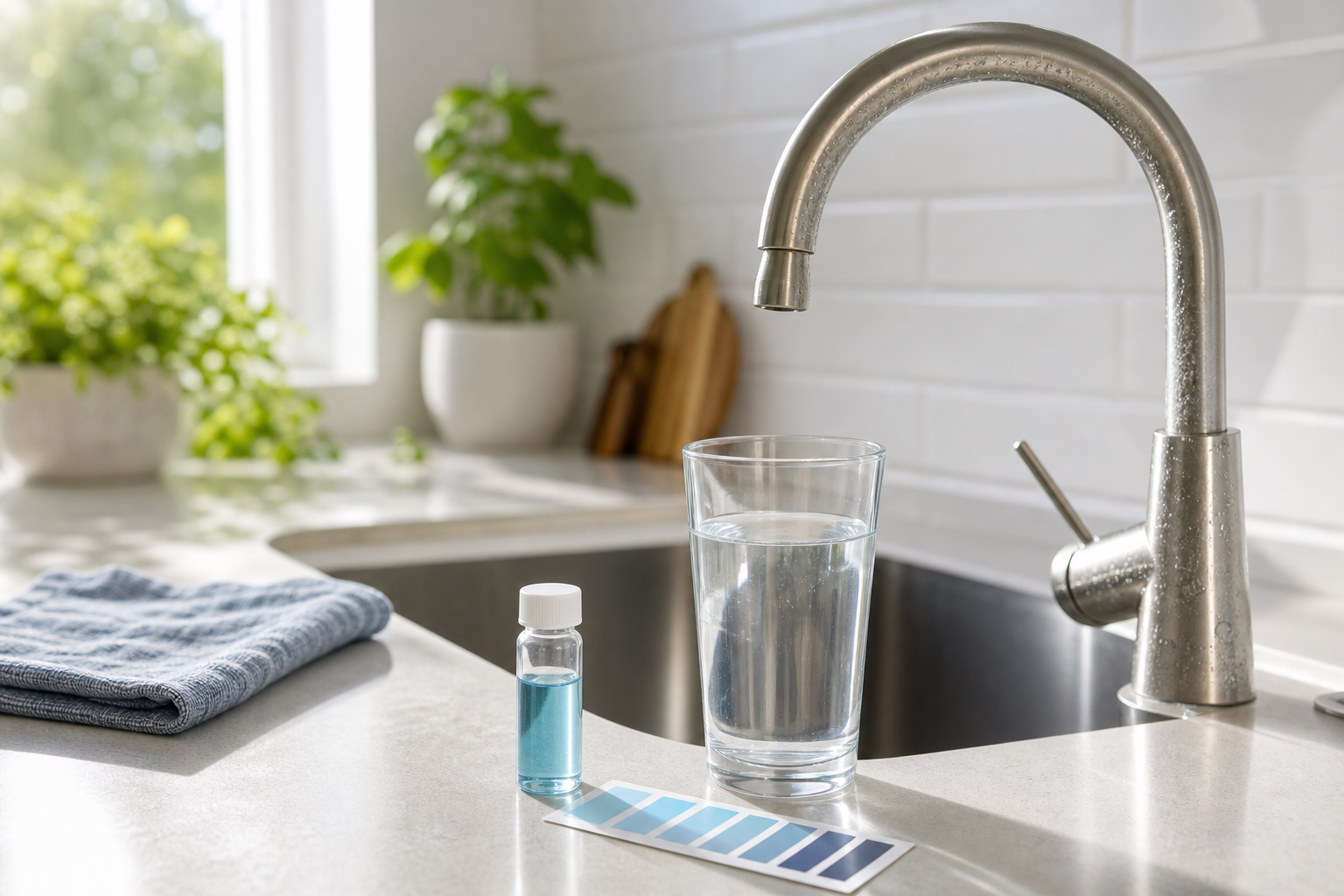
The U.S. Geological Survey uses a general classification based on milligrams per liter of calcium carbonate. The chart below pairs that guidance with the grains-per-gallon values commonly used for water-softener settings.
| Hardness result, as calcium carbonate | Common label | Approximate grains per gallon | What you may notice |
|---|---|---|---|
| 0 to 60 mg/L or ppm | Soft | 0 to 3.5 gpg | Soap lathers readily and mineral residue is less likely. |
| 61 to 120 mg/L or ppm | Moderately hard | 3.6 to 7.0 gpg | You may see some spotting or need a little more soap. |
| 121 to 180 mg/L or ppm | Hard | 7.1 to 10.5 gpg | Soap scum and scale can become regular cleaning concerns. |
| More than 180 mg/L or ppm | Very hard | More than 10.5 gpg | Scale may be more persistent on fixtures and water-heating equipment. |
Think of the chart as a way to interpret a result, not a command to buy equipment. The USGS notes that regional information is not designed to make a decision for an individual property. Your own utility report, home test, or local laboratory result is the better starting point for your home.
Why does hardness show up at all? As water moves through soil and rock, it can dissolve naturally occurring minerals. Calcium and magnesium are the main contributors. That is why two homes in the same county can still have different results, especially when one uses a private well and the other receives treated municipal water.
Why PPM, mg/L, and GPG Appear on Different Tests
The three labels describe the same general property, but they serve different audiences. Home test kits and water-quality reports often use mg/L or ppm. Water-softener controls and sizing discussions often use gpg, short for grains per gallon.
Is ppm the same as mg/L for water hardness?
For the typical home-water result reported as calcium carbonate, ppm and mg/L are commonly used interchangeably. A report that says 120 ppm as CaCO3 and one that says 120 mg/L as CaCO3 are communicating the same point for a homeowner reading a hardness chart.
The important detail is the “as calcium carbonate” part. It provides a shared basis for comparing calcium and magnesium hardness. If your report uses a different expression, follow the report’s own conversion notes or ask the lab or utility before comparing it with a home test chart.
How do you convert ppm to gpg?
The Water Quality Association uses this practical conversion: 1 gpg equals 17.1 ppm as calcium carbonate equivalent. To move from ppm or mg/L to gpg, divide by 17.1.
- 60 ppm ÷ 17.1 = about 3.5 gpg.
- 120 ppm ÷ 17.1 = about 7.0 gpg.
- 180 ppm ÷ 17.1 = about 10.5 gpg.
To convert the other direction, multiply gpg by 17.1. For example, a 9 gpg result is about 154 ppm or mg/L as calcium carbonate. Round for everyday planning. You do not need more decimal places to decide whether your result lands in the moderately hard or hard range.
Why do softener settings use gpg?
Many softeners use gpg because it is a familiar water-treatment unit and works well with capacity calculations. If you are comparing a test result with a softener setting, convert both numbers to the same unit first. Then use your actual hardness result, household water use, and equipment instructions together. A sizing guide can help after you have the number: see what size water softener a family of 4 needs.
How to Use Your Water Hardness Result
What should you do once you have a number? Start with the source of the result and the issue you are trying to solve.
- Confirm the sample. A current utility water-quality report can be useful for municipal water, but a tap sample is more specific to your household. Private-well owners should use a suitable home test or accredited laboratory when they need a documented result.
- Match the unit. Put the result into ppm, mg/L, or gpg, then compare it with the chart. Do not compare raw TDS with a hardness result. Total dissolved solids can include many minerals and is not a substitute for a hardness test.
- Look for practical symptoms. Are you seeing white scale on fixtures, cloudy glasses, extra detergent use, or a water heater that needs frequent attention? These clues help you decide whether hardness is affecting your routine.
- Test before you treat. If your result is surprising or you are making an equipment decision, repeat the test or use a lab. Our guide on how to test water hardness at home compares the common testing approaches.
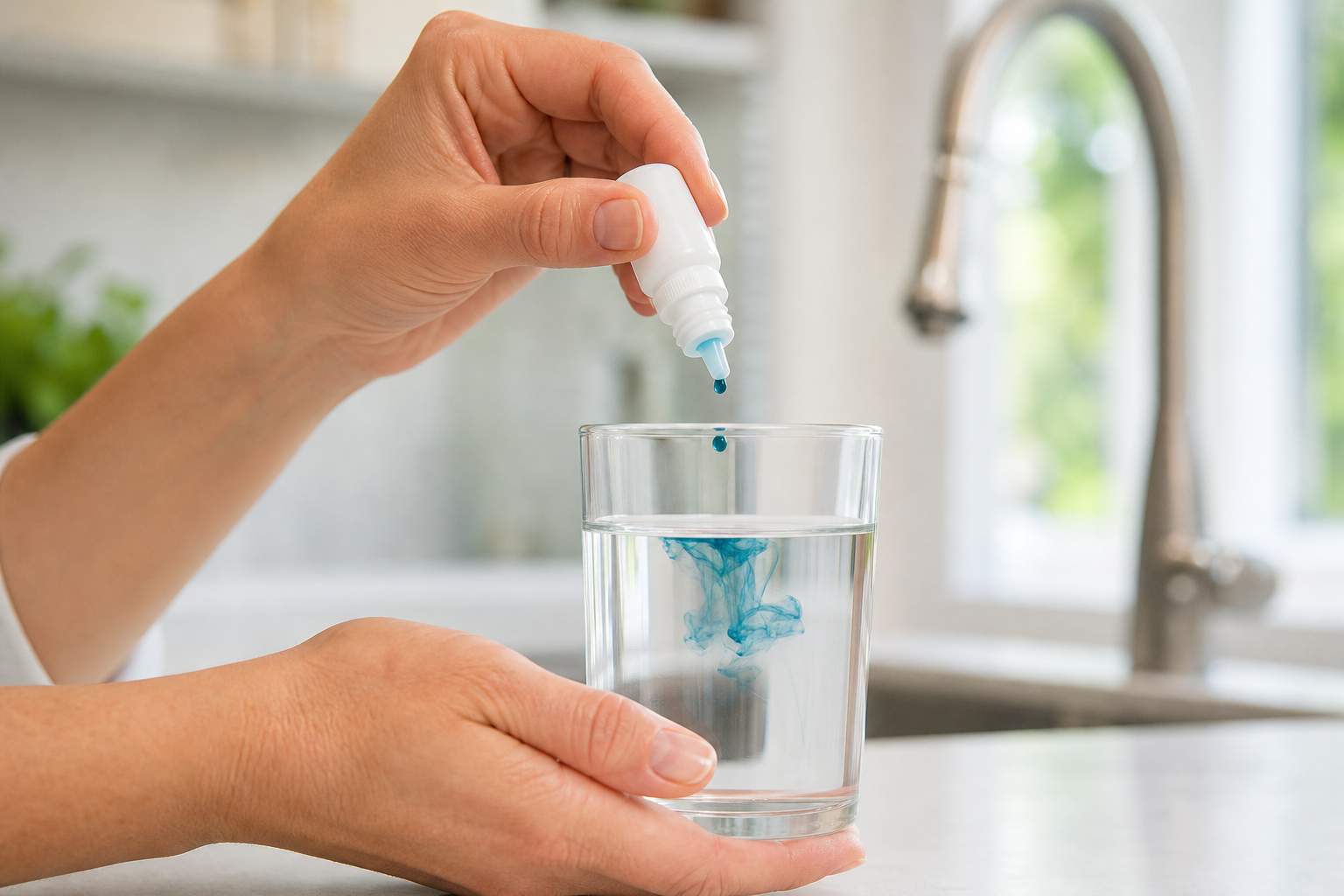
Be careful with regional maps and online lookup tools. They can provide context, but they cannot account for your home’s plumbing, a local blend of water sources, a private well, or a treatment system already in place. A current sample is what turns an interesting regional estimate into a decision-ready result.
When Does Hard Water Need Treatment?
There is no universal hardness number that requires a water softener. The best decision depends on your test result, the problems you are actually seeing, your household’s water use, and the type of system you are willing to maintain.
The EPA’s WaterSense guide notes that significant hardness can lead to mineral scale on fixtures and appliances and can make it harder for soap and detergent to lather. It also advises consumers who choose treatment to look for appropriate certification, such as NSF/ANSI 44 for water softeners.
If your water falls in the hard or very hard range and you are dealing with repeated scale or soap-scum issues, it may be worth comparing treatment options. That does not mean every home needs a softener. For example, a renter may focus on cleaning and appliance care, while a homeowner may consider a whole-home system after confirming the result.
If you already have a softener, the test result can help you check that its setting makes sense. It can also guide routine supplies. Our water softener salt buying guide covers the common salt types and maintenance considerations. If you are trying to solve a separate taste, sediment, chlorine, or contaminant concern, hardness and filtration are different jobs. Start with our home water filtration guide so you can match the system to the actual issue.
Water Hardness Scale FAQs
Is 100 ppm hard water?
On the USGS general scale, 100 ppm as calcium carbonate is moderately hard. It is about 5.8 gpg. You may notice some spots or need slightly more soap, but the number alone does not tell you that treatment is necessary.
Is 7 gpg considered hard water?
Seven gpg is about 120 ppm as calcium carbonate, which sits at the upper end of the moderately hard range in the USGS classification. Values above that move into the hard range. Check the units and the test method before setting equipment from a single result.
What water hardness is considered very hard?
More than 180 mg/L or ppm as calcium carbonate is considered very hard in the USGS general classification. That is more than about 10.5 gpg. At this level, scale and soap-scum issues may be more noticeable, especially around hot-water equipment.
Does hard water mean my drinking water is unsafe?
Not by itself. Hardness measures mineral content, mainly calcium and magnesium. It is not a complete drinking-water safety test. If you have a private well, a water-quality concern, or a result you do not understand, choose testing that covers the specific issue rather than relying on a hardness number alone.
The Bottom Line
The water hardness scale gives you a practical translation for your test result: 0 to 60 ppm is soft, 61 to 120 is moderately hard, 121 to 180 is hard, and more than 180 is very hard, all as calcium carbonate. Divide ppm or mg/L by 17.1 when you need the gpg figure used by many softeners.
Your next step is simple. Get a current result, compare it with the water hardness scale, and connect the number to the real symptoms in your home. From there, you can decide whether to monitor, adjust maintenance, or research treatment with a clear reason behind it.