

Nitrate in well water is a reason to test, not a reason to buy a filter first. Taste, smell, and color will not tell you whether nitrate is present. A laboratory result will. Only after you have that number do you know whether treatment is needed, which kind fits, and who in the home should avoid the water in the meantime.
This guide explains where nitrate comes from, who is most at risk, how to get a reliable result, and what treatment can and cannot do. It does not give medical advice, and it does not guess at what your local nitrate level might be. You will not find that here, because a real number has to come from a laboratory that tests your water.
For the wider testing routine that nitrate sits inside, our guide to getting well water tested walks through the full yearly checklist. For the broader set of treatment choices, the home water filtration guide lays out how the options compare.
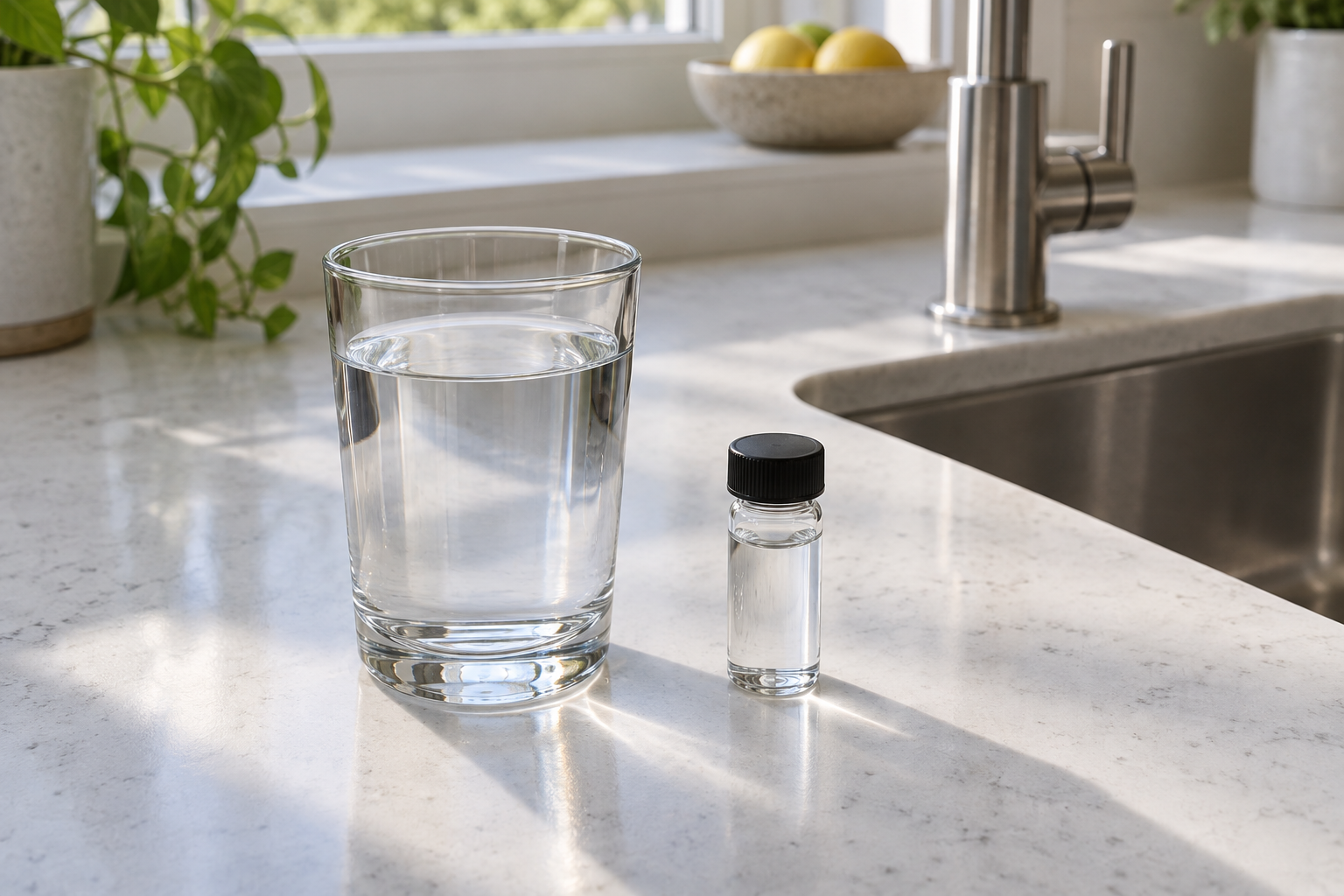

Illustrative image, not a certified product recommendation.
Table of Contents
Nitrate in Well Water: What It Is and Where It Comes From
Nitrate is a compound of nitrogen and oxygen. It occurs naturally in soil, air, and water, and it is also used in fertilizer. That mix of natural and human sources is why nitrate shows up in shallow wells in farming and residential areas and also in wells with no obvious contamination nearby.
Common sources include:
- Fertilizer applied to crops, lawns, and gardens.
- Septic systems and their drain fields.
- Animal waste from livestock, pets, or wildlife.
- Natural soil nitrogen released as organic matter breaks down.
Nitrate dissolves easily in water and moves with it, so it does not stay put. It can travel down through soil into groundwater and reach a well over time. Heavy rain or snowmelt can push it deeper, which is one reason a result from last year is not a guarantee about this year.
Some wells are more exposed than others. A shallow well, a well with a damaged or leaking casing, or a well in sandy soil that drains quickly can carry a higher chance of nitrate reaching the water. The age of the well and the way it was constructed both matter, so it is worth knowing when your well was drilled and whether its casing has been inspected.
Because nitrate has no smell or taste, the CDC’s well water testing guidance treats it as a parameter to test on a schedule rather than a problem you can sense.
Who Is Most at Risk From Nitrate?
Infants are the group of concern for nitrate, and that is the framing the public health sources use. The U.S. Environmental Protection Agency set its drinking water limit for nitrate to protect infants against a condition called methemoglobinemia, sometimes called blue baby syndrome. It affects how blood carries oxygen.
The Minnesota Department of Health states the standard plainly: the EPA limit for nitrate in drinking water is 10 milligrams per liter, measured as nitrogen, and that limit is based on protecting infants. It also notes that bottle-fed babies under six months old face the highest risk, which is why water used to mix infant formula gets special attention.
For context, the same state guidance says nitrate above 1 milligram per liter suggests it is worth testing further, because if nitrate is present other contaminants may be as well. That is a reason to look closer, not a medical alarm.
This article is not medical advice. If you have a specific health question about nitrate, or about a result, talk with your health department or a health care provider.
Does Boiling Well Water Remove Nitrate?
No. Boiling does not remove nitrate, and it can make the concentration higher. When water boils, the water itself turns to steam and leaves, but nitrate stays behind in the remaining liquid. As the volume drops, what is left is more concentrated than what you started with.
That is why the Minnesota Department of Health tells well owners not to try to boil nitrate out of the water, and why the same guidance names boiled water as not a safe option for families with babies under six months. Boiling is a useful step for killing germs in some situations. It is not a nitrate fix, and treating it as one can work against you.
If a result shows nitrate at or above the EPA limit, the practical move is to use a safe alternative source, such as bottled water or water from a source without the problem, until the well is addressed.
How Do You Test a Well for Nitrate?
Test the well, not the tap fixture, unless you are specifically checking a treatment device. Use a state-certified laboratory, and let the lab provide its own sample bottles and instructions. A quick strip can give a rough signal, but it is not a substitute for a certified lab result.
Collect the sample according to the lab’s procedure. In general, that means using their container, following their timing, and getting the sample to the lab within the window it allows. Nitrate is stable enough that this is usually manageable, but the lab’s directions are what apply to your sample.
The CDC recommends testing well water at least once a year for total coliform bacteria, nitrates, total dissolved solids, and pH, and adding any contaminants of local concern. Test sooner if you have a new baby in the home, if a pregnancy begins, if you repair the well, if the water changes, or if land use nearby changes.
What Does the Result Mean?
Read the number against the reference in front of you, not against a memory of a number. The EPA limit for nitrate in drinking water is 10 milligrams per liter, measured as nitrogen. That standard applies to public water systems. Private wells are not regulated by EPA, which is exactly why the owner has to arrange the test.
A result above the limit is a prompt for action, not a diagnosis. Contact your local or state health department to understand your result and the recommended next steps. The 1 milligram per liter reference point some state programs use is a signal to test further, not a health verdict on its own.
Keep the result with the date, the lab, and the sample location. A short log of your yearly numbers lets you see a trend. A level that climbs year over year is easier to act on early than a single reading you cannot compare against anything. If you change anything about the well or nearby land, note that beside the result too.
| Result range | What it usually means | Common next step |
|---|---|---|
| Below the local reference (for example, under 1 mg/L) | Nitrate present at a low level | Keep to the yearly test cadence |
| Between the reference and the EPA limit | Worth investigating further | Retest, review well condition and nearby sources |
| At or above the EPA limit (10 mg/L) | A level set to protect infants | Use a safe alternative source and consult your health department |
The exact thresholds you should act on come from your health department and your lab report, not from this table alone.
How Do You Keep a Well From Getting Worse?
Testing tells you the current level. Managing the source helps determine the next one. The Minnesota Department of Health points well owners toward three practical steps: keep nitrate sources such as fertilizer, septic systems, and animal waste away from the well, maintain the well so its casing and fittings stay watertight, and remove potential sources on the property where you can.
That work is often slower than buying a device, but it addresses the cause rather than the symptom. If a septic system is failing or a drain field sits near the well, repair or relocation can matter more over time than any point-of-use unit. A licensed well contractor can inspect the well for damage, and your county environmental or public health office can help you identify sources to check.
None of this replaces testing. It is the other half of the same task: lower what reaches the well, and confirm with a lab that the level is where you want it.
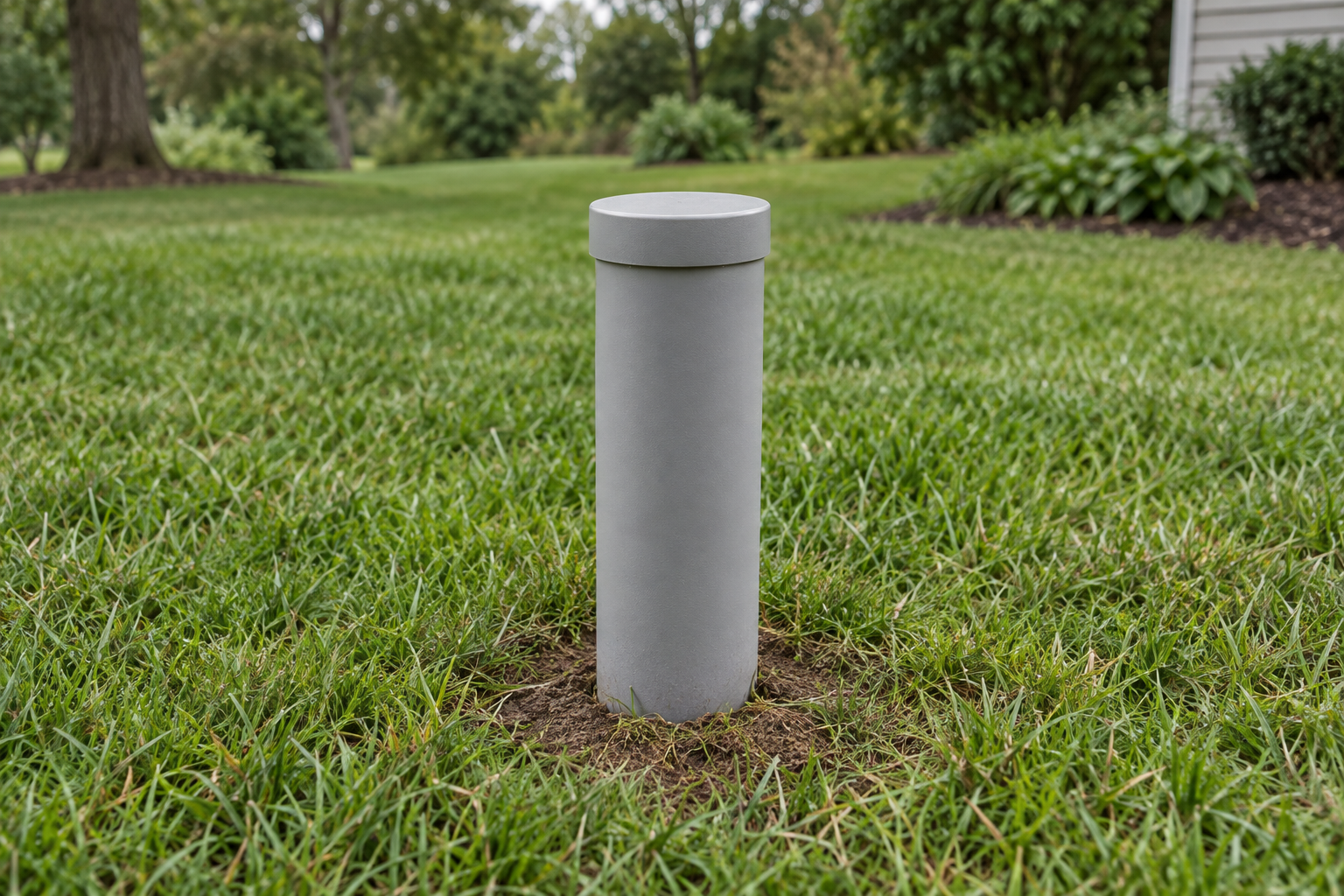
Illustrative image, not a certified product recommendation.
What Treatment Reduces Nitrate?
Treatment is a match between the chemistry and the device. The EPA names several technologies for nitrate removal in drinking water, including ion exchange, reverse osmosis, and electrodialysis. Each has a place, and each has limits.
Point-of-use reverse osmosis is a common household approach for drinking and cooking water. Ion exchange works by swapping nitrate for another ion on a resin. A whole-house system can be sized to treat water at every tap, while a point-of-use unit treats only one tap.
What matters is the certification claim, read against your actual result. A device should be certified for nitrate reduction under the applicable standard, and the listing should name the exact model and replacement cartridge being sold. A general water filter claim is not evidence of nitrate reduction. For how to read a certification listing in general, see our guide to certified water filters.
Two boundaries are worth keeping in view:
- Treatment reduces nitrate in the water it treats. It does not fix the source. Septic repair, well inspection, or fertilizer management may matter more in the long run.
- Even with treatment, some state guidance still advises families with babies under six months to use an alternate source. Follow your health department’s advice on that point.
If your well has more than nitrate to manage, a whole house filter for well water is a different decision, and one that depends on the full panel of results, not on nitrate alone.
When Should You Use Another Water Source?
If a result is at or above the EPA limit, or if your health department advises it, use a safe alternative for drinking and for preparing infant formula until the well is addressed. That can be bottled water or water from a public system without a nitrate problem. It is a short-term bridge, not a permanent solution, and it buys you time to test further and fix the source.
Do not try to make the water safe by boiling it. Boiling concentrates nitrate. If you are not sure what to do with a result, call your local or state health department. They can walk you through it, and their advice is specific to your area and your home.
Frequently Asked Questions
Is nitrate in well water dangerous?
Infants are the group public health agencies focus on, and the EPA limit is set to protect them from methemoglobinemia. For everyone else, the right reading depends on the level and your situation, so treat a result as a prompt to consult your health department rather than to self-diagnose.
Can I remove nitrate by boiling the water?
No. Boiling removes water as steam and leaves nitrate behind, so the remaining water is more concentrated. Do not use boiling to treat nitrate.
How often should I test my well for nitrate?
At least once a year, alongside the rest of the yearly checklist. Test sooner after a repair, a change in the water, nearby land use changes, or when a baby or pregnancy enters the home.
My test result is high. What do I do first?
Use a safe alternative source for drinking and infant formula, then contact your health department and a licensed well contractor. Address the source where you can, and choose treatment only once you know exactly what the number is.
The Takeaway
Nitrate in well water is a test-first problem. Confirm the level with a certified lab, understand who is most at risk, and never treat boiling as a fix. If the result is high, use a safe alternative source while you work on the well, then match any treatment to your real number and a certification that names nitrate. Your health department is the right first call for interpreting a result, and your well contractor is the right first call for the well itself.