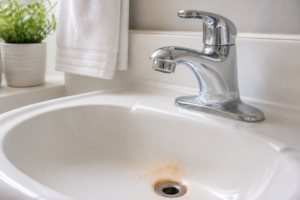

Do you have white scale on fixtures, spots on dishes, rough laundry, or soap that will not lather well? Hard well water may be part of the reason. Hardness usually comes from dissolved calcium and magnesium that groundwater picks up as it moves through soil and rock.
But a hardness number is not a complete private-well water test. The Centers for Disease Control and Prevention says private-well owners are responsible for testing their own water, including annual checks for total coliform bacteria, nitrates, total dissolved solids, and pH. Your local health department can help identify other tests for conditions in your area.
Fortunately, you do not need to choose equipment from one symptom or one strip result. This guide shows how to test hard well water, how to read the result beside other well-water findings, and how to choose a treatment category only when it fits the documented problem.
Table of Contents
Table of Contents
- What Does Hard Well Water Mean?
- Test Hard Well Water Before You Treat It
- How to Read a Well-Water Test for Hardness
- How to Treat Hard Well Water Based on Results
- When to Get Local Help
- Frequently Asked Questions
What Does Hard Well Water Mean?
Hard well water is groundwater with enough dissolved calcium and magnesium to cause practical problems, such as scale, spotting, or reduced soap performance. The U.S. Geological Survey explains that these minerals can dissolve from the rock and soil around a water supply well. That is why two wells in the same town can have different hardness results.
What does hard water not tell you? It does not tell you whether your well water has bacteria, nitrate, lead, arsenic, iron, an unusual pH, or another issue. It also does not prove that every stain, odor, plumbing problem, or appliance fault comes from hardness.
This distinction matters when you are deciding what to buy. A water softener is designed to reduce hardness minerals. It is not a general solution for every well-water concern. The CDC notes that water softeners remove calcium and magnesium, but do not remove parasites, bacteria, or viruses. Start with a measurement that matches the problem instead of treating your whole home on assumption.
If you have not measured hardness yet, our guide to testing water hardness at home compares strips, drop kits, and laboratory analysis. For a private well, a lab result can be especially useful because you may need to read hardness alongside other water-quality findings.
Test Hard Well Water Before You Treat It
What should you test first? Collect a sample that reflects the water you want to understand. If you are checking the untreated well supply, do not collect after an existing softener, filter, or reverse-osmosis system. Ask the laboratory where and how to collect the sample, because the instructions can differ for bacteria, metals, and general chemistry.
For a useful starting point, ask a state-certified laboratory or local health department about a private-well panel that includes the annual CDC basics: total coliform bacteria, nitrates, total dissolved solids, and pH. Add hardness when scale, soap performance, softener setup, laundry, or appliance deposits are part of the problem.
Depending on your location and symptoms, the local recommendation may also include iron, manganese, lead, arsenic, or other substances. Do not add a treatment system before you know whether one of those findings needs a different response. The EPA’s private-well guidance recommends using certified laboratories and matching a treatment decision to the measured result.
When is a new test more urgent? The CDC lists changes in taste, color, or smell, flooding, repairs to a well system, nearby land disturbance, and local well-water notices as reasons to test. If you suspect contamination, use another safe source of water and contact a local health or environmental authority for advice. A hardness strip is not the right test for that situation.
Keep the Sampling Details With Your Result
Why save more than the number? A laboratory report is much more useful when you can tell what it represents. Record the collection date, the tap or sample point, whether the sample was before or after any existing treatment, and any recent change in your water or well system. Keep the laboratory’s collection instructions with the report too.
That small record can prevent a wrong comparison later. A result from a kitchen tap after a softener does not describe the untreated well supply. A sample collected before a repair may not represent the water after a repair. If a laboratory or local authority asks you to repeat a test, follow its new collection instructions rather than trying to match an old sample method yourself.
You do not need to interpret every line alone. Bring the complete report to a local health department, certified laboratory, qualified well contractor, or water-treatment professional. Ask which finding matters first, which results may be related, and what result you should confirm after any treatment change.
How to Read a Well-Water Test for Hardness
Hardness can appear as milligrams per liter (mg/L) as calcium carbonate, parts per million (ppm), or grains per gallon (GPG). These units can describe the same measurement in different forms. Our water hardness scale explains how to compare them without confusing a concentration with a treatment setting.
Use the result as part of a larger picture. The table below shows why a separate finding can change the next step.
| Test finding | What it can help you understand | Why it should not be treated as hardness alone |
|---|---|---|
| Hardness | Calcium and magnesium that may affect scale and soap performance. | It does not identify bacteria, nitrate, metals, or a plumbing fault. |
| pH | Whether water is acidic or basic, which can affect plumbing and treatment choices. | A high or low pH needs its own interpretation. |
| Iron or manganese | Possible sources of staining, taste, or treatment-system fouling. | Their removal needs result-specific treatment planning. |
| Total coliform bacteria or nitrate | A possible drinking-water safety concern. | A softener does not solve microbiological or nitrate problems. |
| Total dissolved solids | The overall amount of dissolved material in water. | It is not the same measurement as hardness. |
Could a cheap home test still help? Yes, it can be a useful screen for a scale or softener question. But do not use a general total-dissolved-solids meter as if it were a hardness test. If you need a treatment setting, a purchase decision, or a record for a well professional, use a method that directly reports hardness and follow the test instructions.
You can also plan a routine check. Our guide on how often to test water hardness explains when a fresh number is useful for a home with a well, treatment system, or recurring scale issue. Keep the report with the date, sampling point, and any treatment already in use. That history helps you tell a real change from a one-time observation.
How to Treat Hard Well Water Based on Results
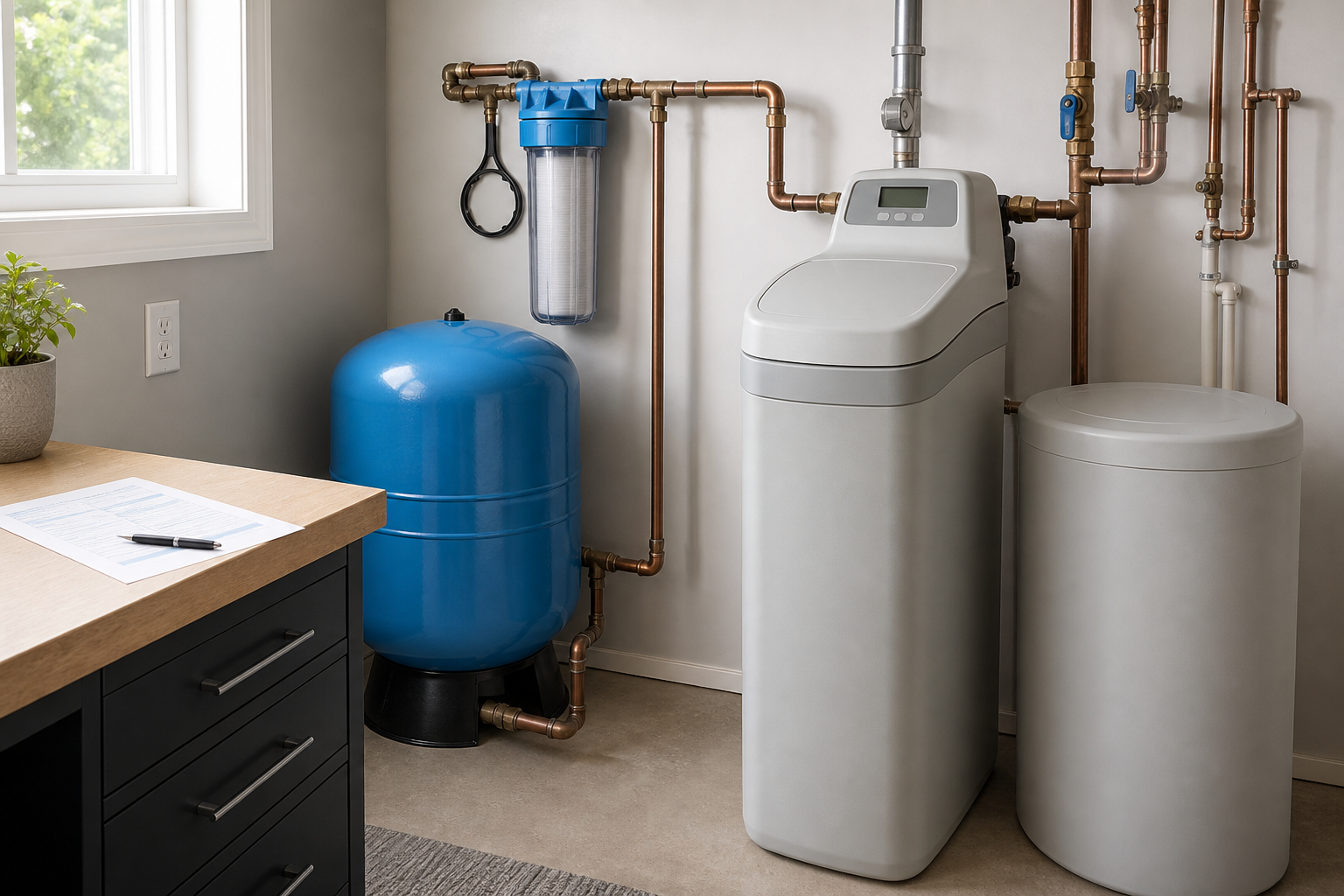
What is the usual treatment for hardness? Ion-exchange softening is a common method for reducing calcium and magnesium in water. The CDC’s home treatment guidance describes water softeners as systems that remove these minerals. That can help with hardness-related scale and soap performance when the rest of the water chemistry supports that approach.
Still, do not assume a softener is the whole plan. A well can have hardness plus iron, manganese, low pH, bacteria, nitrate, sediment, or another issue. Each can affect treatment order, equipment compatibility, maintenance, and whether a professional needs to inspect the well itself.
Use this practical sequence:
- Confirm the finding. Keep the laboratory report, including units and sample location. If the result is surprising, ask the lab or local agency how to confirm it.
- Separate hardness from safety concerns. Treat bacteria, nitrate, metals, or a local contamination concern as their own questions. Do not wait for a softener decision to address a possible safety issue.
- Ask what each treatment is meant to remove. Read the product documentation and check that the stated capability matches the measured problem. One treatment type does not protect against every problem.
- Size and maintain equipment from documented data. A qualified well-water professional can use hardness, household water use, flow, iron or manganese results, and other water chemistry to explain the options.
- Test again after a meaningful change. Confirm that the treatment is doing the job it was selected to do, and keep following the broader well-testing plan.
For a closer explanation of the hardness part of that decision, see what a water softener does to well water. It can help you ask better questions about calcium and magnesium without treating a softener as a blanket water-safety device.
When to Get Local Help
Who should you call when the report is hard to interpret? Start with your local or state health department. They may know which contaminants are common in your area and can direct you to certified laboratories. A qualified well contractor or water-treatment professional can then explain treatment options for the measured result and your plumbing setup.
Get prompt local guidance if your water changes suddenly in color, smell, or taste; a flood reaches the well area; you repair the well or pump; someone in the household has a health concern; or a laboratory identifies a harmful germ or chemical. These situations are broader than hard water and need a response tied to the source and result.
Want a deeper testing checklist before you make that call? Our well-water testing guide can help you prepare questions for a certified lab. Bring your complete report, not just the hardness number, so you can avoid paying for a system that addresses only part of the problem.
Frequently Asked Questions
Is hard well water safe to drink?
Hardness describes calcium and magnesium, not a complete drinking-water safety result. A hard-water result alone cannot tell you whether your well has bacteria, nitrate, lead, or another concern. Use a broader private-well test and local guidance to answer the safety question for your home.
Does a water softener fix all well-water problems?
No. A water softener is intended to reduce hardness minerals. It does not remove every possible chemical or germ, and it is not a substitute for a certified well-water test. Match treatment to the documented finding.
How often should I test hard well water?
Test when you need an up-to-date hardness result for a treatment or maintenance decision. Include hardness in your routine review when scale or a softener matters, but also follow the CDC guidance for annual private-well testing and test sooner after a meaningful change.
Can iron make well water seem hard?
Iron can cause staining or taste concerns that are different from hardness. A well can have both iron and hardness, which is why a full report is more useful than choosing treatment from one visible stain.
Should I use a test strip or a laboratory?
A strip can screen for hardness at home. Choose a laboratory when you need a documented result, want to compare hardness with other well-water findings, or are making a treatment decision. Use a state-certified laboratory for drinking-water concerns.
The Bottom Line
Hard well water can be a practical scale and maintenance issue, but it is only one part of your well-water picture. Test hardness with the right method, read it beside your broader well-water results, and choose treatment only for the problem you have confirmed.
That test-first approach can save you from buying the wrong system. Start with a certified laboratory or your local health department, keep the complete report, and use your water hardness test result to guide the next decision with confidence.