
Are you comparing a reverse osmosis vs carbon filter and wondering which one will do more for your drinking water? The better question is: what does your water need? A carbon filter and a reverse osmosis system work differently, use different amounts of water, and may fit different concerns.
Fortunately, you do not need to choose by the longest feature list. Start with a water quality report or test result, then check whether an exact model has a documented reduction claim for the concern you found. The CDC advises choosing a home treatment system for the germs or chemicals you are concerned about, not assuming that every filter handles the same things.
This guide compares activated carbon and reverse osmosis (RO), explains where they overlap, and gives you a practical way to decide whether a simple carbon filter, an RO system, or no new treatment is the right fit.
Table of Contents
Table of Contents
- Reverse Osmosis vs Carbon Filter: The Short Answer
- How Activated Carbon Filters Work
- How Reverse Osmosis Systems Work
- Can an RO System Also Use Carbon?
- Choose the Right Treatment for Your Water
- Compare Installation, Water Use, and Maintenance
- Questions Readers Ask
Reverse Osmosis vs Carbon Filter: The Short Answer
An activated-carbon filter is often a practical starting point when you want to address a stated taste, odor, or contaminant-reduction claim without adding an RO membrane. An RO system uses pressure and a semipermeable membrane at a drinking-water point of use. It can address a broader set of dissolved-substance concerns when the exact system documents the claim you need.
Neither is automatically better. A carbon filter may be enough when it has the right verified claim. RO may be worth considering when a report or test points to a dissolved contaminant that an exact RO system is certified to reduce. If you do not have a measured concern and your water already meets your needs, you may not need extra treatment at all.
| Question | Activated carbon filter | Reverse osmosis system |
|---|---|---|
| How it works | Adsorbs selected substances onto porous carbon media. | Uses pressure to move water through a semipermeable membrane, usually with other treatment stages. |
| Typical scope | A pitcher, faucet, countertop unit, under-sink unit, or whole-home system, depending on the design. | Usually point of use, often a kitchen drinking-water faucet. |
| What to verify | Exact model, stated reduction claim, capacity, flow, and replacement cartridge. | Exact model, stated reduction claim, feed-water conditions, waste-to-treated-water ratio, and replacement schedule. |
| Important limit | The word “carbon” does not prove a specific reduction. | The words “reverse osmosis” do not prove every contaminant reduction or make water safe in every situation. |
The NSF water-treatment standards guide explains why this model-level check matters. NSF/ANSI 42, 53, and 58 identify different scopes. The numbers are not quality rankings, and a standard does not mean every product has every possible reduction claim.
How Activated Carbon Filters Work
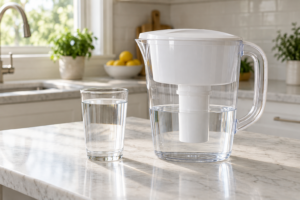
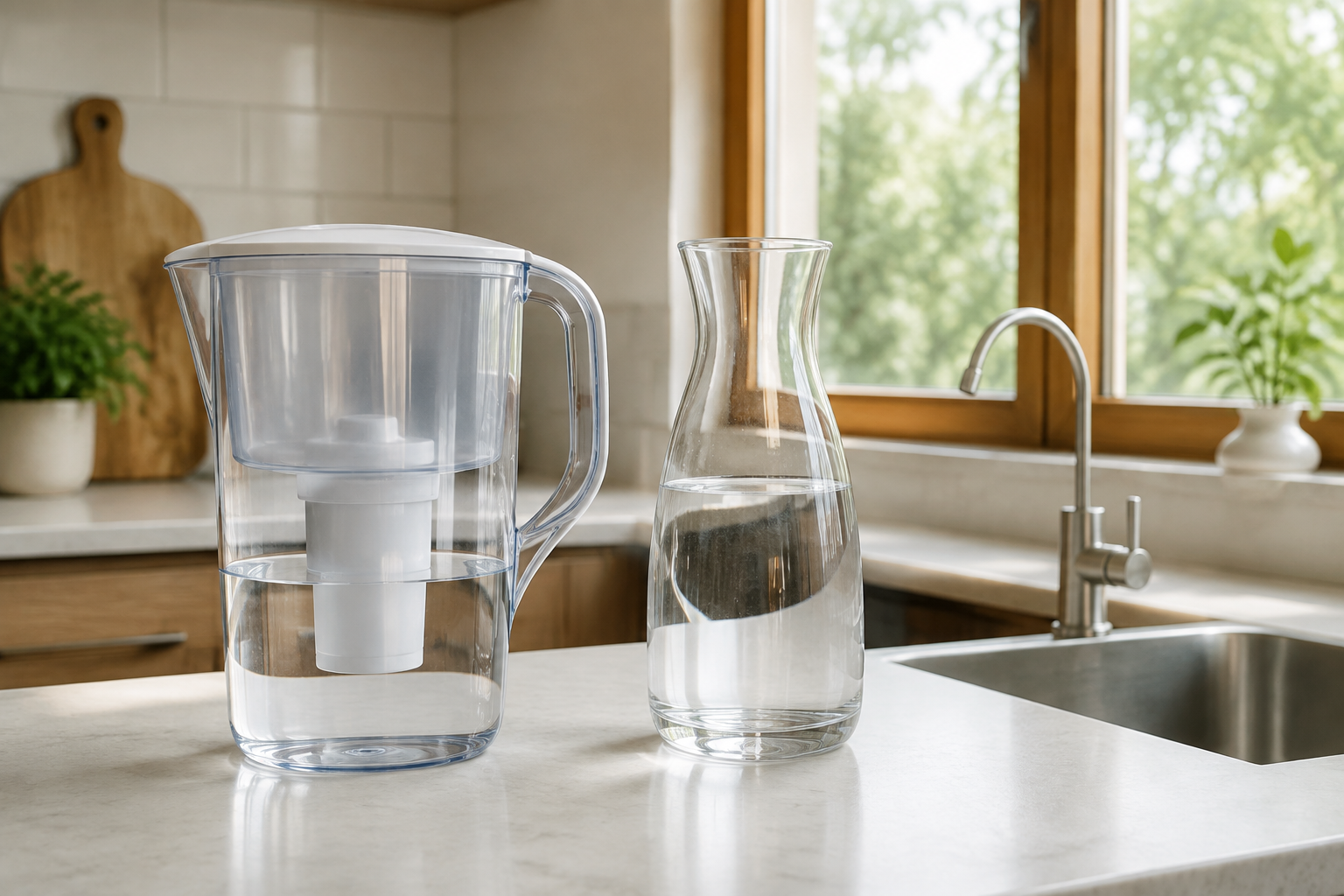
Activated carbon has a porous surface that can attract selected substances as water passes through it. You will find it in pitchers, faucet filters, refrigerator filters, countertop units, under-sink cartridges, and some whole-home systems. Carbon may also be paired with other media or stages, so two carbon products can behave differently.
What can a carbon filter do for you? It may be a good fit for a stated aesthetic claim, such as chlorine taste or odor. Some carbon-based systems also have verified claims for named contaminants. The product’s size, carbon type, flow rate, contact time, and replacement interval can all affect the claim. That is why a generic statement such as “carbon removes contaminants” is not enough for a purchase decision.
Before you buy, look for the exact model number and its performance data sheet. If a particular chemical concerns you, find that chemical by name in the product documentation or certification listing. Our guide to NSF certified water filters shows how to compare the model, claim, capacity, and replacement cartridge without relying on a logo alone.
Could a carbon filter be the simpler answer? Often, yes, when your concern is limited and the exact claim matches it. It can also be a lower-water-use choice than RO. But a carbon filter is not a general water test, a substitute for disinfection, or a promise that every similar cartridge has the same performance.
How Reverse Osmosis Systems Work
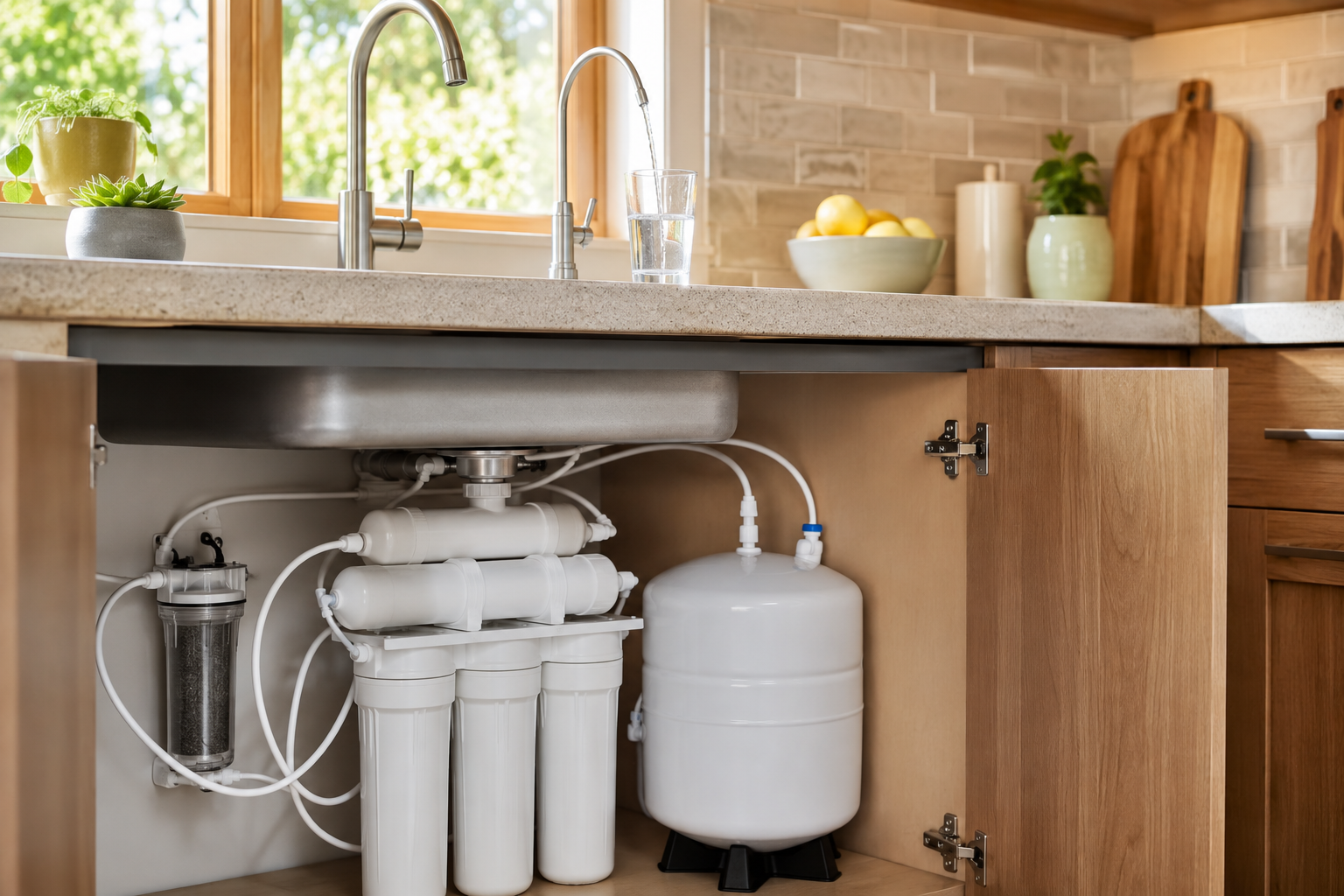
Reverse osmosis uses pressure to push water through a semipermeable membrane. The EPA describes point-of-use RO as a device connected to a single fixture, such as a kitchen sink. It produces treated water for that point and a separate reject-water stream.
The CDC explains that RO systems may reduce several types of dissolved substances, along with some germs, but it also says to check the system label for the specific chemicals it removes. That distinction matters. A system designed for one listed reduction may not make the same claim for another contaminant, and a low-cost model description is not evidence of a certified result.
RO also has practical tradeoffs. It usually needs more installation space and more maintenance planning than a basic pitcher or faucet filter. Many systems use a storage tank, while other designs treat water as you use it. They can also send water to a drain as part of the treatment process. The EPA’s current point-of-use RO guidance notes that a typical RO system may produce five or more gallons of reject water for each gallon of treated water. WaterSense-labeled systems must meet stricter efficiency criteria, so compare the stated ratio when water use matters to you.
Does that make RO a poor choice? Not when it is the right technology for a documented need. It means RO deserves the same careful fit check as any other treatment. Verify the named reduction, the available space, the feed-water requirements, the maintenance schedule, and the water-efficiency information before you commit.
Can an RO System Also Use Carbon?
Yes. Carbon and RO are often parts of the same multi-stage system, not opposing choices. Many residential RO systems include carbon stages before or after the membrane. A carbon stage can help with certain stated treatment needs and can protect other stages, while the membrane handles a different part of the process.
This is why comparing technology labels alone can mislead you. A product may include sediment filtration, activated carbon, an RO membrane, and a final carbon stage. The question is not whether it has the most stages. The question is whether the complete, documented system has the claim you need under the conditions in your home.
If you are deciding between treatment at one faucet and treatment throughout the home, start with our water filtration guide. A point-of-use system can be sensible for drinking and cooking water. A whole-home system may be appropriate when the measured issue affects multiple fixtures, appliances, or household uses.
Choose the Right Treatment for Your Water
Want a decision you can defend after the first cartridge change? Work through these steps before you compare brands.
- Identify the concern. Read your utility’s Consumer Confidence Report, use a certified laboratory test when needed, or ask your local health department what to test for. Taste, smell, and appearance alone do not identify every water issue.
- Decide where you need treatment. Are you treating drinking and cooking water at one tap, or is the problem affecting the whole home? This helps you avoid paying for more treatment than you need.
- Match the technology to the documented result. A carbon filter may fit a stated carbon-filter claim. RO may fit a documented RO claim for a dissolved contaminant. Do not assume either one handles every concern.
- Verify the exact product claim. Check the model, certification listing or performance data sheet, capacity, flow, operating limits, and replacement cartridge. Use the complete system documentation, not a family name or a retailer headline.
- Plan for ownership. Add replacement parts, installation room, water use, and the work of keeping the system on schedule before you buy.
If hardness scale is your main concern, do not use this comparison as a shortcut to a whole-home softening decision. Carbon filters and point-of-use RO serve different roles than a conventional softener. Our water softener vs water filter guide explains that difference and helps you separate scale control from a drinking-water claim.
Private-well owners should take an extra pause before choosing. Well water can change, and different results may need different treatment steps. Review our water filter guide for well water after you have a current test result.
Reverse Osmosis vs Carbon Filter: Key Tradeoffs
Both choices need maintenance. A neglected filter can lose flow or fall outside its intended replacement schedule. The right option is one you can install, maintain, and verify over time.
| Consideration | Carbon filter | RO system |
|---|---|---|
| Space | Can be compact, depending on pitcher, faucet, countertop, or under-sink format. | Often needs under-sink space for stages, tubing, and possibly a tank. |
| Connection | May be gravity-fed, faucet-mounted, countertop, or plumbed in. | Often plumbed to a cold-water line and drain at one drinking-water point. |
| Water use | Usually does not create an RO reject-water stream. | Produces treated and reject streams, so compare the stated efficiency or ratio. |
| Routine care | Replace the specified cartridge on schedule. | Replace pretreatment and post-treatment stages and follow the system’s membrane and sanitation instructions. |
| Best comparison tool | The exact claim, capacity, and cartridge availability. | The exact claim, waste-to-treated-water ratio, operating requirements, and service parts. |
Do you want help sorting those questions without starting from a product page? Find Your Filter can help you narrow the water source, treatment goal, and budget questions before you compare documentation.
Questions Readers Ask
Is reverse osmosis better than a carbon filter?
Not in every situation. RO may be useful for a documented drinking-water need that an exact RO system is designed and certified to address. A carbon filter may be the better fit when it has the required claim and you want a simpler, lower-water-use setup. Compare the claim, not only the technology name.
Can a carbon filter remove the same things as RO?
Some systems can have overlapping reduction claims, but you should not assume they do. Carbon media, membrane design, and complete system configuration differ. Check the named contaminant, the model listing, and the product’s performance data sheet before you treat two systems as equivalent.
Does an RO system remove everything from water?
No. The CDC advises checking an RO system’s label for the specific chemicals it removes. RO treatment also does not replace public-health guidance during a boil-water advisory or a laboratory test when you need to identify an unknown concern.
Do I need RO for city water?
Not automatically. Start with your utility report, your plumbing situation, and any concern you can verify. EPA notes that lower-water-use treatment methods may be enough in some cases. A correctly selected carbon filter, or no added treatment, can be appropriate when it fits the documented need.
Can I use a carbon filter and RO together?
Yes. Many RO systems include carbon stages. Verify the complete system’s stated claims and maintenance instructions, because the results depend on the exact design and replacement parts.
Choose the Treatment That Matches Your Water
The reverse osmosis vs carbon filter decision becomes simpler when you start with evidence. Identify the issue, decide where you need treatment, and verify a specific model’s documented claim. Carbon can be a practical choice for a defined need. RO can be useful when its additional treatment and water-use tradeoffs fit a verified drinking-water concern.
You do not need the most complex system. You need a system that matches your water, your home, and the maintenance you can keep up with. Start with a test or report, keep the product documentation, and choose with confidence.