
Are you looking at a shower head filter because your shower has white scale, soap does not rinse the way you expect, or the fixture needs frequent cleaning? A shower head filter for hard water can sound like the easy answer. But the first question is not which filter looks best. It is what you need the device to change.
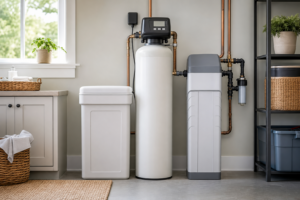
Most shower filters are not water softeners. A shower filter may have a documented claim for a specific substance, often free available chlorine. It does not usually remove the dissolved calcium and magnesium that make water hard. The CDC explains that water softeners are the household systems designed to remove those minerals.
Fortunately, you can avoid an expensive mismatch. Test your water, choose a shower filter only for a claim that the exact model documents, and use a softener or another treatment approach when your real goal is less hardness throughout the home.
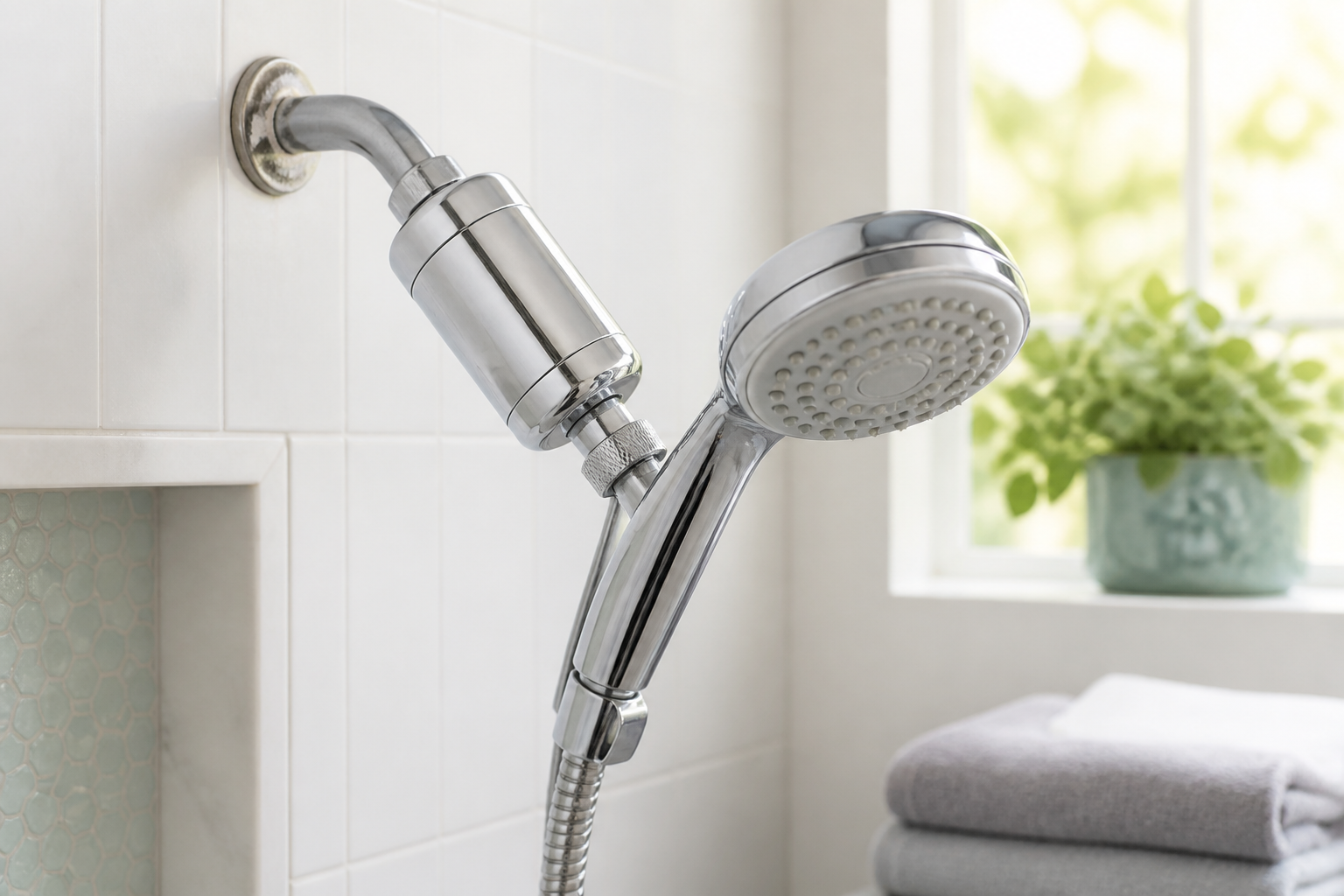
Table of Contents
Table of Contents
- The Short Answer
- Why Hard Water Shows Up in the Shower
- What a Shower Filter Can Actually Do
- Why a Shower Filter Does Not Usually Soften Water
- How to Choose a Shower Filter Without Guessing
- When a Different Solution Makes More Sense
- Frequently Asked Questions
The Short Answer
What is the best shower head filter for hard water? It is the one whose documented claim matches your actual goal. If you want a fixture-level filter for free available chlorine, look for a current, model-specific claim and check whether the model is listed to NSF/ANSI 177. If you want lower calcium and magnesium hardness, do not expect a typical shower attachment to do that job.
The NSF overview of water-treatment standards says shower filters covered by NSF/ANSI 177 are certified to reduce free available chlorine. NSF identifies water softeners, not shower filters, as the treatment systems that reduce calcium and magnesium hardness. Certification always applies to a particular product and reduction claim, not to every issue a buyer may have with their water.
That distinction is useful because the same bathroom can have more than one problem. You may see scale from hardness, notice a chlorine odor, and have an old showerhead that needs cleaning. One small attachment is not automatically the solution to all three.
Why Hard Water Shows Up in the Shower
Hard water contains dissolved minerals, mainly calcium and magnesium. As water dries on a shower door, tile, or showerhead, those minerals can remain behind as a chalky deposit. You may also notice soap film, slower spray from clogged nozzles, or a ring around fixtures.
Want to put a number on it? Start with how to test water hardness at home, then use our water hardness scale to understand the result. A utility report can be helpful context, but a current test at your home is more useful when you are deciding on treatment.
Do not treat a scale mark as a complete diagnosis. Iron, corrosion, soap residue, cleaning products, and worn fixtures can look similar. If your water suddenly changes color, odor, pressure, or taste, or if you receive a local water advisory, address that concern separately instead of relying on a shower filter.
What a Shower Filter Can Actually Do
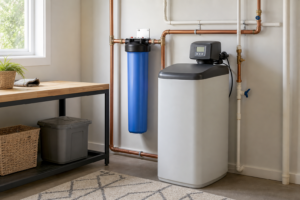
A shower filter is a point-of-use device. It treats water at one shower connection, not at the water line that serves the house. That can be useful when its claim matches your concern, but the product label and certification listing matter.
Free available chlorine is the common verified claim
NSF describes NSF/ANSI 177 as the standard for shower filtration systems and free available chlorine reduction. The standard also covers material safety, product design, and durability requirements. It does not turn a shower filter into a whole-home softener.
If chlorine reduction is why you are shopping, check the exact model name in the NSF certified-products listing. Confirm the listing is current, read the performance claim, and compare it with the manufacturer instructions. A package saying “multi-stage” or “for hard water” is not the same as a verified hardness-reduction claim.
A shower filter can be a maintenance item
What else should you expect? Replacement intervals, flow limits, shower-arm fit, and installation directions. A filter that is installed incorrectly or used beyond its stated service interval may not perform as its documentation describes. Keep the instructions, note the installation date, and replace the cartridge on the maker’s schedule.
This is also a good time to clean the showerhead according to its manufacturer instructions. Removing visible deposits can restore spray pattern, but it does not lower the hardness in the water entering the bathroom.
Why a Shower Filter Does Not Usually Soften Water
Why is this distinction so important? Hardness minerals are dissolved in the water. A conventional softener uses ion exchange to remove calcium and magnesium. The EPA describes cation exchange as a method used for water softening because it removes hardness ions such as calcium and magnesium.
A typical shower filter does not have the resin capacity, brine regeneration, plumbing position, or whole-home flow design of a conventional ion-exchange softener. It may filter for a separate claim at one fixture, but that does not prove it lowers the water’s hardness. If a manufacturer makes a hardness-reduction claim, verify the exact model, test conditions, maintenance requirements, and independent certification before treating that claim as the reason to buy.
This is the same difference explained in our water softener vs. water filter guide. A filter and a softener can both be useful. They simply solve different problems.
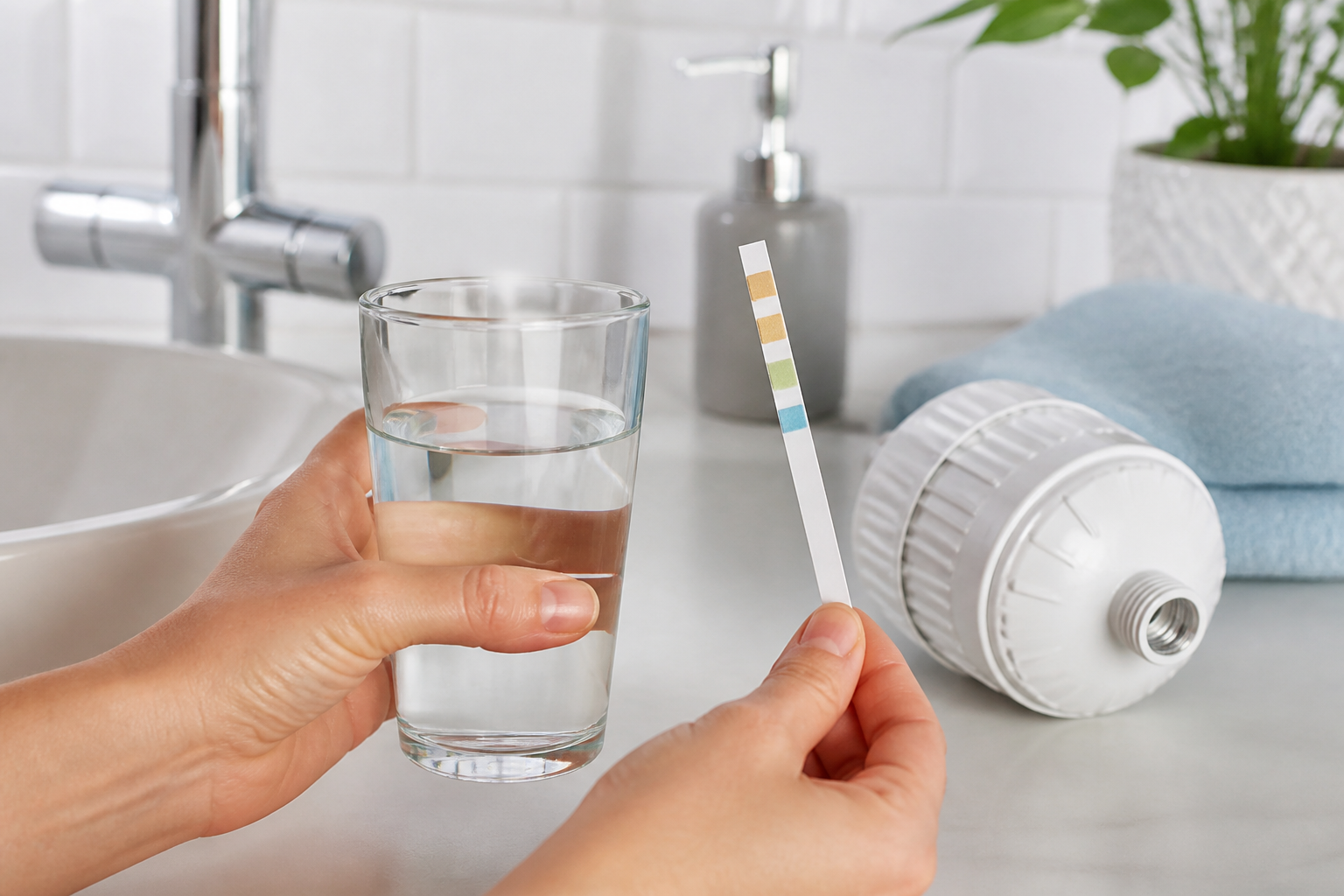
How to Choose a Shower Filter Without Guessing
You don’t need a long list of vague promises. Use this checklist before you order a shower filter.
1. Name the exact problem
Are you trying to reduce a documented chlorine concern, manage scale, improve an old showerhead’s spray, or lower measured hardness? Write down one goal. A hardness result should lead you toward a hardness solution, while a chlorine concern should lead you toward a model with a chlorine-reduction claim.
2. Check the claim, not just the marketing words
Look for the specific substance the product says it reduces. Then look for the standard or independent listing that supports that claim. NSF notes that certification to a standard does not mean a treatment system reduces every possible contaminant. The claim must fit your water and the exact product.
3. Confirm the connection and maintenance plan
Check your shower-arm threads, showerhead type, water pressure requirements, cartridge service life, and replacement cost. If you rent, get permission before you attach equipment to plumbing. Our guide to hard water solutions for renters explains why an attachment should not be treated as a building-level fix.
4. Keep your expectation at the fixture level
A shower filter can’t soften the water used by your dishwasher, laundry, kitchen tap, or other bathrooms. It also can’t prove that the home’s water is safe for every purpose. If you need a result across several fixtures, compare a whole-home solution after you have a current water test.
What to Check Before You Install It
The filter is only one part of the decision. A few minutes of preparation can help you avoid a leak, a poor fit, or a purchase that cannot meet the claim you expected.
| Check | Why it matters | Practical step |
|---|---|---|
| Existing showerhead condition | A blocked spray pattern may come from existing scale, not the new filter. | Clean or replace the showerhead as its maker directs before judging a new attachment. |
| Connection type | A filter must fit the shower arm and your preferred showerhead. | Read the installation diagram and confirm any adapter is included. |
| Water pressure and flow | A cartridge may change the feel of the shower as it loads with use. | Check the maker’s flow specification and keep the receipt until installation is confirmed. |
| Replacement schedule | The treatment claim is linked to a stated service interval. | Put the replacement date on your calendar when you install it. |
| Claim documentation | Broad marketing terms don’t identify what is reduced. | Save the model page, label, certification listing, and installation instructions. |
Turn off the shower, relieve pressure, and use only the installation method supplied by the manufacturer. After installation, run the water and inspect the connection for leaks. If the fitting continues to leak, remove the attachment and contact the maker or a qualified plumber. Do not force a connection or use an unapproved adapter just to make a filter fit.
How should you judge whether it is working? Follow the exact maintenance and verification instructions for the model. A change in shower smell or feel is not a substitute for a documented reduction claim. If your goal is hardness reduction, test the untreated and treated water with a method that measures hardness. That result, rather than a marketing description, tells you whether the device is addressing calcium and magnesium.
When a Different Solution Makes More Sense
What should you choose when a shower filter does not match the problem? Start with the job that needs to be done.
| Your goal | Useful next step | What not to assume |
|---|---|---|
| Confirm whether scale is tied to hard water | Test untreated cold tap water and interpret the result. | A white deposit alone proves the cause. |
| Reduce free available chlorine at one shower | Check a model-specific, documented shower-filter claim. | The device also softens the water. |
| Reduce hardness at showers, laundry, and appliances | Compare a properly sized softener or speak with a qualified installer. | A cartridge filter can replace a whole-home softener. |
| Manage visible scale without changing plumbing | Clean and maintain fixtures as their makers direct. | Cleaning removes hardness from incoming water. |
If you do not want a conventional softener, our guide to treating hard water without a softener can help you choose a limited alternative without confusing it with complete hardness removal. The important step is to match the equipment to the measured problem.
Frequently Asked Questions
Do shower filters soften hard water?
Usually, no. Standard shower filters are commonly used for separate, fixture-level filtration claims. Conventional softeners use ion exchange to reduce calcium and magnesium hardness. Check the exact model documentation before relying on any hardness-reduction claim.
Will a shower filter stop limescale?
Not usually if hard water is the cause. A shower filter that does not reduce calcium and magnesium will not stop new mineral deposits from forming. Cleaning can remove existing scale, and a suitable softener can address hardness at the water source.
Is NSF/ANSI 177 a hardness-removal certification?
No. NSF/ANSI 177 is the shower-filtration standard for free available chlorine reduction and related product requirements. It is useful evidence for that specific claim, not proof that a shower filter softens water.
Can a shower filter solve dry skin or hair concerns?
Do not assume it can. Skin and hair concerns have many possible causes. A shower filter should be selected only for a documented water-treatment claim, not as a medical or personal-care promise. If you have a persistent skin concern, seek advice from a qualified health professional.
Should renters buy a shower filter for hard water?
It can be a reasonable fixture-level option when the documented claim matches the renter’s goal and the lease permits the installation. It is not a substitute for a property owner’s building-level treatment when the goal is lower hardness throughout the apartment.
The Bottom Line
The best shower head filter for hard water is not necessarily a hard-water treatment device. A shower filter can be useful when it has a documented claim that matches your concern, especially a verified free available chlorine claim. But it will not usually remove the calcium and magnesium behind hard-water scale.
Test first. Then choose a fixture-level filter for a fixture-level claim, or investigate a properly sized softener when you want lower hardness throughout the home. That simple check keeps the purchase focused on what the equipment can actually do.