
Are you comparing a reverse osmosis system and wondering how much reverse osmosis waste water it will send to the drain? Start with the label direction. Reverse osmosis (RO) makes one stream of treated water and another stream that carries concentrated dissolved material away from the membrane. EPA calls that second stream reject water, concentrate, or brine.
The useful question is not whether every RO system has the same ratio. It is whether the exact model documents a ratio, which direction the ratio uses, and which test conditions apply. A label that says “pure-to-drain” is the reverse of a label that says “waste-to-product.” Read the words around the numbers before you decide one system uses less water.
This guide explains the terms, gives simple hypothetical arithmetic, and shows how WaterSense information can help. It does not measure any system in a home. Your incoming water pressure, temperature, source water, storage design, maintenance condition, and usage pattern can affect actual operation.
Table of Contents
Table of Contents
- Reverse Osmosis Waste Water: The Short Answer
- Why an RO System Has a Reject Stream
- How to Read an RO Ratio
- Efficiency, Recovery, and Real-Home Results
- What the WaterSense Label Tells You
- A Safe RO Water-Use Checklist
- Questions Readers Ask
Reverse Osmosis Waste Water: The Short Answer
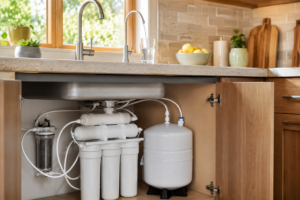
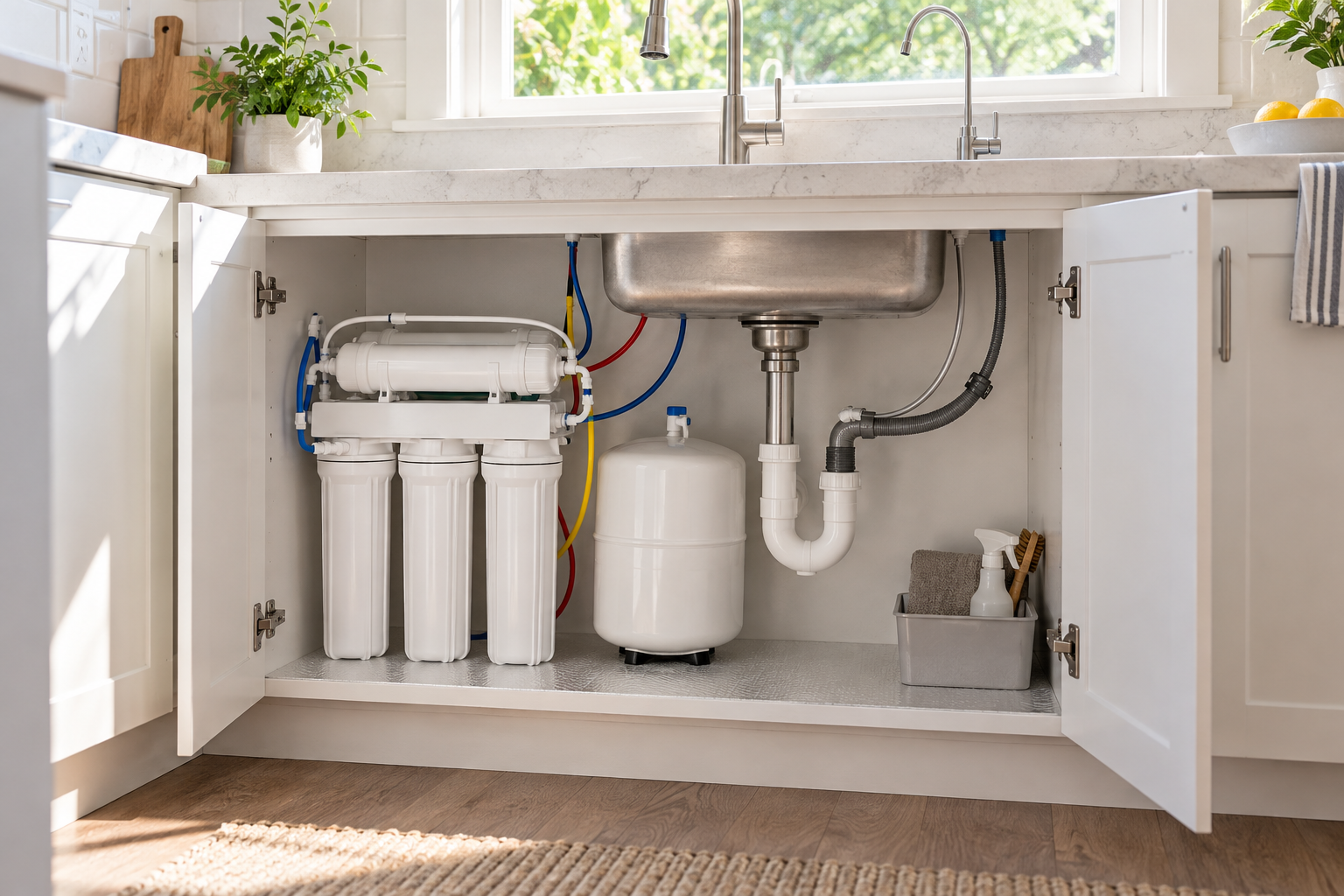
Point-of-use RO treats drinking or cooking water at one fixture, often a kitchen sink. Pressure moves feed water across a semipermeable membrane. One stream becomes treated water, also called permeate. Another stream leaves with a higher concentration of material that did not pass through the membrane. That is reject water.
EPA says a typical point-of-use RO system may generate five or more gallons of reject water for each gallon of treated water. Some models use less. A WaterSense-labeled point-of-use RO system must send 2.3 gallons or less to the drain for each gallon of treated water it produces. Those figures describe the program and labeled performance criteria. They do not predict the result from every RO system in every kitchen.
Before you focus on the ratio, make sure RO is the right treatment for your water concern. The CDC says to start with the germs or chemicals you need to address, then check the exact system label for the specific claim. Our reverse osmosis vs carbon filter guide can help you decide whether a simpler, lower-water-use filter already fits your documented need.
Why an RO System Has a Reject Stream
RO is not a normal sieve that holds all material in one place. Water pressure drives water through the membrane while dissolved material remains more concentrated on the feed side. The system needs a managed outlet for that concentrated stream. Its tubing usually leads to a drain connection according to the manufacturer instructions.
That design is why “waste water” can be a confusing term. The water is not proof of a plumbing fault, and it is not the same as the treated water at the RO faucet. EPA uses “reject water” or “concentrate” because the stream carries material rejected by the membrane. The exact makeup depends on the source water and the system. Do not treat it as drinking or cooking water.
If you see a continuous drain when the manual says the system should stop after a storage tank fills, do not change a flow restrictor or bypass a shutoff part to force a better ratio. Check the exact troubleshooting section for your model. A leak, unfamiliar plumbing condition, or problem that needs disassembly is a reason to shut off the system as the manual directs and contact qualified service.
How to Read an RO Ratio
The order of the numbers matters. Manufacturers may use different labels for the same water flows. Look for words such as “pure-to-drain,” “product-to-reject,” “waste-to-product,” “recovery,” or “efficiency.” Do not compare the first number alone.
Here is a hypothetical example. A waste-to-product ratio of 2:1 means two gallons go to drain for each one gallon of treated water. A pure-to-drain ratio of 2:1 means two gallons of treated water are produced for each one gallon sent to drain. The numbers look identical, but their meaning is opposite.
Some manufacturer pages use the pure-to-drain format. For example, the iSpring RO600-BN product documentation states a model-specific 2.5:1 pure-to-drain ratio. That is a manufacturer claim for that model, not a general RO result or a certification claim. Check its manual, current listing, operating conditions, and any independent label before comparing it with another system.
Use this quick label-reading routine:
- Find the exact model number, not only the product family name.
- Identify which stream is first in the ratio.
- Read the stated test conditions, including pressure and temperature when listed.
- Check whether the number is a manufacturer statement, a certification result, or a WaterSense label value.
- Compare like with like. Do not compare a tank system’s efficiency statement directly with a tankless system’s recovery statement without reading the definitions.
Efficiency, Recovery, and Real-Home Results
Efficiency and recovery are related water-use measures, but the label definitions matter. EPA’s WaterSense program uses separate criteria for systems with and without a storage tank because their operation differs. A storage-tank system stores treated water before you use it. A tankless system treats water as you use it. Our tankless vs tank reverse osmosis guide explains the space, power, delivery, and service questions that come with those designs.
Neither label tells the whole story by itself. Feed-water pressure, cold incoming water, high dissolved solids, a clogged prefilter, an aging membrane, and a full storage tank can change what you observe. A gallons-per-day rating is also not the same thing as faucet flow, stored capacity, or a reject-water ratio.
This is why a short home measurement can mislead. Filling a jug during one cycle does not reproduce a program test method, and it cannot confirm a contaminant-reduction claim. Use the model documentation to understand normal operation. If the system is not working as described, follow the manual’s safe troubleshooting steps or use qualified service instead of changing calibrated parts.
Compare Conditions Before You Compare Numbers
Two systems can show different ratio labels even when both are installed under a kitchen sink. That does not automatically make one label wrong. It may mean the systems use different storage designs, test methods, or stated operating conditions. A helpful product page or manual should identify the complete model and explain the metric. If the page gives a ratio but no direction, no conditions, and no supporting documentation, treat it as incomplete shopping information.
Start by recording the model number and the date you checked the information. Then save the manual, performance data sheet, and certification listing with your water records. This gives you a better reference when you need replacement filters, compare a future model, or speak with an installer. It also keeps a retailer summary from becoming the only source you rely on.
Pay attention to the difference between a system that has a storage tank and one that does not. A tank system can make treated water available from stored supply, while a tankless system produces treated water as you use it. EPA uses different WaterSense label language for those designs. A tank may report an efficiency rating, while a tankless system may report recovery. The labels can both help, but they are not interchangeable numbers.
Also read the maintenance section before you use the ratio to estimate monthly water use. A prefilter that needs replacement, a membrane at the end of its stated life, or an incoming-water condition outside the manual’s range can affect performance. Replace only the parts the manufacturer identifies for the model. Do not assume a similarly sized cartridge, a generic flow restrictor, or a setting shared online is compatible with your system.
The best comparison is therefore a complete one: the documented water concern, exact reduction claim, WaterSense or certification status where available, ratio direction, operating conditions, required maintenance, and physical fit. That sequence helps you avoid paying for an efficiency number that does not match the system or treatment need you actually have.
What the WaterSense Label Tells You
The EPA WaterSense label is useful when you have already decided that point-of-use RO suits a documented need. EPA states that WaterSense-labeled RO systems are independently certified to meet its efficiency and performance criteria. The program also requires a baseline total dissolved solids reduction, membrane-life criteria, and certification for additional contaminant claims a manufacturer makes.
WaterSense does not mean every RO system is necessary, every named contaminant is reduced, or every model will have the same drain result in your home. EPA specifically notes that lower-water-use treatment methods can be sufficient in some cases. A model needs the right documented reduction claim for your concern, not just an RO name or an efficiency label.
Certification details also remain model-specific. NSF’s water-treatment standards overview explains that NSF/ANSI 58 applies to reverse osmosis drinking-water treatment systems. It does not mean every system has the same contaminant reductions. Use our NSF certified water filters guide to match the model, claimed contaminant, capacity, and replacement part before you buy.
A Safe RO Water-Use Checklist
Water use is one factor in an RO decision. Use this checklist before you buy or replace a system:
- Start with a water report or appropriate test result. If there is no documented concern, you may not need added treatment.
- Confirm the point of use. Most RO systems serve drinking and cooking water at a specific fixture, not every tap in the home.
- Read the ratio words and test conditions. Record whether the label says pure-to-drain or waste-to-product.
- Look for a current WaterSense label when efficient RO is important to you, then confirm the exact model in the program’s current information.
- Check the complete certification and performance documents for the contaminant claim you need.
- Plan for filters, membrane service, cabinet access, a proper drain route, and any required power connection.
- Follow the exact manual. Do not alter a drain restriction, connect reject water to a drinking-water line, or use a generic video in place of model instructions.
For a broader choice process, start with our water filtration guide. When you have a documented concern and a short list of suitable formats, Find Your Filter can help you organize the treatment, budget, and maintenance questions.
Questions Readers Ask
Is reverse osmosis reject water the same as wastewater from my home?
It is a separate stream from the RO process. EPA calls it reject water, concentrate, or brine because it contains the material rejected by the membrane. Its contents depend on the incoming water and the system. Do not assume it is suitable for drinking or cooking.
Does a 2:1 ratio always mean the same thing?
No. A pure-to-drain 2:1 ratio and a waste-to-product 2:1 ratio describe opposite directions. Read the label words, the model number, and the test conditions before you compare systems.
Does a WaterSense label prove an RO system removes every contaminant?
No. WaterSense confirms that a labeled system meets EPA efficiency and performance criteria. You still need to check the exact model’s documented and certified reduction claims for the contaminant that concerns you.
Can I improve an RO ratio by changing the drain parts?
Do not change flow restrictors, shutoff components, or other calibrated parts to chase a ratio. Follow the manufacturer troubleshooting guidance. Stop and use qualified service if there is a leak, contamination concern, or a repair outside the manual’s safe instructions.
Compare the Whole RO Decision
Reverse osmosis waste water is a real tradeoff, but a ratio is only useful when you read its direction and conditions. Start with your water concern. Then compare the exact model’s claim, point-of-use fit, water-use documentation, maintenance plan, and current certification information.
You do not need to choose the most complex treatment. You need a system that addresses a documented need and that you can operate safely. If RO fits that need, a current WaterSense label and a clear model-specific ratio can help you make a more informed choice.